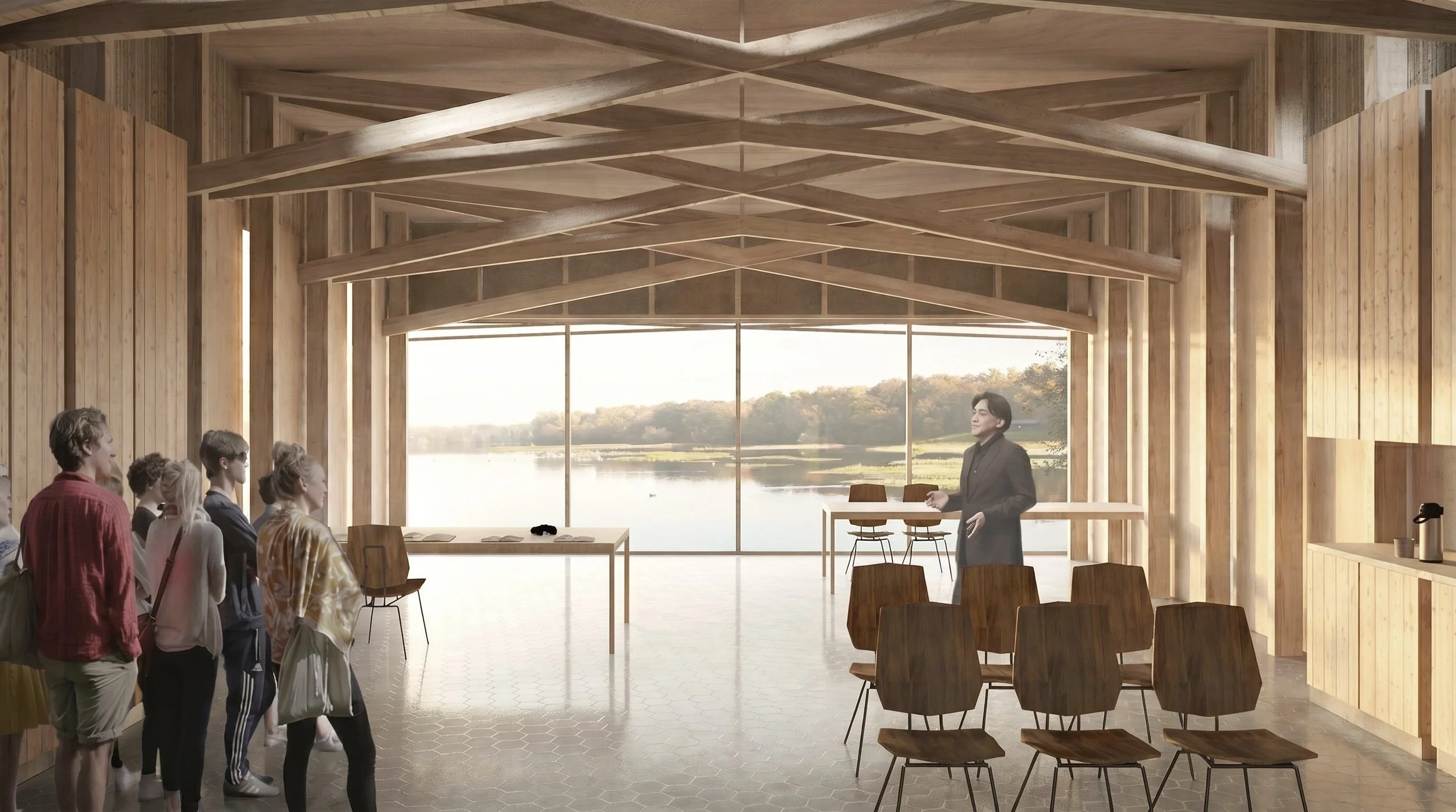
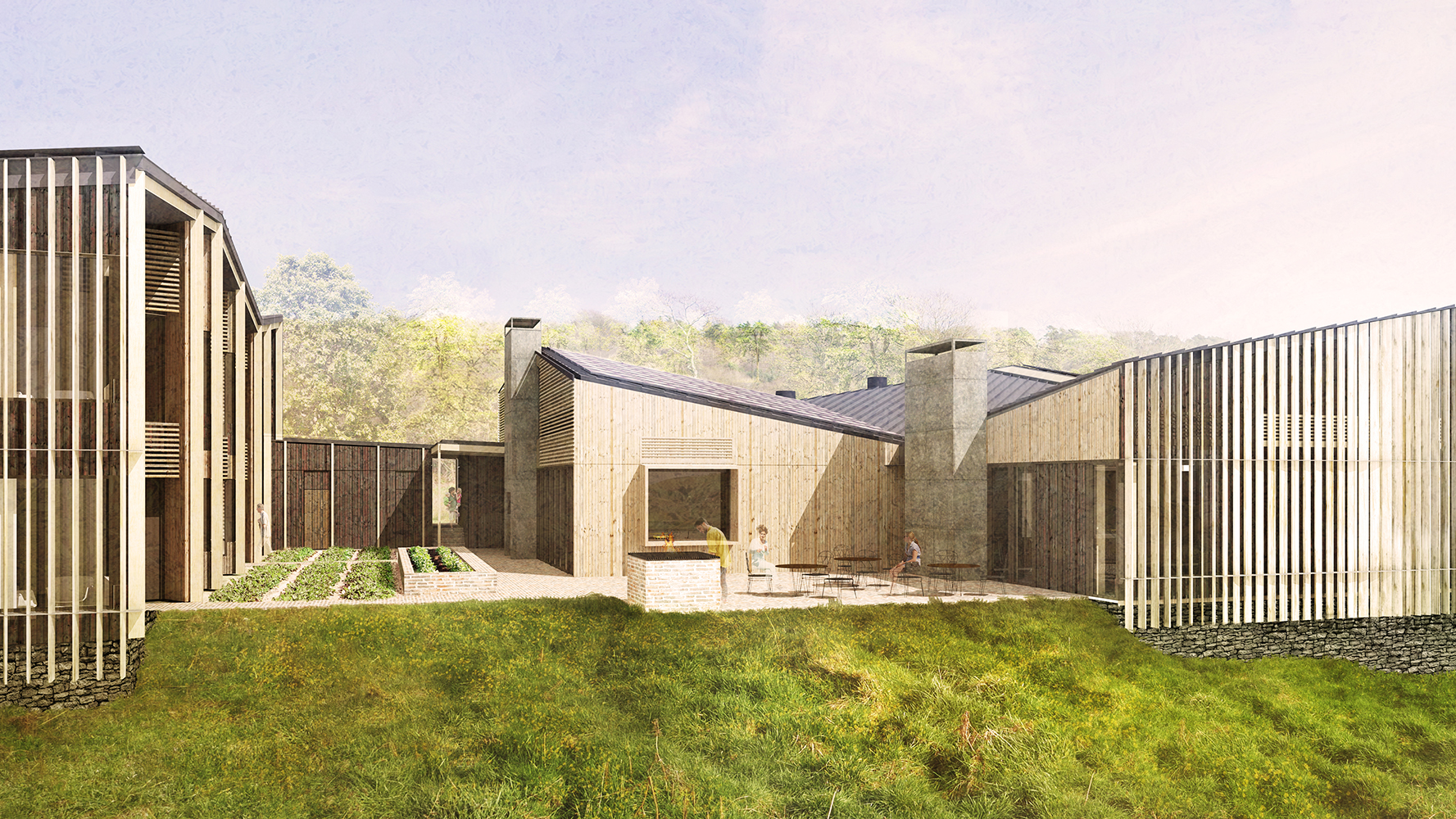
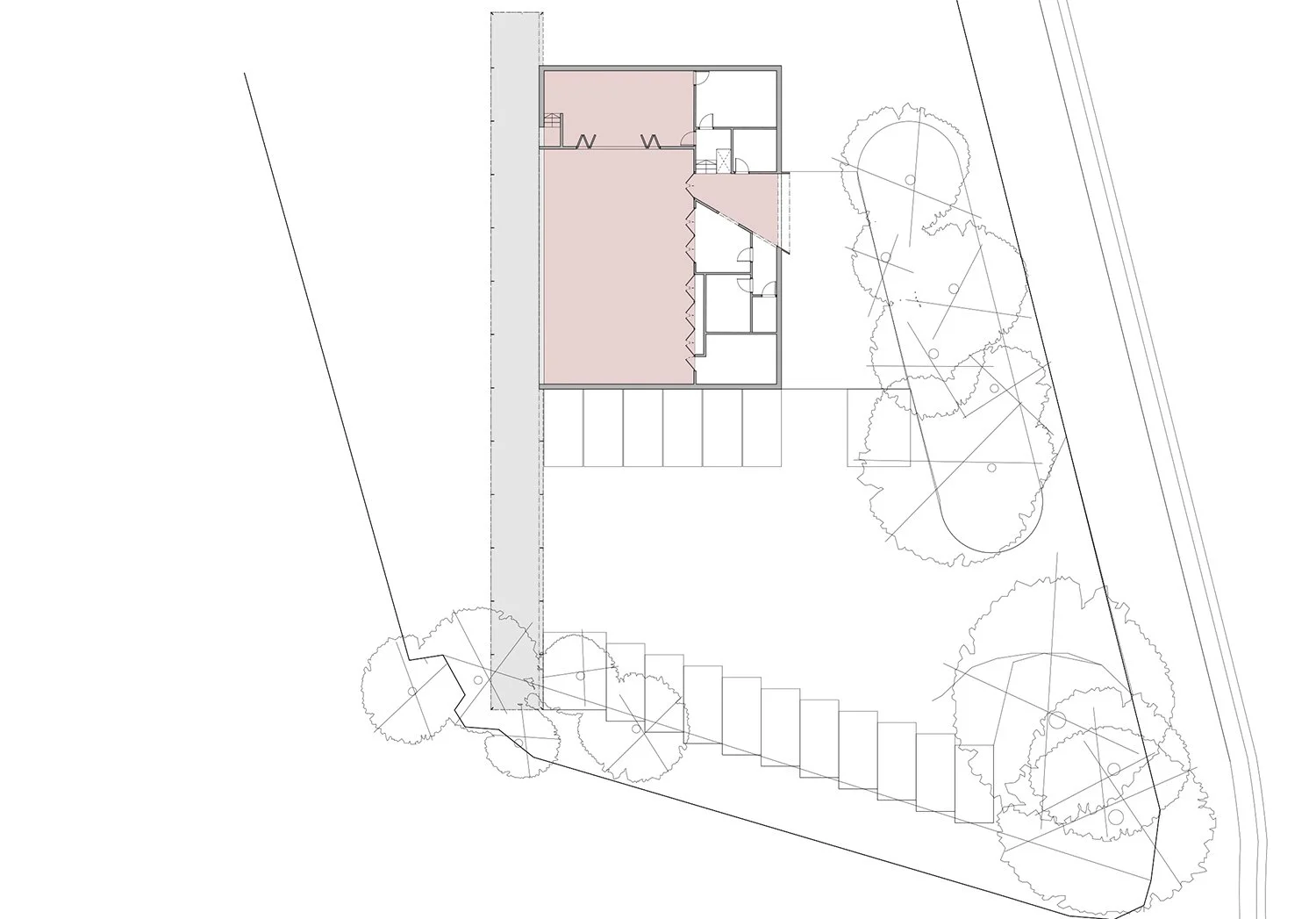
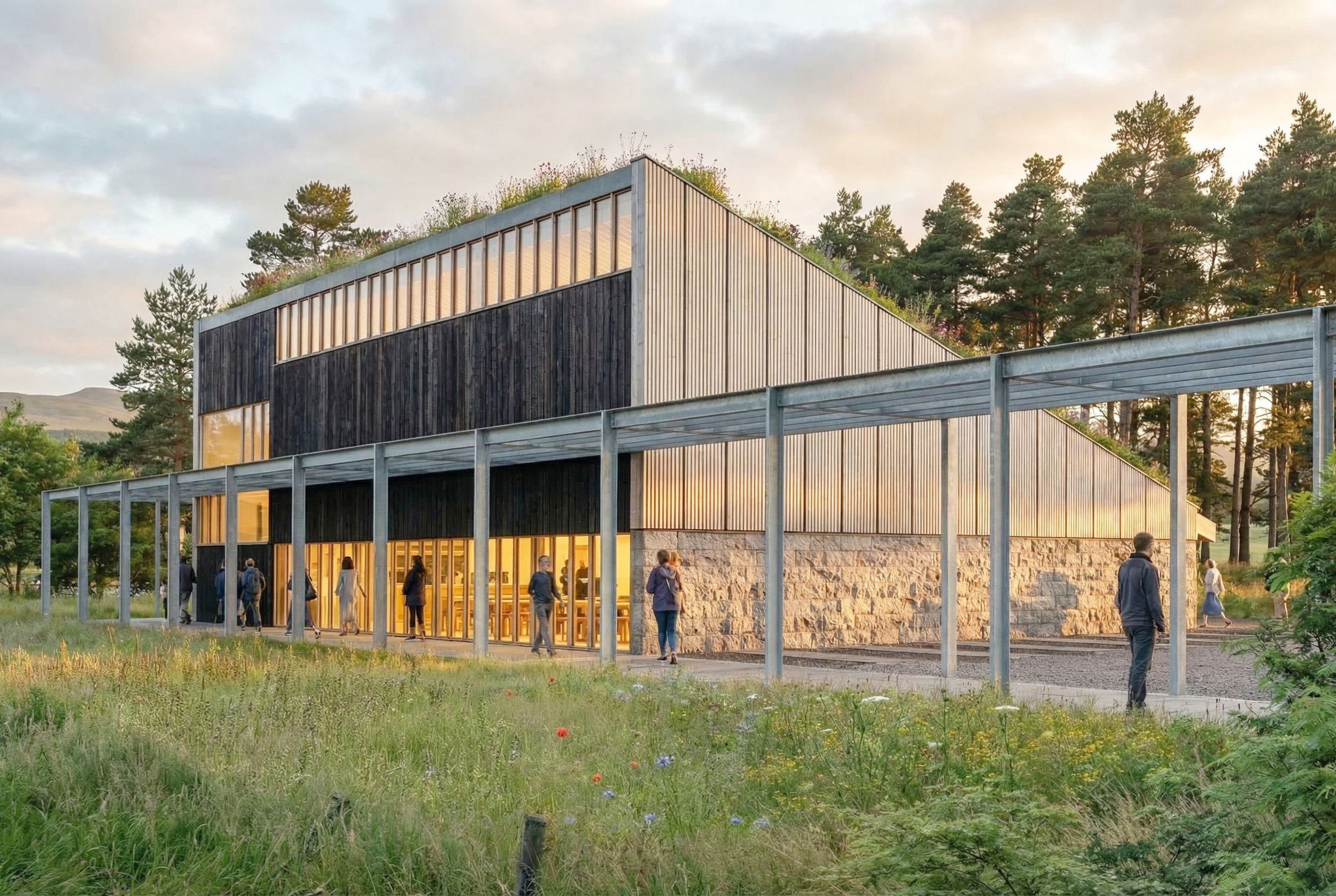
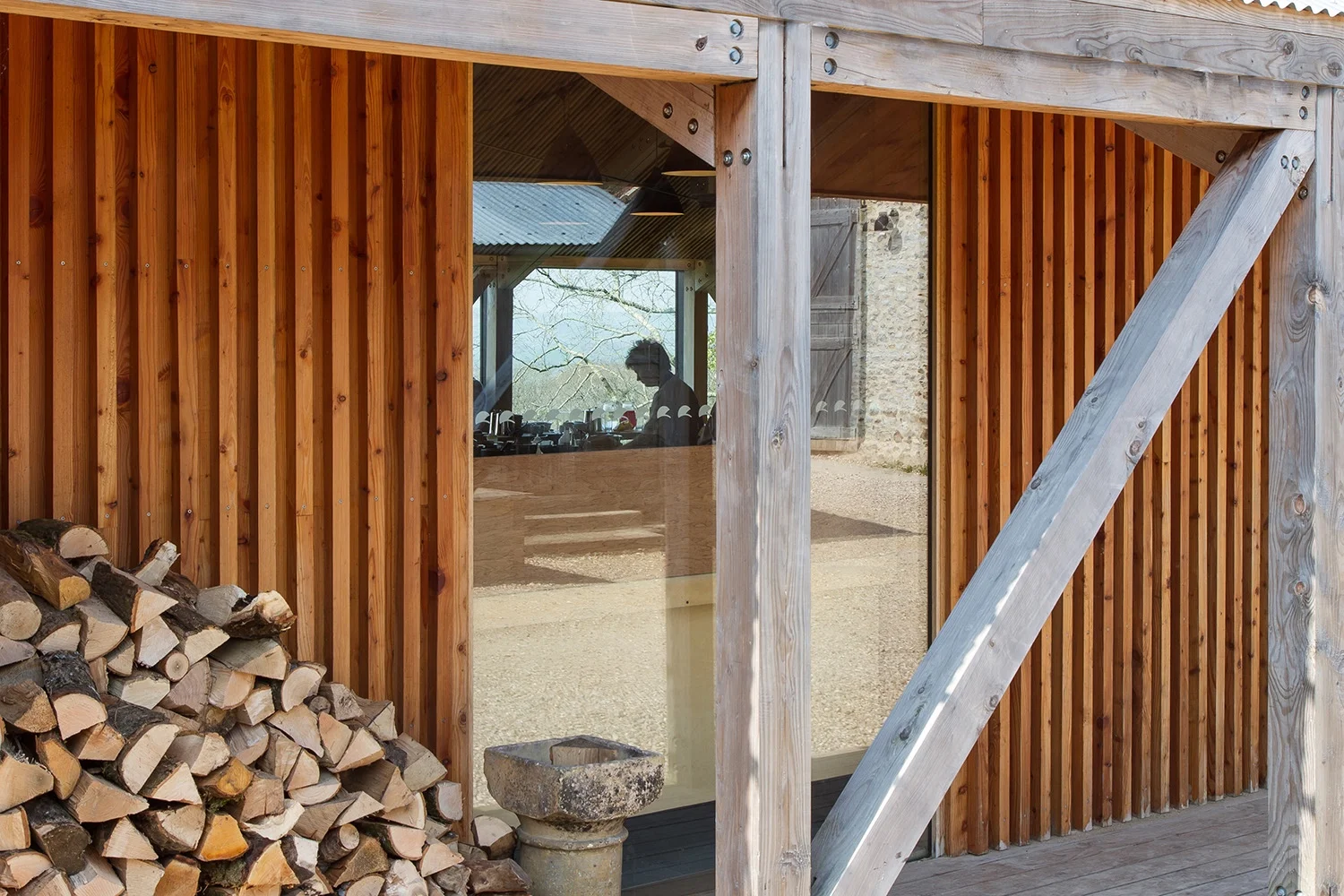
A professional cookery school and a flexible event space form the core of activities within the ongoing diversification of a historic farm, creating the headquarters for the expanding business that has grown up around the TV programme River Cottage.
ᗐ
Materials and detailing bond together the new and old elements of the complex. The barn-like structure of the new cookery school exploits the spectacular views and evening sunlight across the rural valley to the west with a crisp fully glazed wall, while connecting back into the farmyard via a veranda within an informal colonnade created by an offset of the structure to the outside. The massing and location of the new structures have been carefully considered to help reinstate the original Jacobean farmyard arrangement.
The project takes a holistic view of sustainability appropriate to its remote location. Potable water comes from an on-site well, rainwater is harvested and wastewater is processed through a reed bed. Heating in centralised through a biomass plant housed within the old cart shed while wind and solar power supplement the site’s power requirements.
The project won the 2015 RIBAJ/Schüco Design Excellence Award and the 2015 Civic Trust Award.
Additional construction phases are set to follow and have already achieved planning permission. They include a rural guesthouse and a second contemporary farmyard that provide space for an additional cookery school, an event and hospitality facility, and accommodation for visitors.
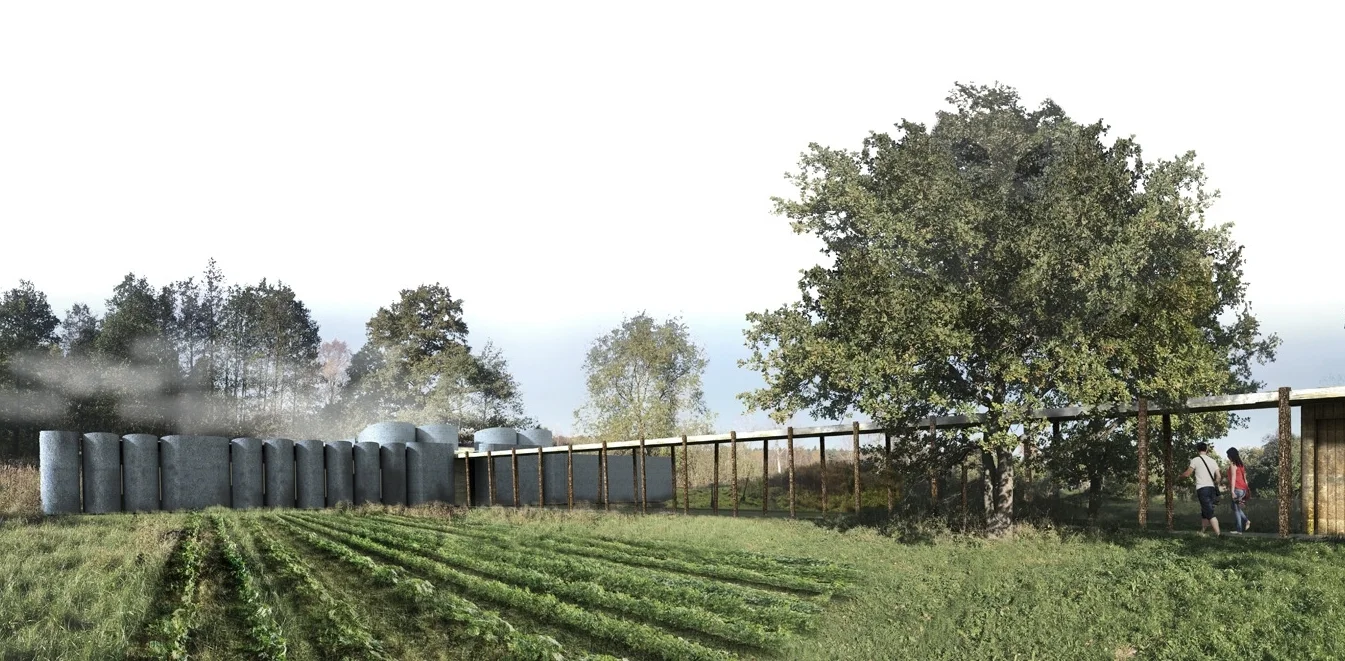
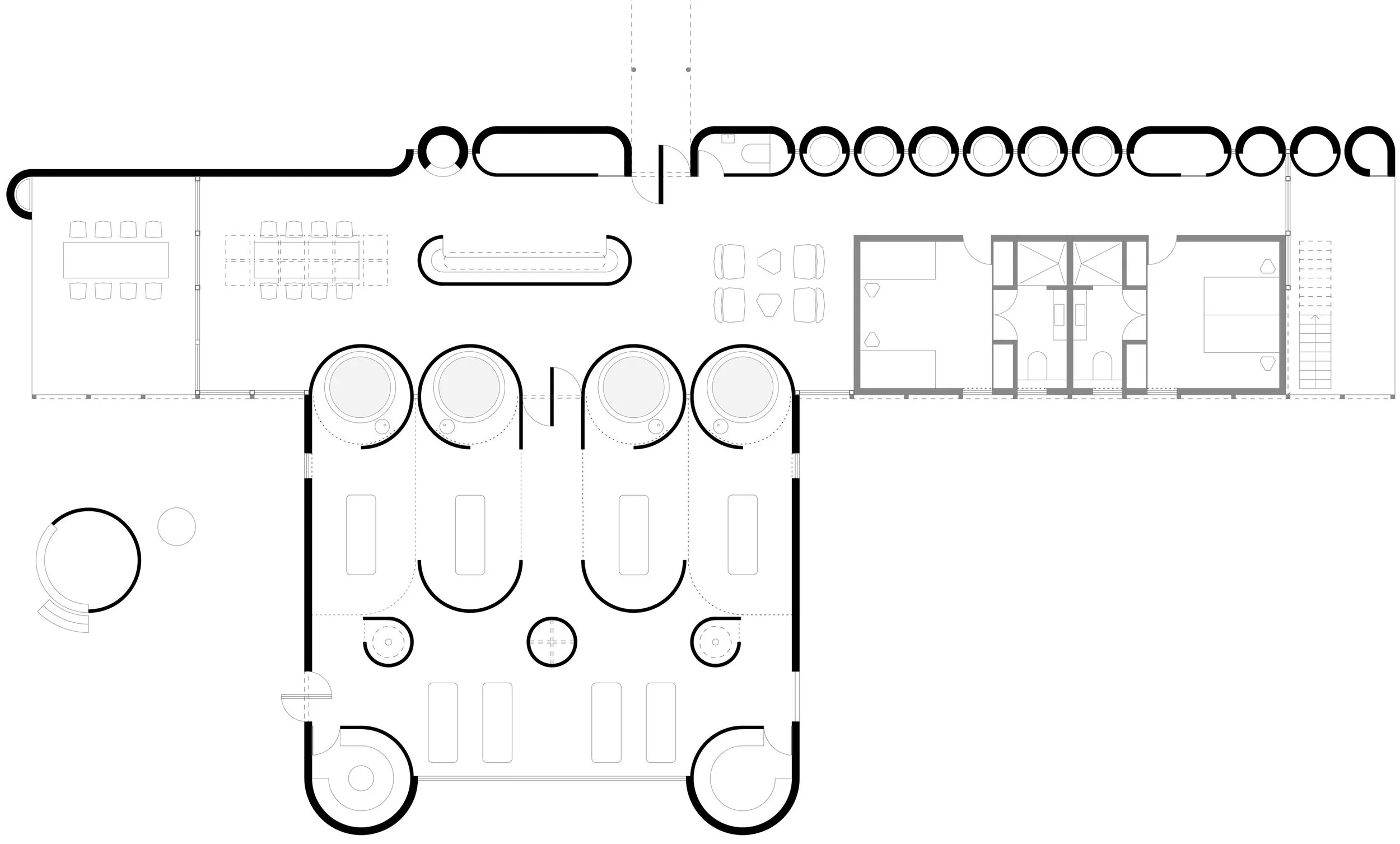
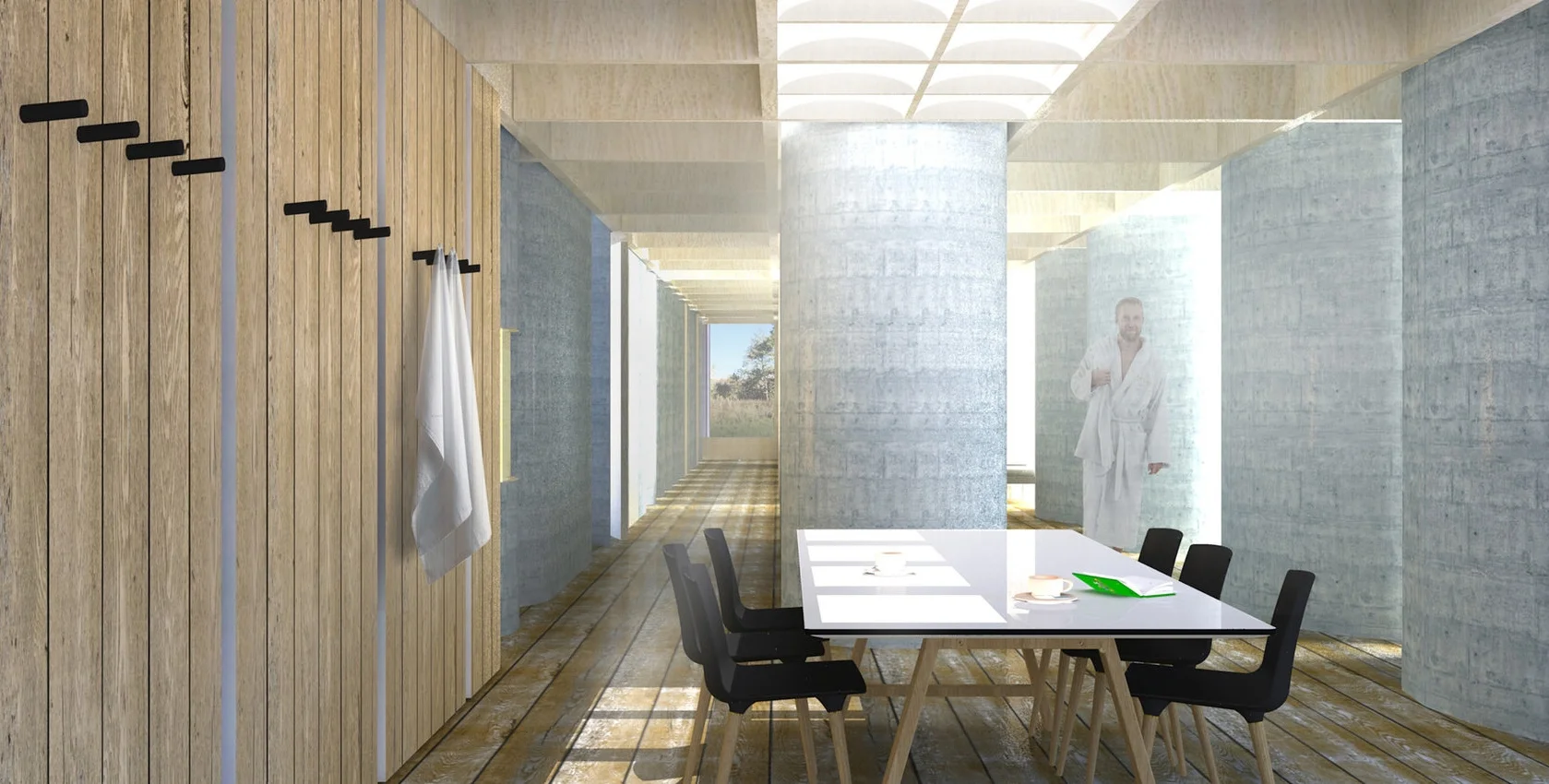
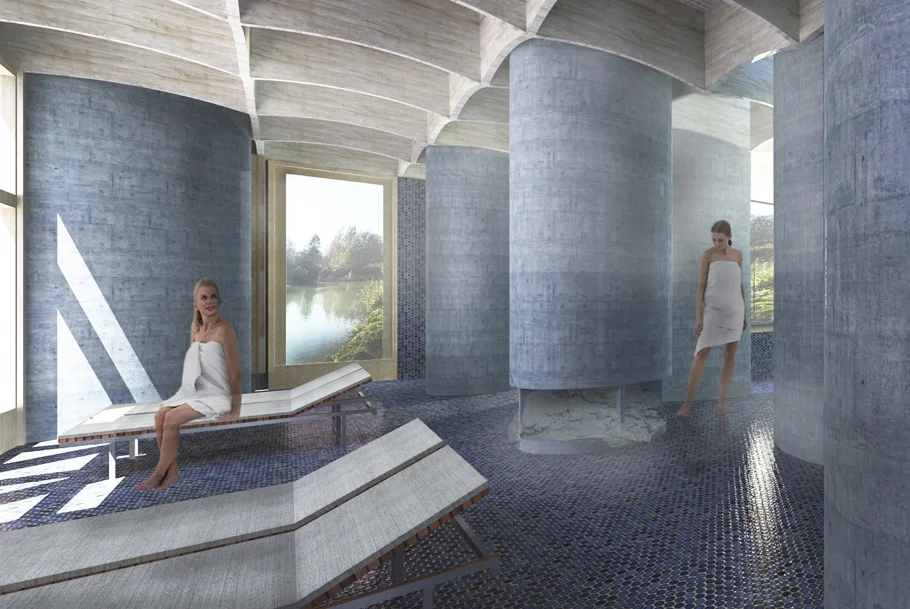
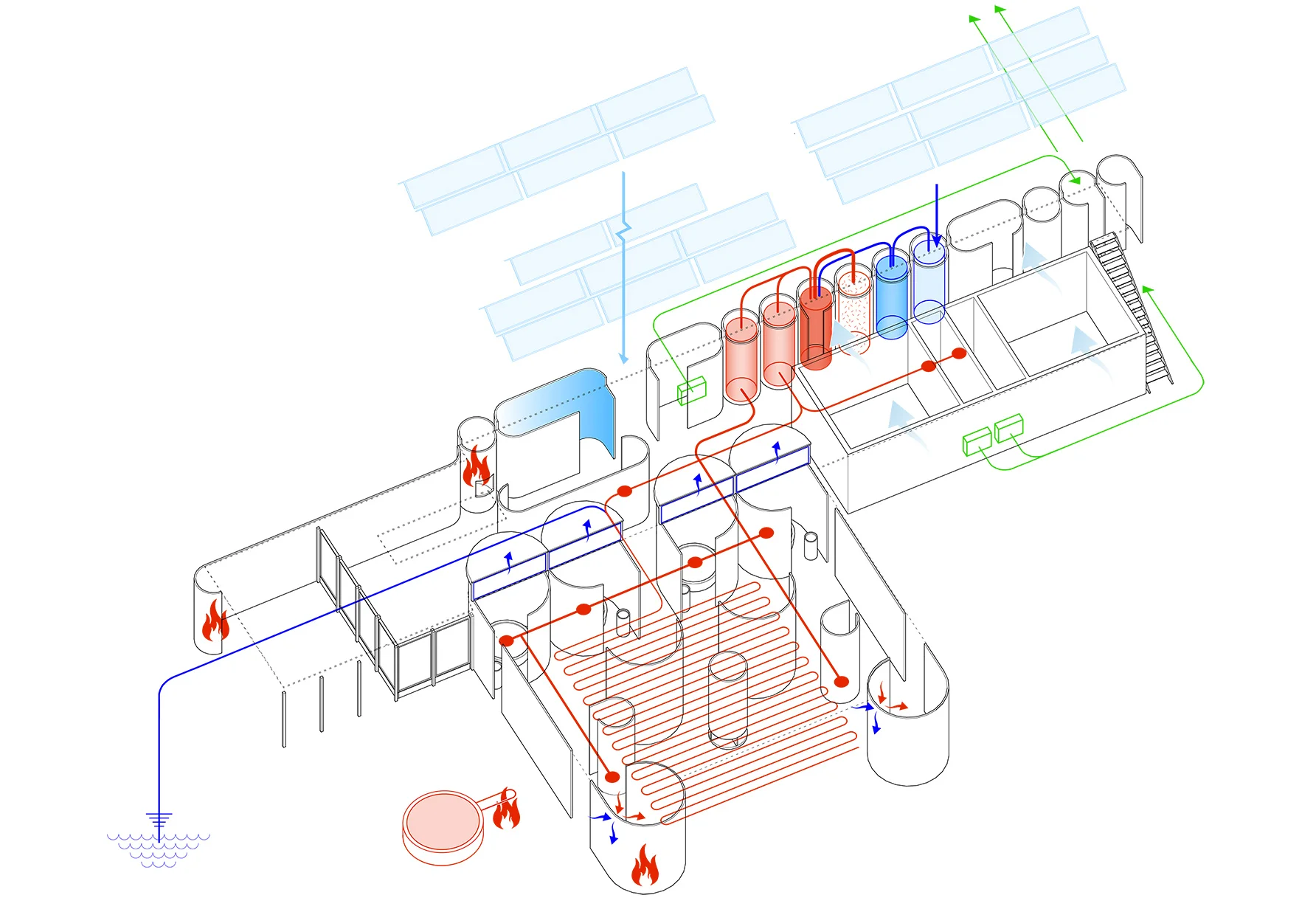
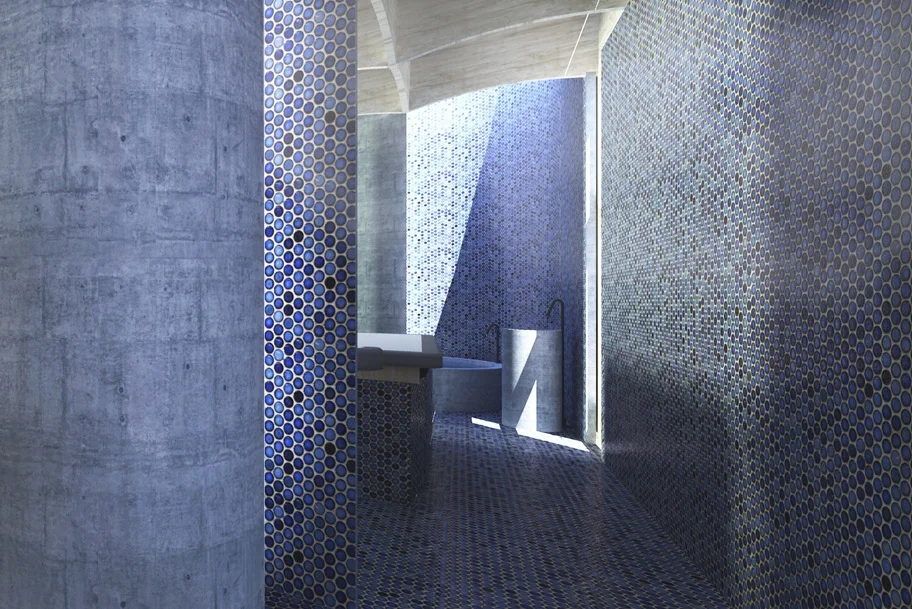
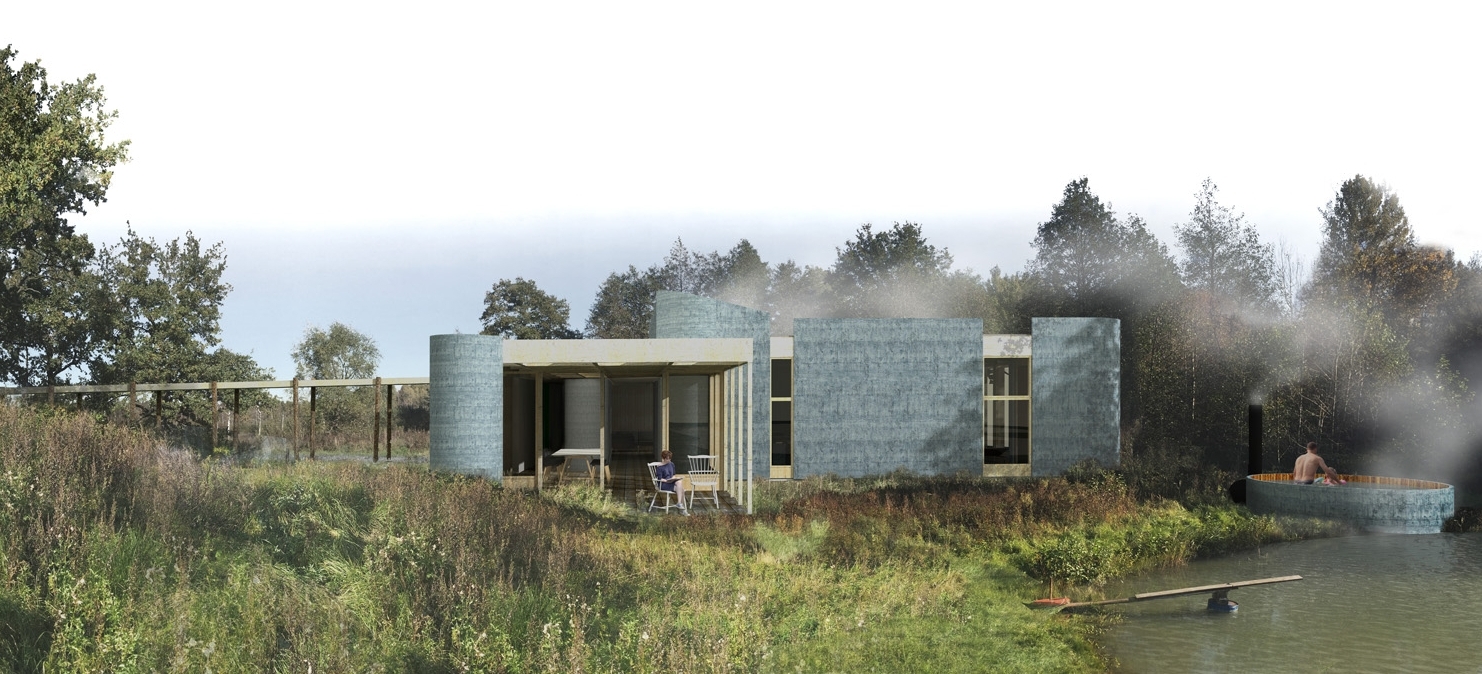
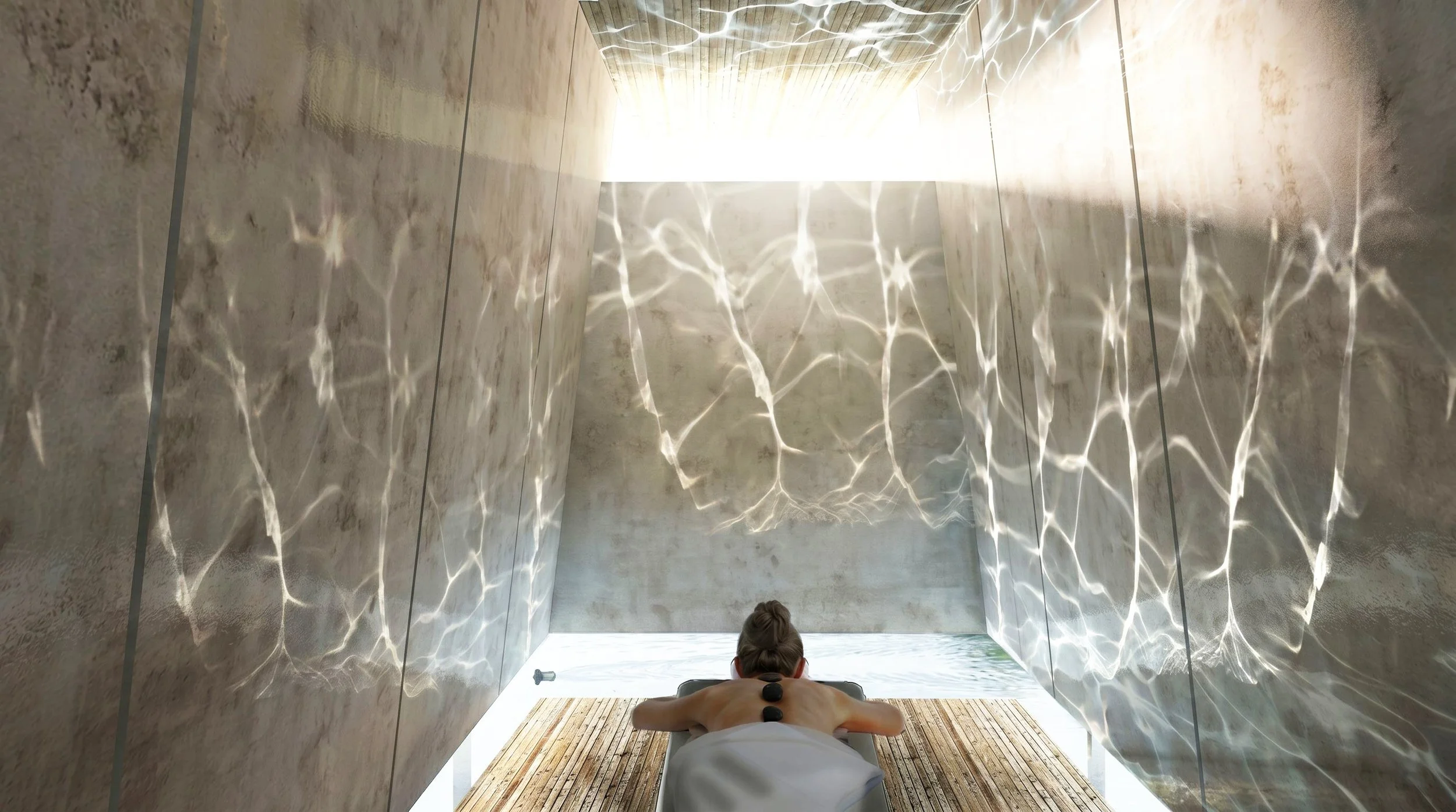
A Spa conceived as a series of vessels for cleansing and sustenance. Defining a strong enclosure to the spa’s exposed northern approach, these vessels develop into an internal arrangement of interlocking curved forms, describing a seamless series of spaces that open into one another and out into the landscape beyond.
ᗐ
The repetition of vessels define an elemental character within the pristine site, denoting a clear crafted identity for the spa. Each of these curved containers is used to house building resources or singular physical activities; bathing, massage, showering or sweating in the sauna. They fluidly connect private and collective spaces to enable the guests to enjoy the surrounding stillness of the forest as part of the ritualistic experience of the spa.
The use of simple pre-fabricated glass reinforced concrete vessels provides a simple lightweight structure that was easy to fabricate, assemble and maintain, within the isolated location of the spa. They house the resources that enable the spa to regulate itself and provide for self-sufficient and ecologically sustainable inhabitation.
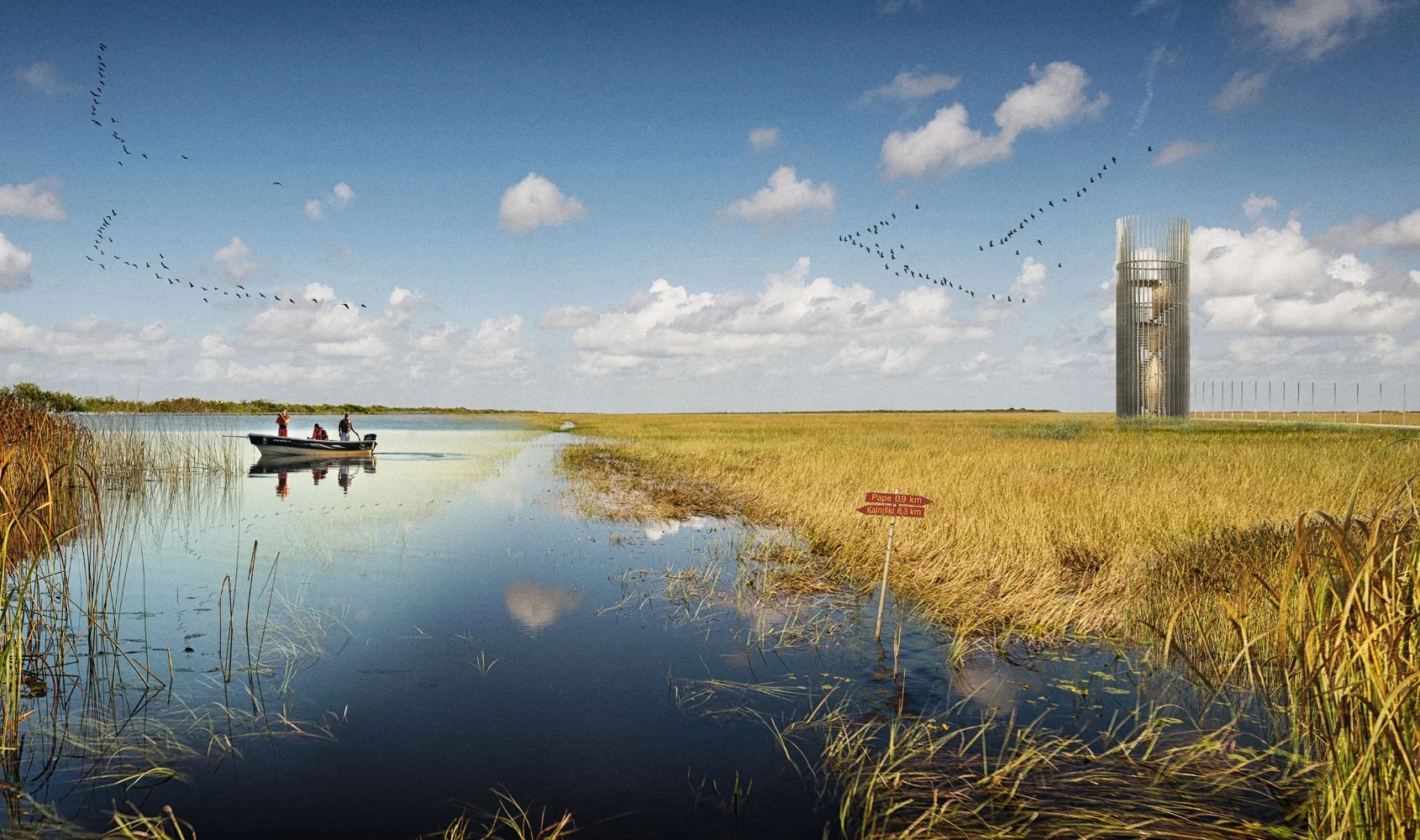
A new bird observation tower forms an elemental marker within expansive wetlands. A cylindrical perimeter of fine metal fins work reciprocally with a twisting timber stairway and circular viewing platforms that support and brace one another, operating seemingly fragile composite. Grounded in the surrounding reeds, the slender tower climbs to dissolve into the sky, and gently sway in the breeze beyond the bracing.
ᗐ
The DNA of the proposal is derived from the landscape of the site itself. Although clearly man-made, the tower performs in a naturalistic manner, gently swaying in the breeze along with the surrounding reed beds. Its slender shimmering steel blades create a minimal structure that both blends in and stands apart from the environment that it surveys. The blades of the tower taper as they rise, so that the form begins to dissolve towards the sky and feels progressively more open as visitors climb higher. A covered observation platform provides panoramic views across the lake, its low soffit sheltering and shading occupants. A small flight climbs further to an open upper viewing level. Above this level the incredibly slender steel blades are left free of bracing to sway in the wind.
The tower is at once a still, calm presence in the landscape but one with an embodied dynamism that creates an interplay between nature and artifice to conceal its occupants obliquely screened by the perimeter structure. Despite the extremely expansive views from within, the slender blades allow the tower to act as a veil, hiding its visitors in the reeds.
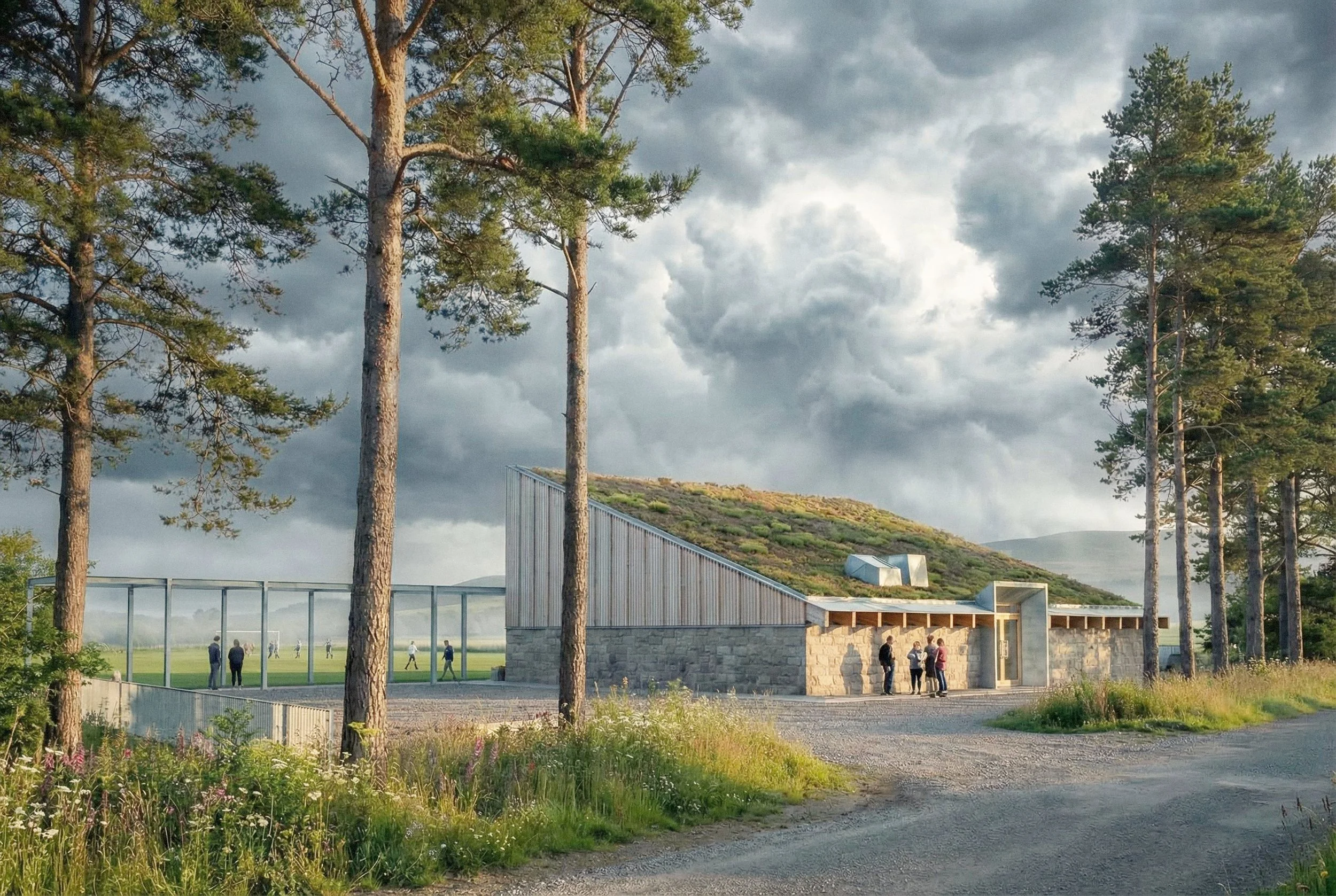
A Park Pavilion informed by a wider landscaping strategy for a small London park. Overlapping circles, derived from the existing Art Deco Garden, create distinct nodes for movement and connection, offering moments of pause as well as clear destinations. The pavilion’s linear form, which defines the park edge, is eroded by these circular interventions, producing a sculptural alcove—or even an apse—that serves as a focal point for park activities and the terminating vista of the main axis through the park.
ᗐ
Derived from the exiting landscaping of Kensington Memorial Garden, two circles are created to define both movement and destination.
To the north this opens up a key junction of primary routes allowing a generous node to pause and open up lines across the park.
The circle to the south becomes the central hub for key park activities and pushes into a linear block of programme, eroding the form to create a beautiful sculptural space and the termination of the main north/south axis through the park. The simple, compact block defines an edge to a maintenance yard and houses extensive park facilities including café, park office and changing facilities.
The simple monopitched form takes advantage of positioning and orientation to optimise secure natural lighting, biodiverse green roof planting, whilst being at the ideal pitch for PV panels. Its extremely compact form and the short cross spans promote modular, panel based engineering solutions including SIPs and CLT, allowing a lightweight, thermal and cost efficient building with low embodied energy with a short construction programme.
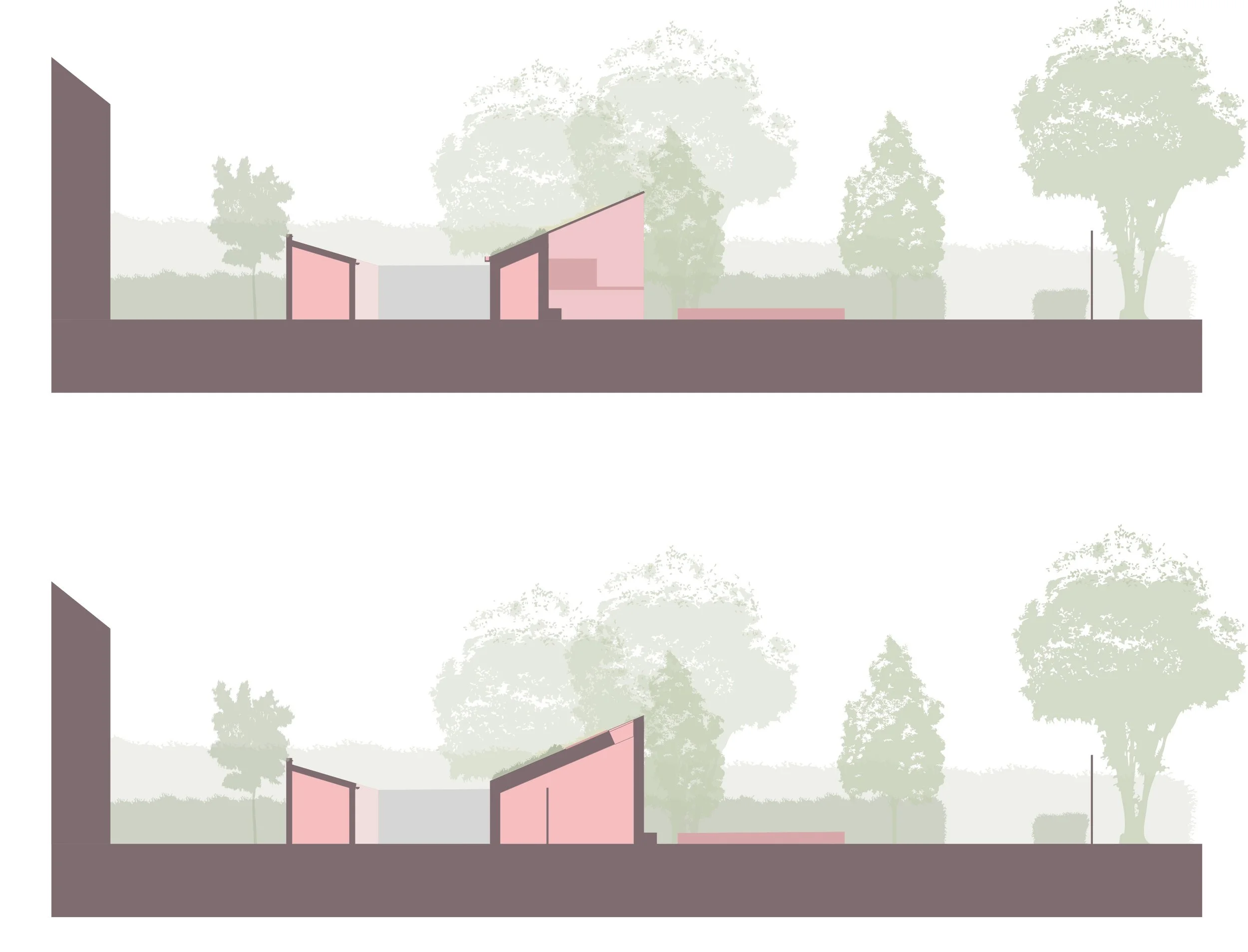
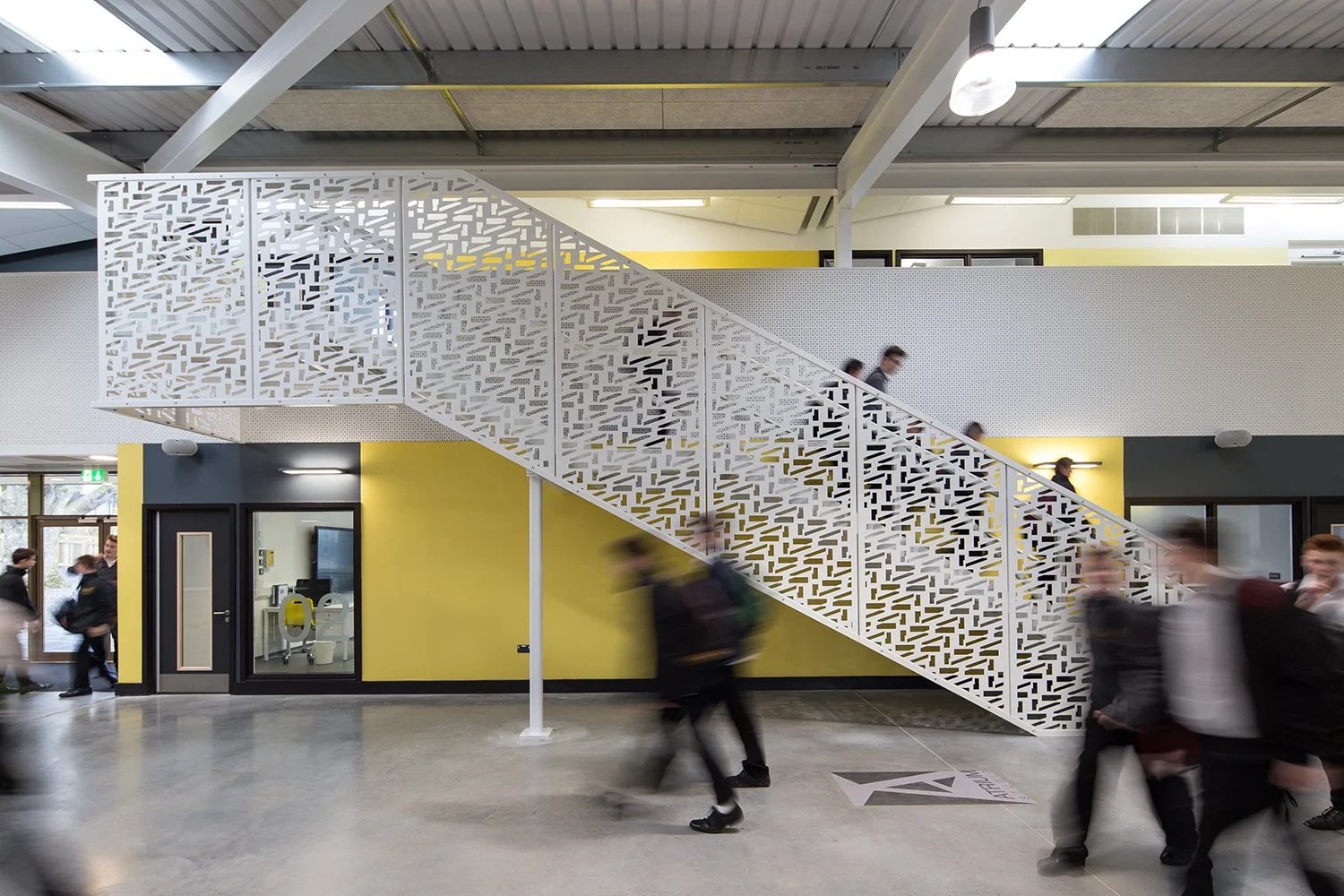
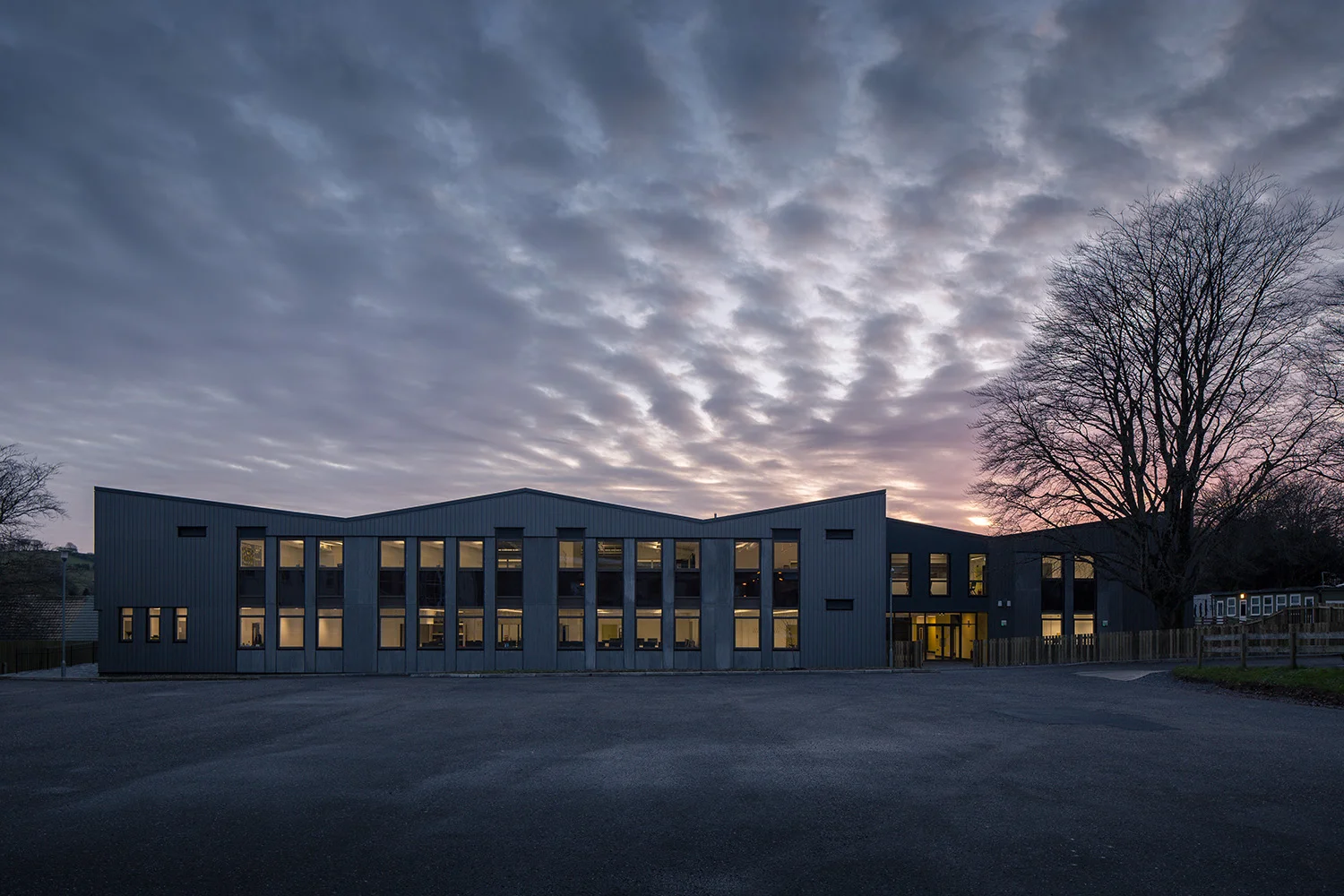
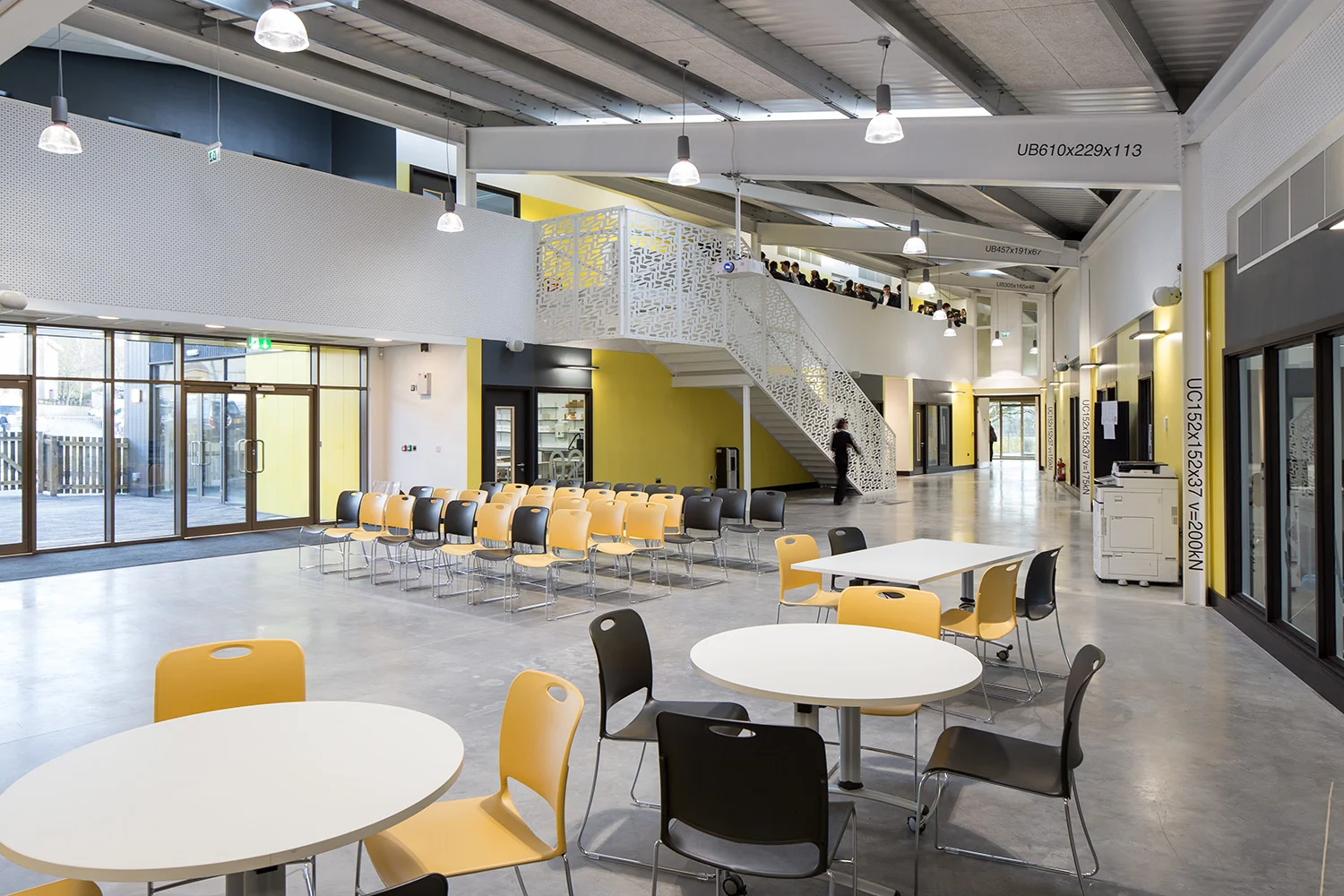
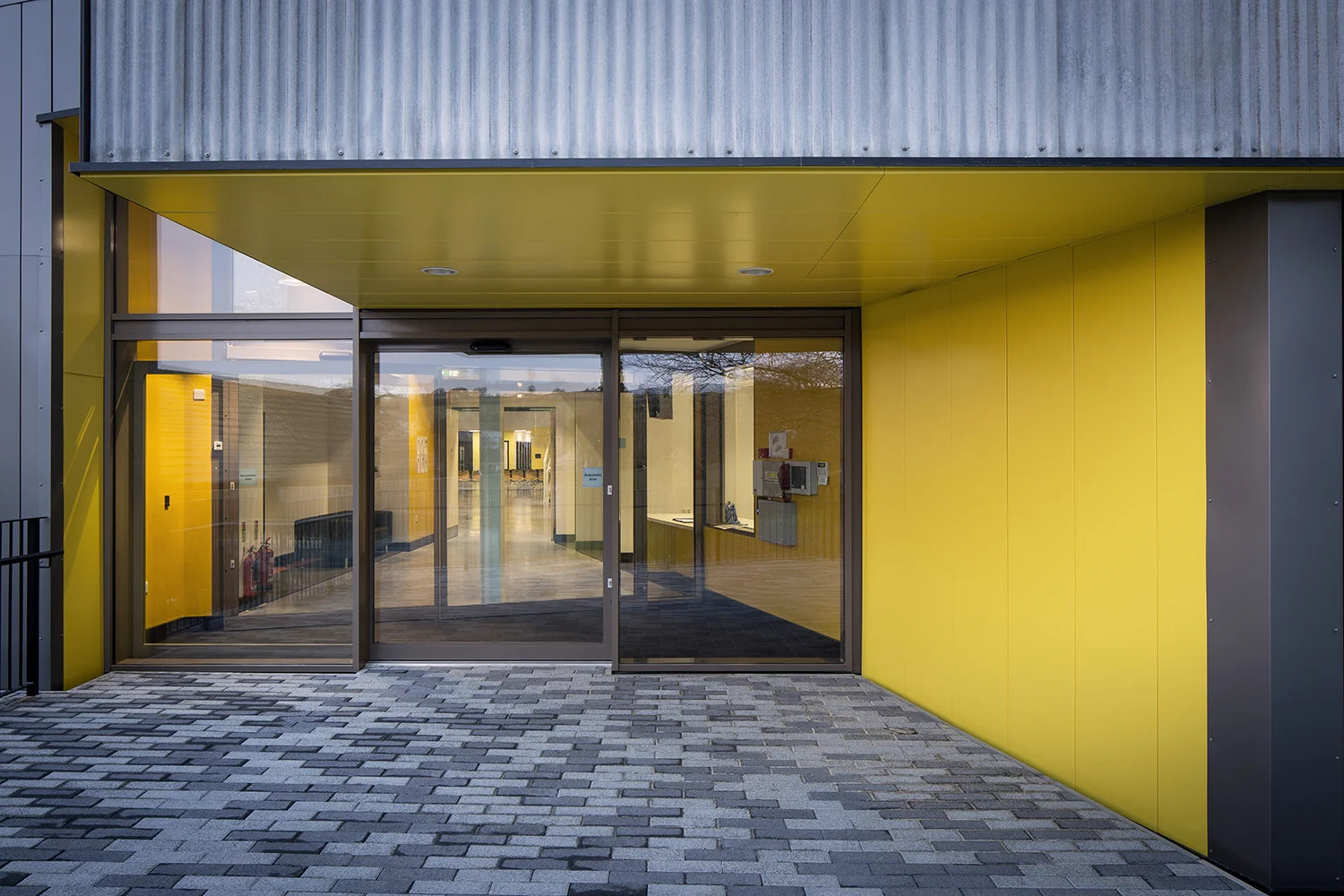
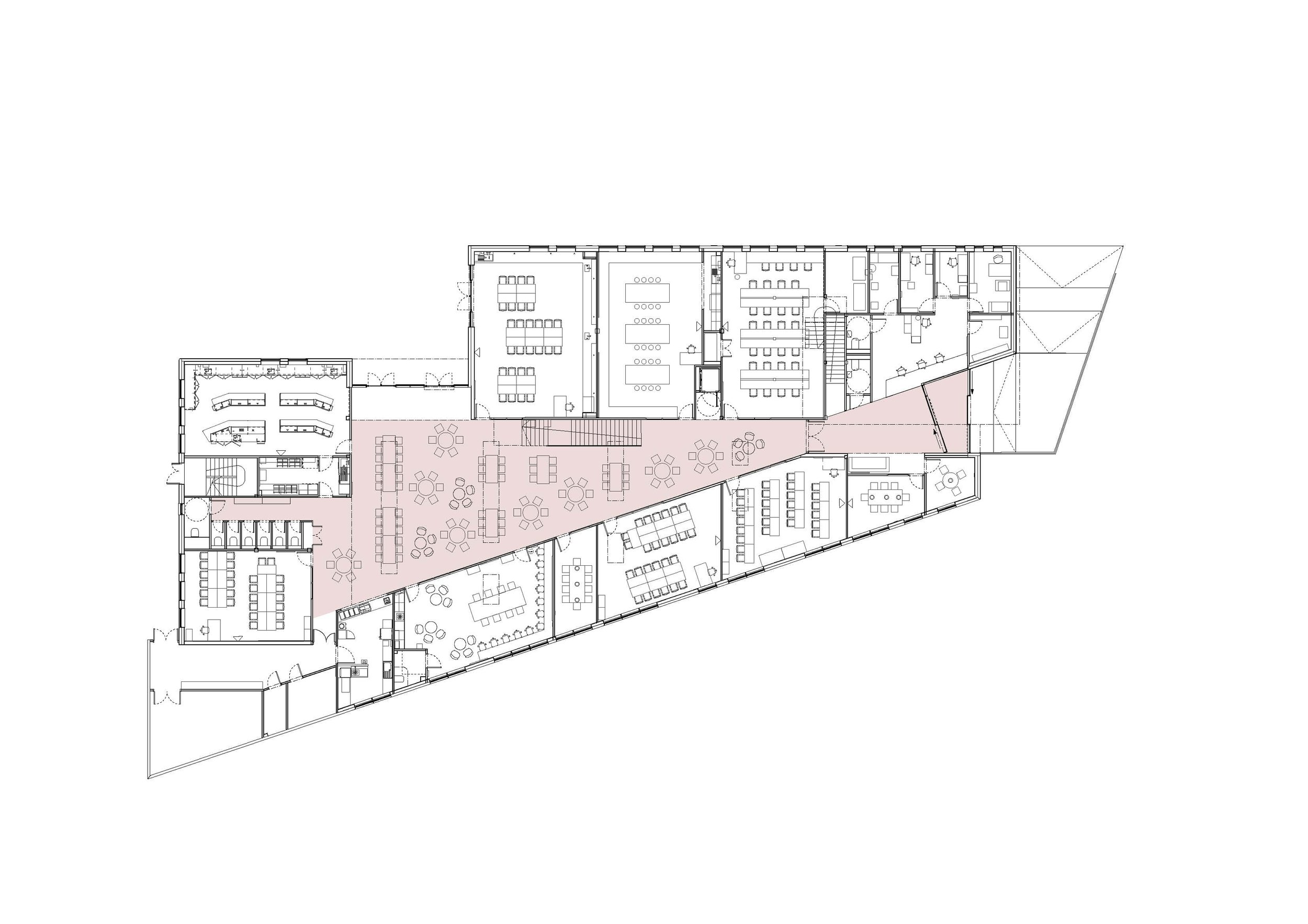
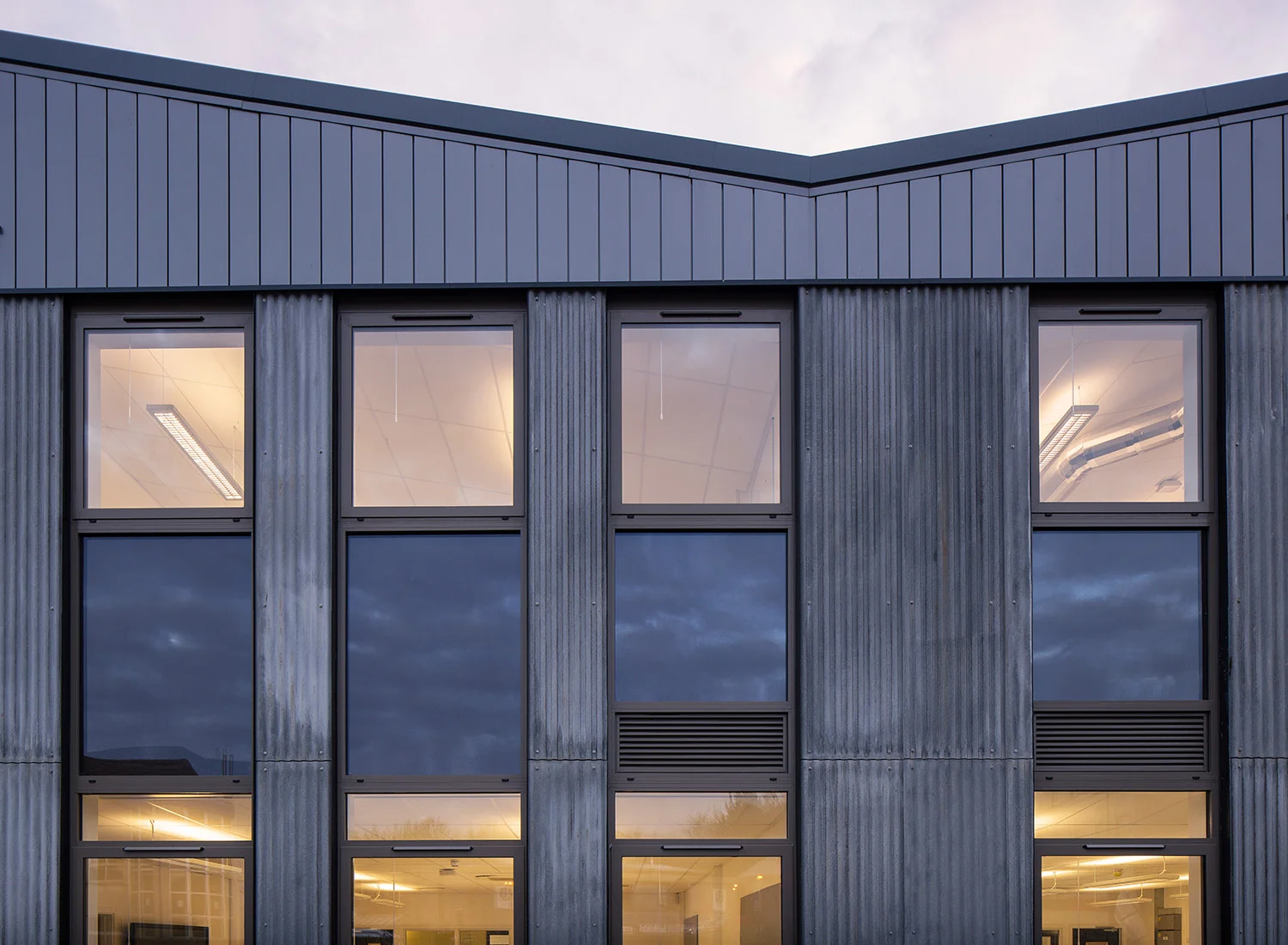
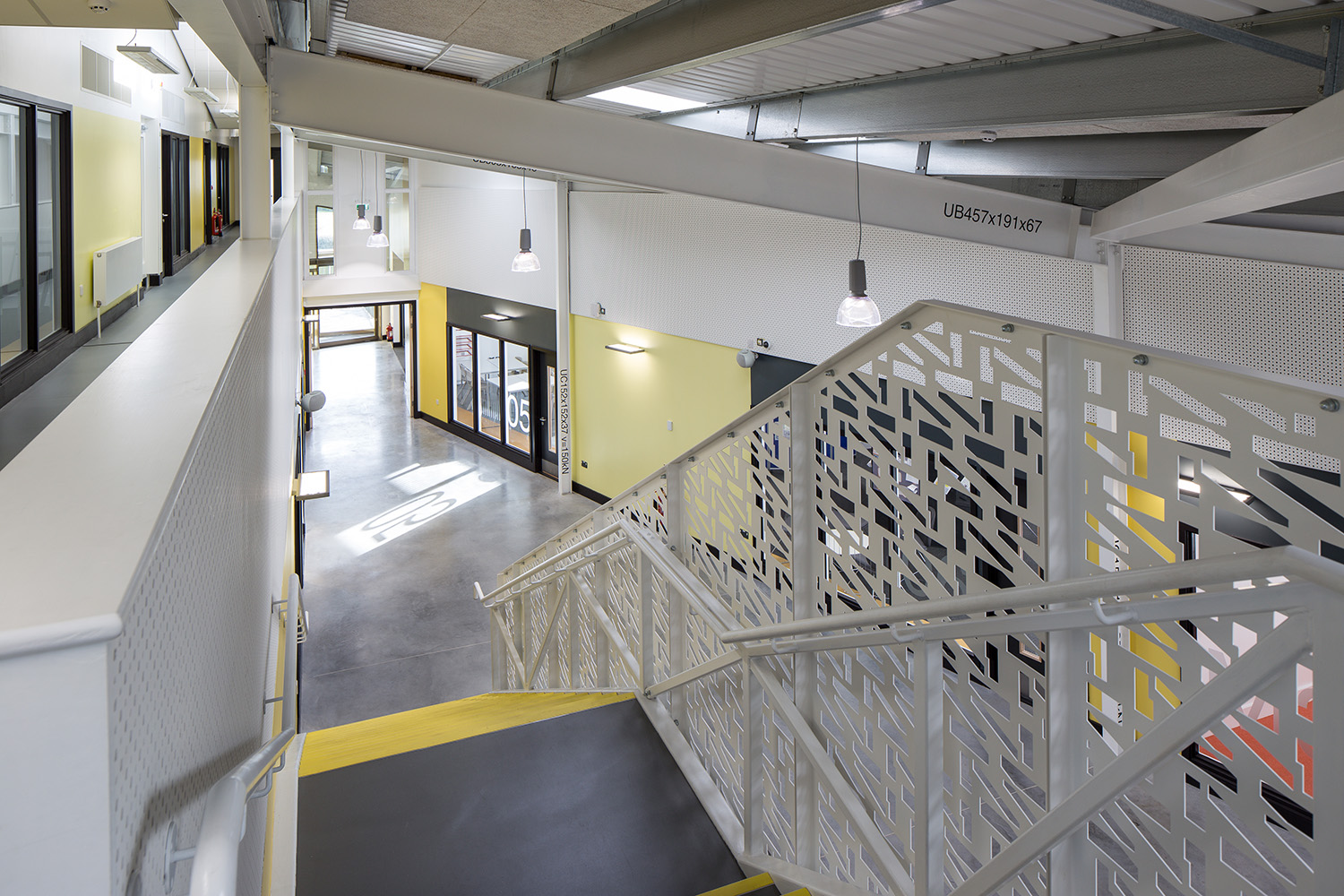
A specialist construction school situated within Dartmoor National Park. Its form of breaks down the school’s volume within this sensitive, restricted site, while defining spaces and providing rhythm to its structure from both inside and out. Flexible spaces feed off a large naturally lit central space, bringing formal and informal programme together.
ᗐ
The building’s plan and roof forms are a direct response to its tight site, setting it back from the surrounding trees and gardens, and pitching to minimise its volume. Built to an extremely tight budget, its main entrance is sculpted and cantilevered to create a dynamic composition at the narrowest point of the site.
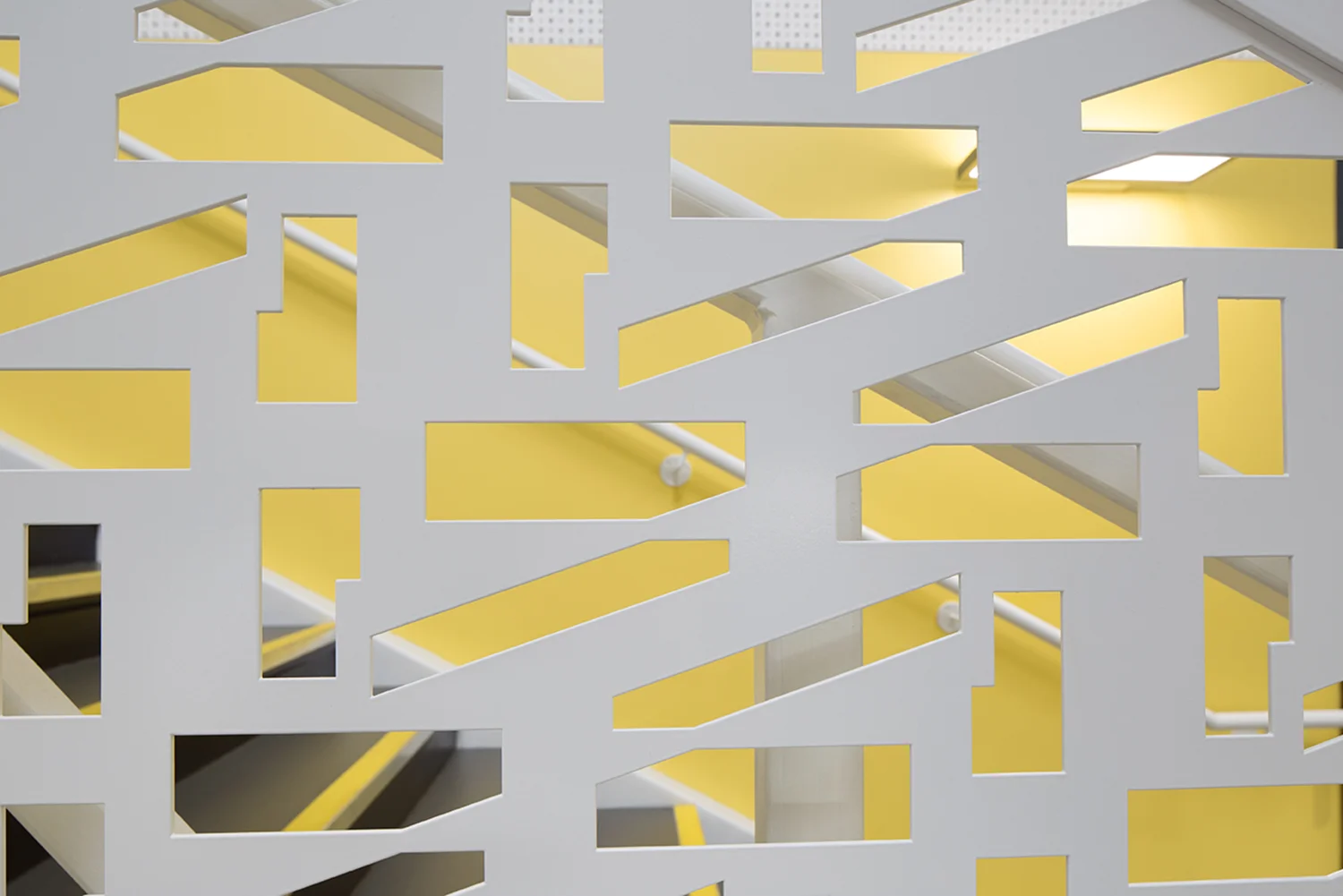
Mechanical systems and structure are exposed, with sizes and design loading identified graphically to integrate with the school’s specialism in construction. This industrial language (the plan of the school forms the pattern to its stair balustrade) is balanced by splashes of bright colour and generous daylighting
A simple tapered volume distinguishes this new visitor centre as a clear linear marker within the expansive, horizontal landscape of the Broads wetlands. The elongated form maximises visual and physical connection to the surrounding environment, sited between the water and the drained landscape, and creates a shared arrival and orientation point that relates directly to existing linear routes and neighbouring buildings.
ᗐ
Inverting historic hall-house typologies, a mass of supporting functions (the hearth of the building) sits centrally defining spatially specific zones to each side. This accommodates flexibility for the various activities of the centre, allowing for simultaneous or singular large events and the ability to operate with a minimal staff presence.
REEDS Taking advantage to the abundant local material and historic crafts, the roof is formed from a large, highly insulated thatch. Its shape leading the eye both up to big skies and open views and to focus back down to the ground and water.
LATTICE STRUCTURE Small, easily worked and transported elements combine together to form a structural lattice, seeming to support the roof ethereally as if woven from reeds or the sails of a windmill.
PLINTH The floor, cores and furniture are cast in rammed black fly-ash concrete, as if ‘carved’ from the peat, alluding to the history of the broads. External facing blocks are stacked like traditional sods for drying, allowing a tempered airflow through them. The plinth floor is set just above projected flood levels and is highly durable/water resistant.
1. Entrance 2. WC’s, storage & informal office 3. Kitchen & storage 4. Exhibition area 5. Education 6. Café 7. Terrace 8. Event space
9. Forecourt 10. Rental / Laundry 11. Bikes / Kayaks / Waste 12. 24h WC’s / Showers
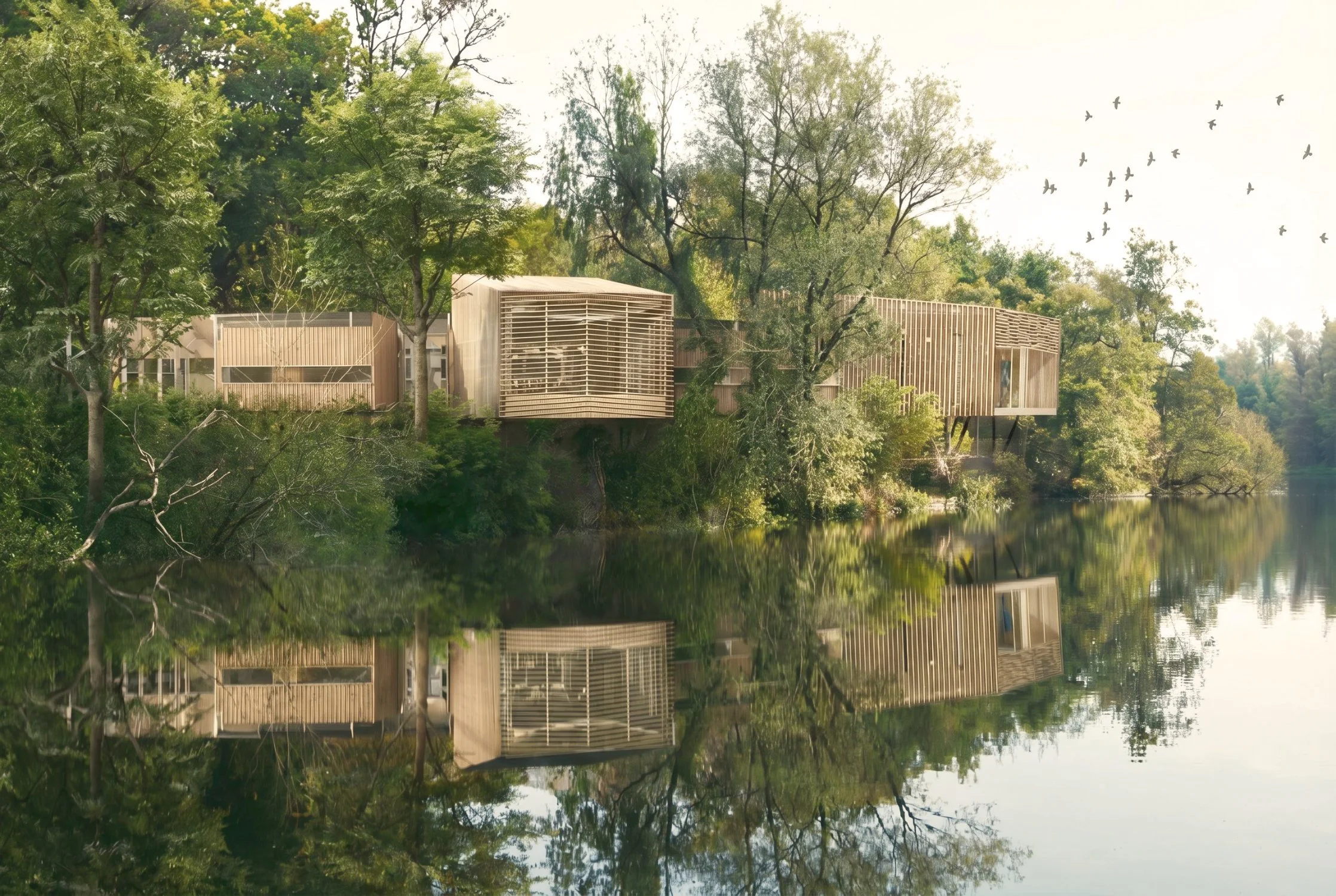
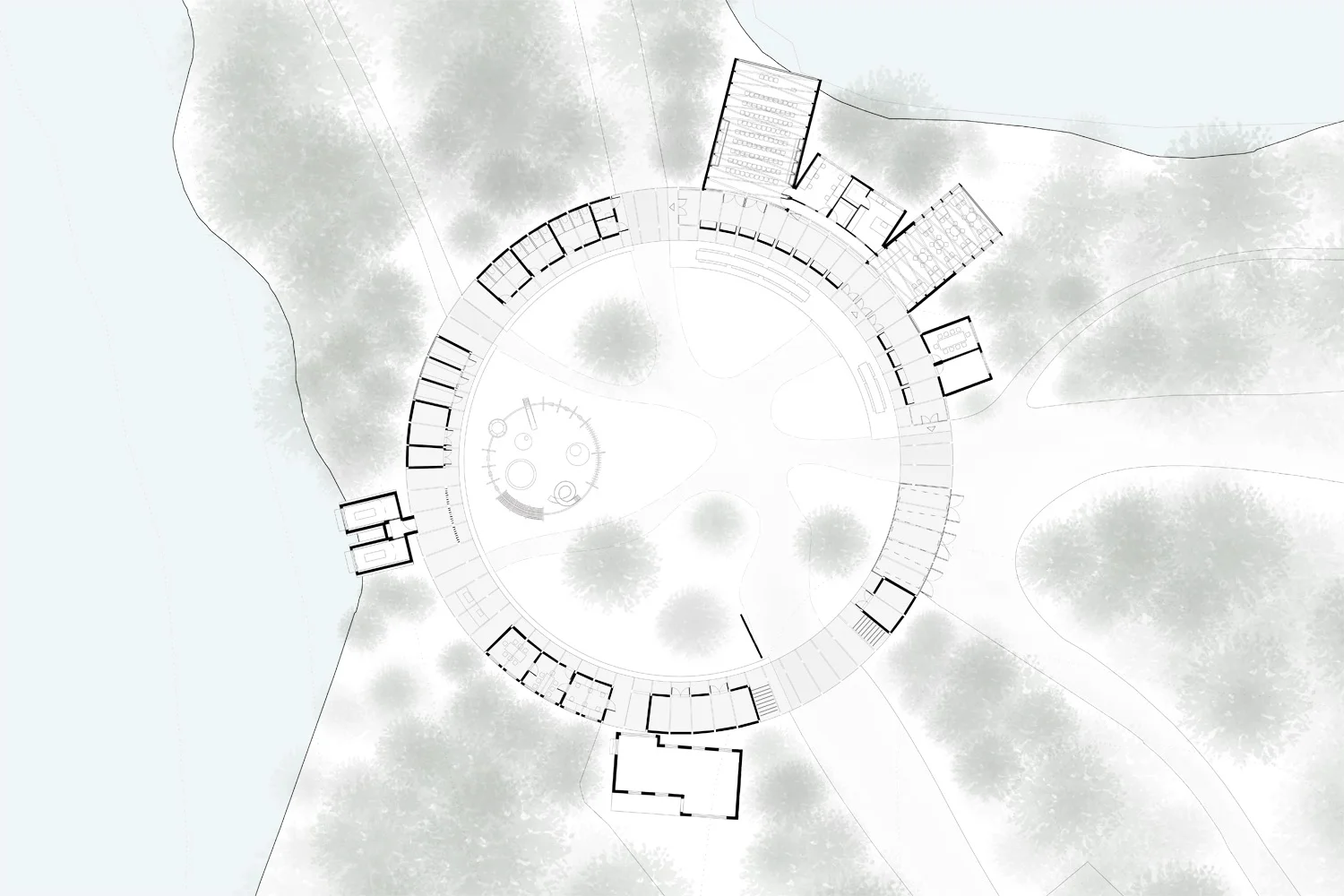
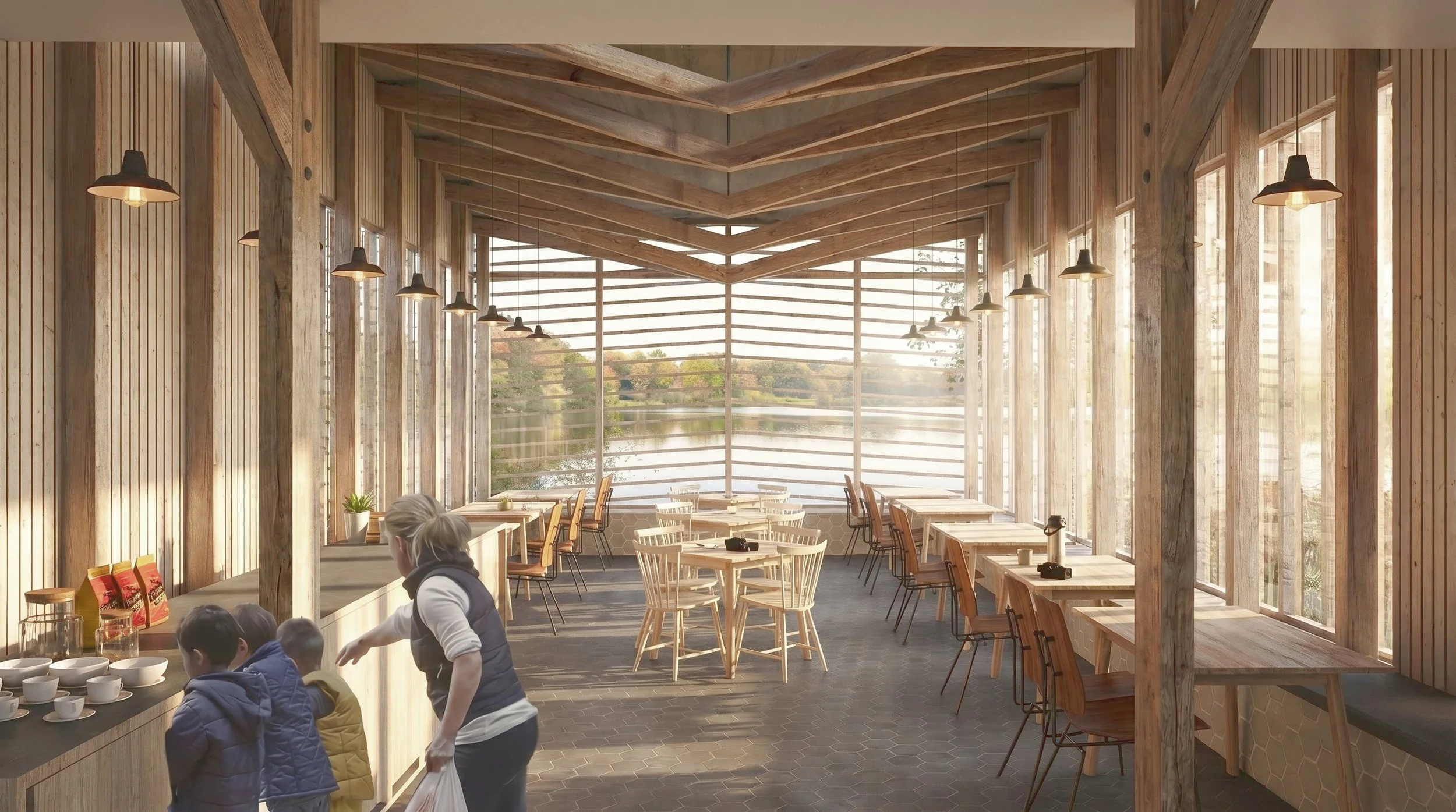
A new Nature and Wellbeing Centre at the heart of the Sevenoaks Wildlife Reserve forms a circular clearing in the surrounding woodland that provides a gathering and orientation point for visitors. It’s simple continual geometry links and unifies all aspects of the centre in a single collective gesture that maximises connections through the trees to its spectacular lakeside setting.
ᗐ
The circular form defines an arrival and orientation point from multiple directions, by local rail, car or long-distance footpath, connecting all the centre’s operations under one roof such that each component can operate individually or as part of the whole, with a continuous, mutable exhibition route, part internal, part external, threaded around the loop. It is a consolidated node from which all the wildlife paths radiate and loop – a true centre for the reserve.
A contemporary addition to a Grade-I listed Anglo-Saxon church. The new structure aims to reimagine and reinvigorate the church’s community function at the heart of the local village.
Carefully positioned alongside the listed building the new spaces respect the existing fabric, standing off it to form an enclosed cloister-like space between. The building provides modern facilities within an accessible and flexible series of communal spaces for gathering, meeting and sharing, as well as a second entrance.
ᗐ
Curved infills, derived from gothic vaulting, brace a external frame supporting composite roof cassettes, allowing an extremely lightweight structure that can be installed, touching only minimally touches on the building and archeologically protected ground.
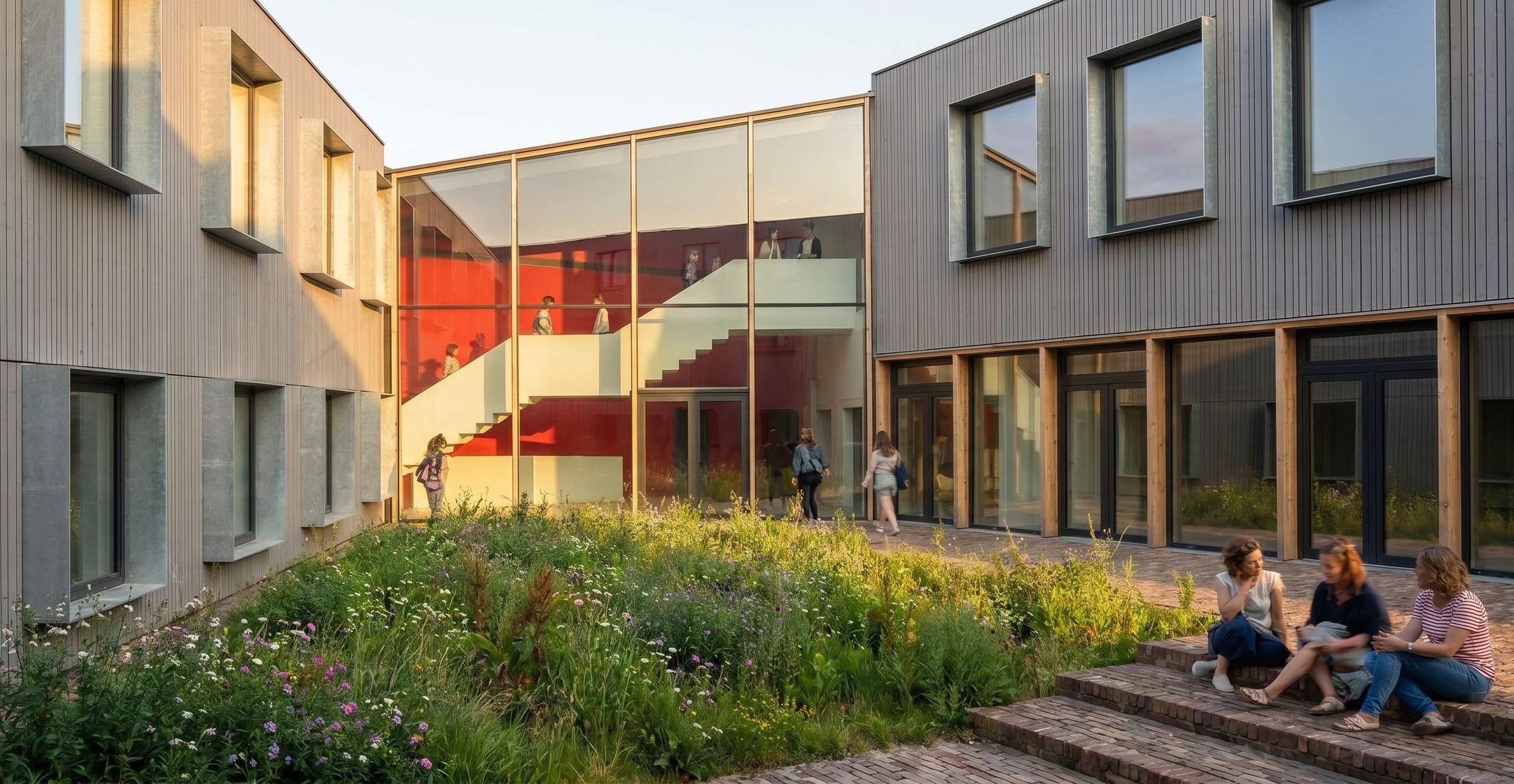
A reimagining of a farmyard for a rural events centre and accommodation defining a built cluster within a pristine landscape. It seeks to bring new and sustainable growth to an historic Devon farm. It includes a 16 room guest house, cookery school and event spaces, focused on kitchens and food production at its heart.
ᗐ
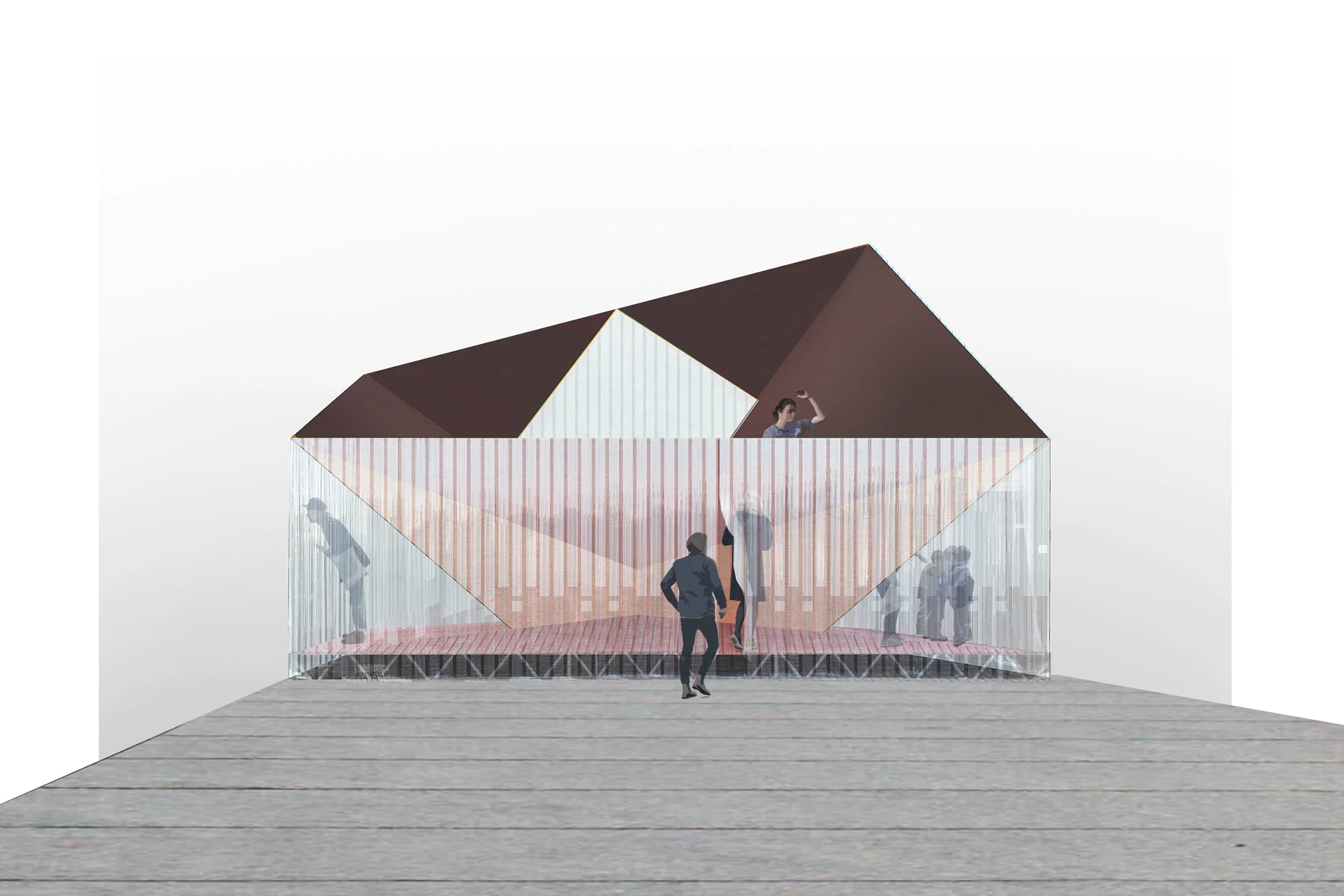
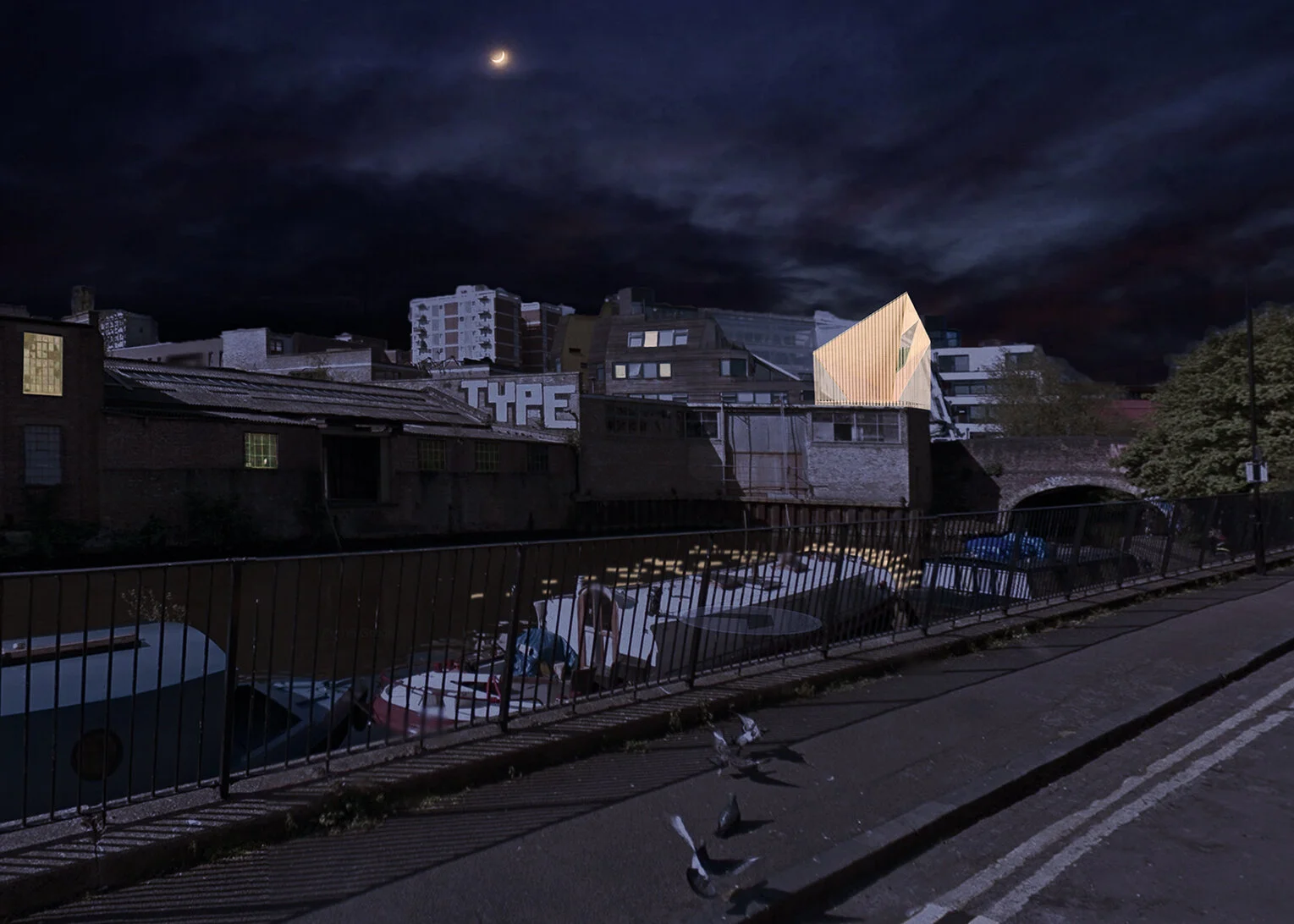
Rather than warning people away, this urban lighthouse instead welcomes them in and stands as a striking marker conceived as a secular space meant to draw people together, encourage dialogue, conversation, and dreaming.
Derived from their traditional role of both marking danger and signaling isolation while simultaneously guiding sailors toward the communal safety of sheltered harbors, it creates a series of complex, conflicting spatial conditions that look both out and in, framing a sequence of intermediate spaces between the city and the sky.
ᗐ
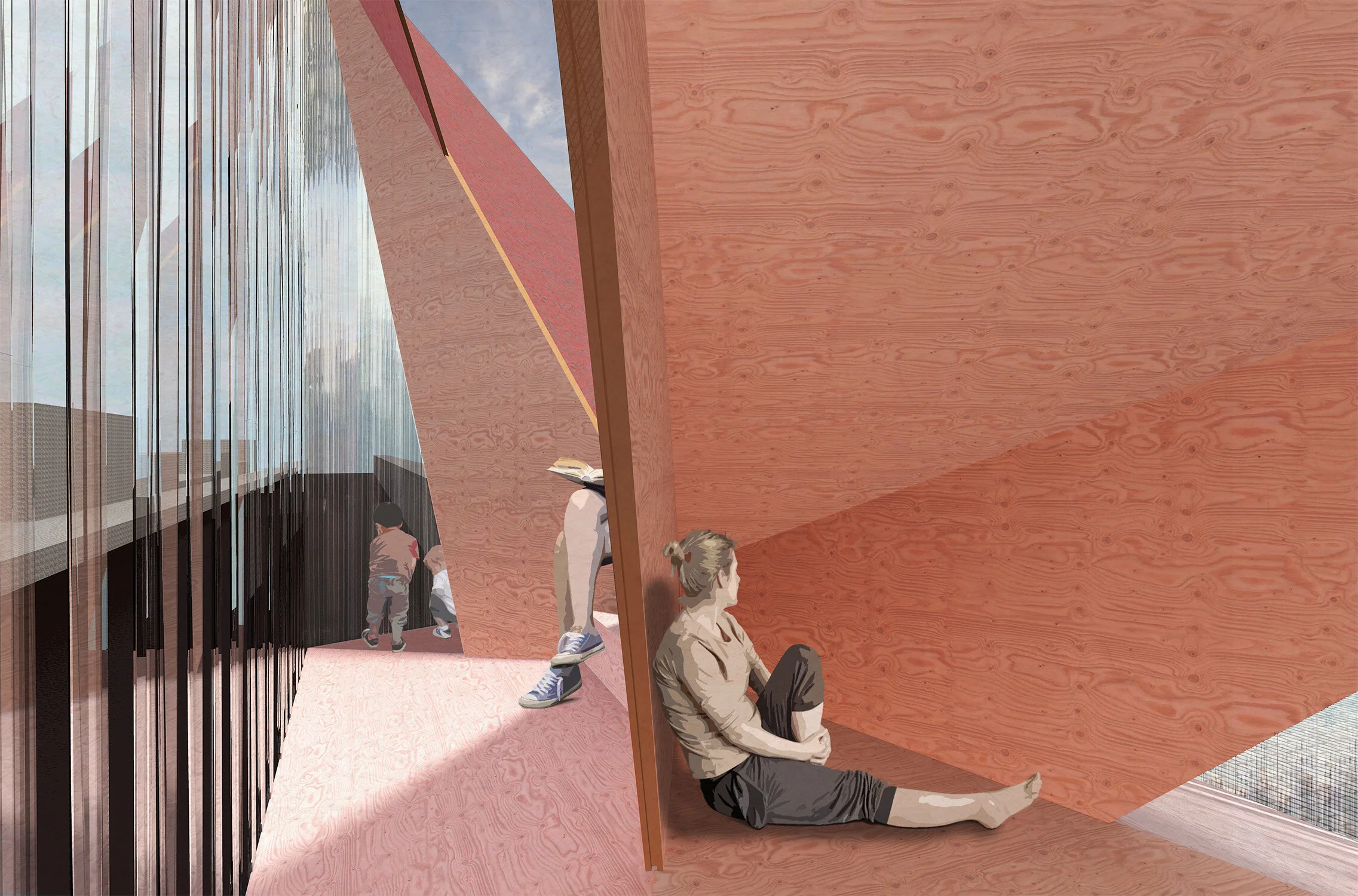
Inclined floor planes unsettle and embrace visitors, leaning out to the seemingly fragile edges of the structure. This instability aims to promote a heightened engagement with its spaces that is entirely open, free and non-prescriptive.
It is a place to clamber into, explore, curl up and relax or to look out, broadcast from or observe the changing city, working at both a human and an urban scale. The lens like nature of its transparent curtain wall acts as an illuminated surface at night, echoing the elevated torch flames from the first lighthouses.
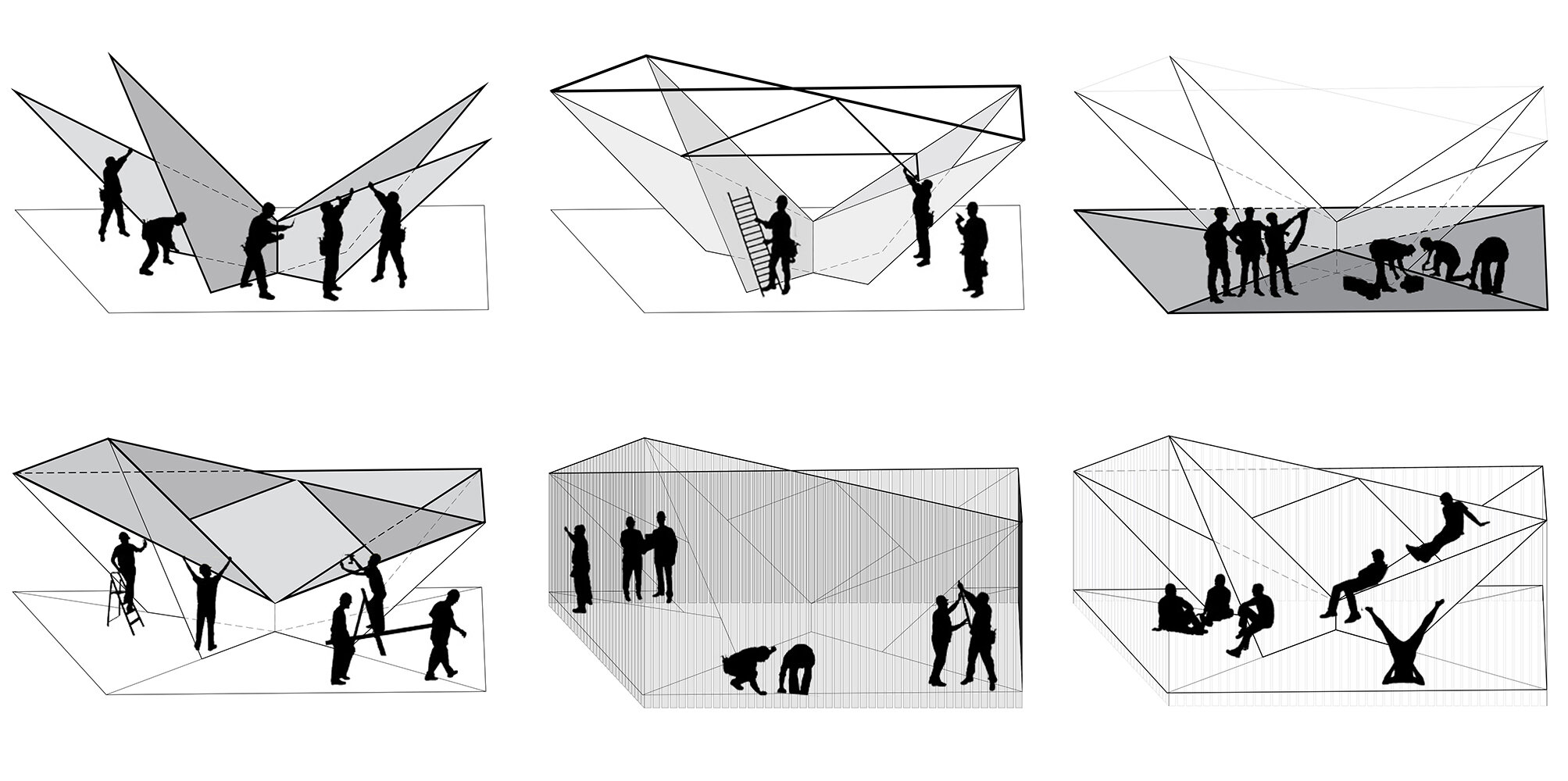
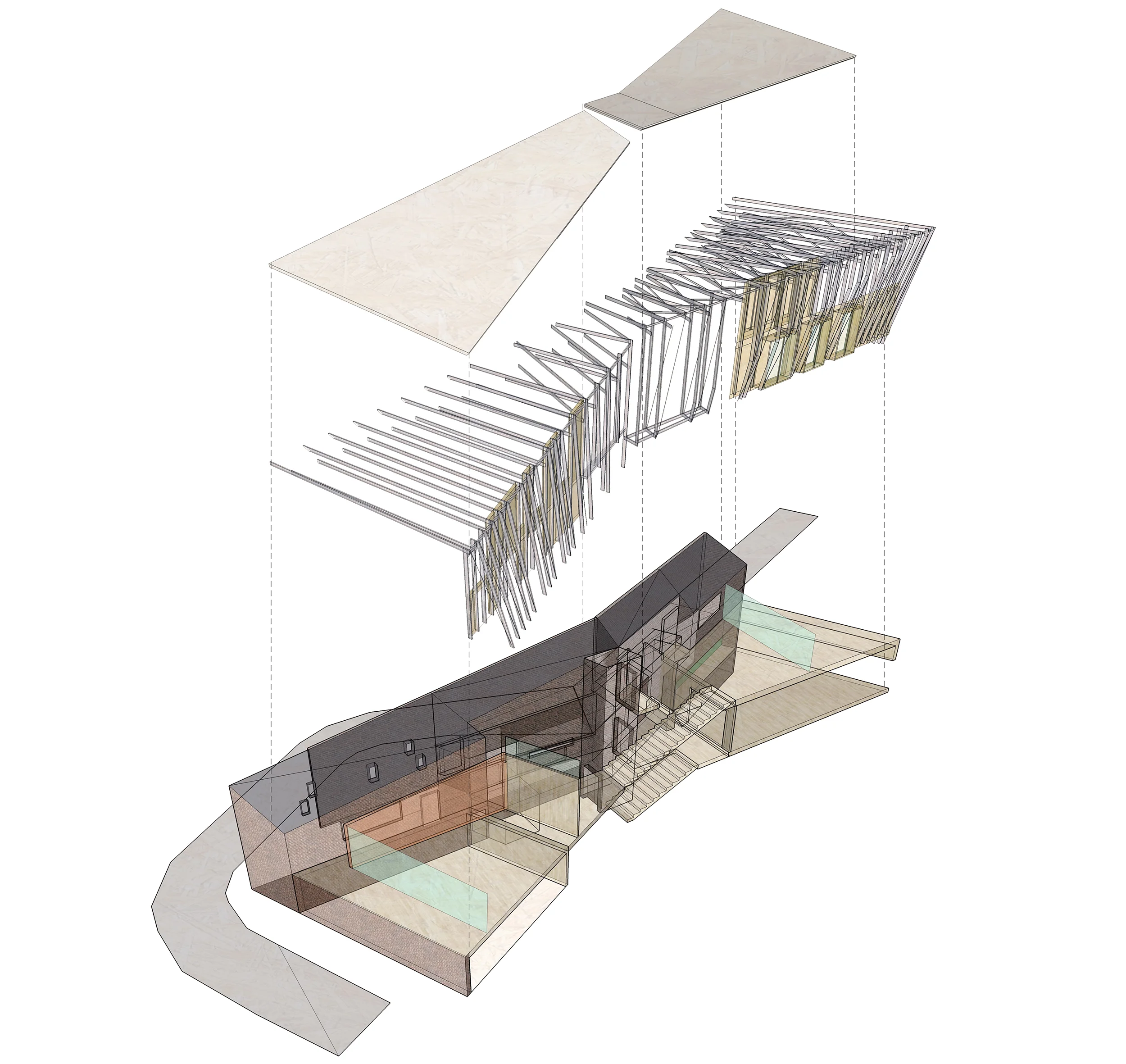
I Inverted timber A-frames provide a simple robust framework. II Ring cables brace the structure against itself. III The angled planes of the sloped floor conceal the support structure. IV A stressed plywood skin forms the inverted roof of the structure. V A transparent curtain wall of PVC strips placed in tension holds the structure in place. VI The completed structure offers a place to encourage dialogue, conversation and daydreaming.
A visitor’s centre for a central London nature reserve sits between a post-industrial past and its present day guise as an urban arcadia. The centre’s north elevation forms an inhabited masonry wall, created from reclaimed bricks from the Kings Cross redevelopment area, and is set against a lightweight, plant covered, exposed timber structure that forms its south elevation.
ᗐ
The form of the centre embraces the park as the landscape rises to meet with the building. The plan inflects to create a sheltered external space that acts as a transitional zone between the centre and the park. The building’s circulation is compressed into a tight vertical slot at the centre of the plan, linking its two diametric façades, various levels, activities and functions.
As an act of participation, architecture has the capacity to fundamentally affect the management of space and the politics inherent in its creation. For architecture to retain any social relevance, it must become a spatial generator for processes of social interaction and integration.
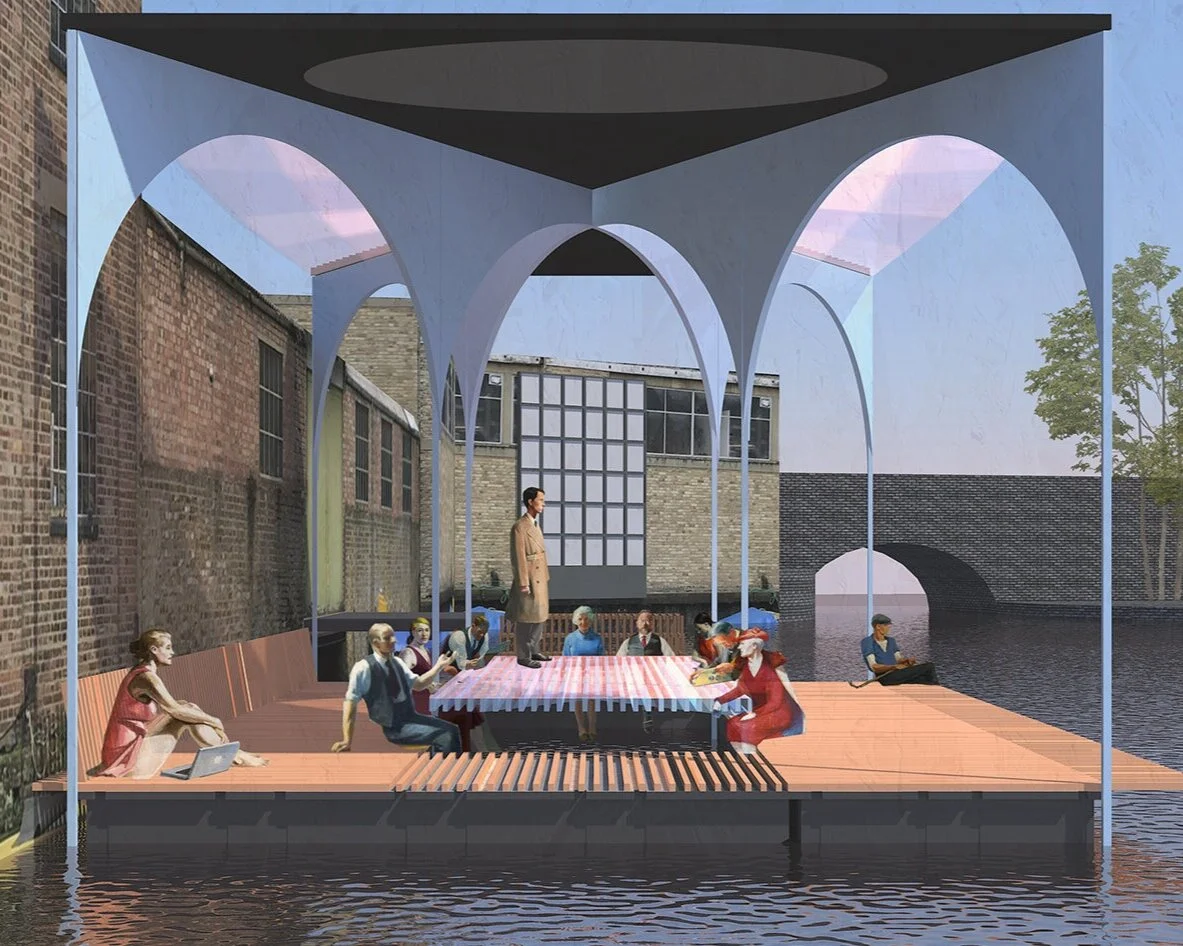
Here it is taken back to a single element — a table, enlarged and celebrated as an object for sharing — food, ideas, stories and performances.
ᗐ
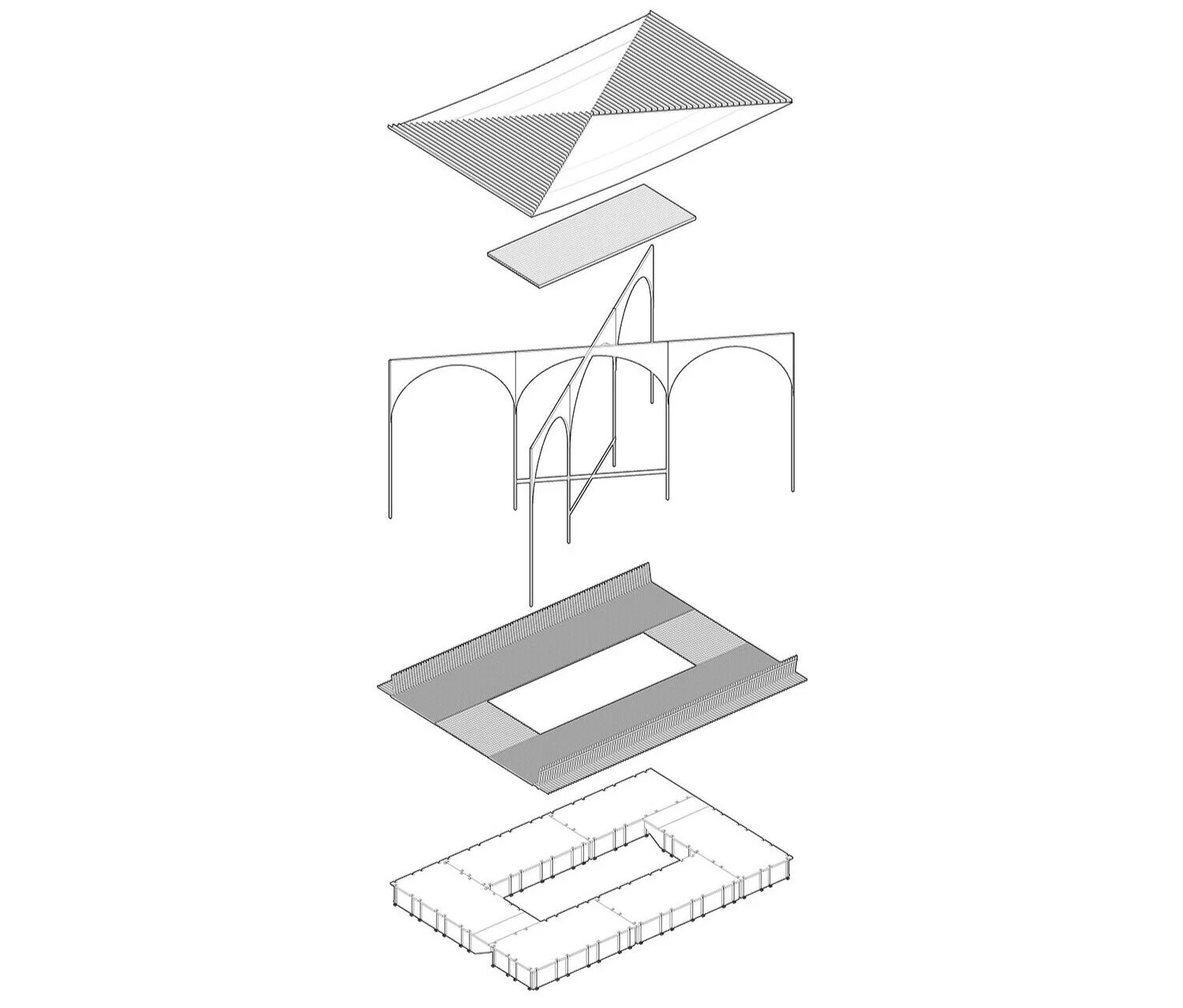
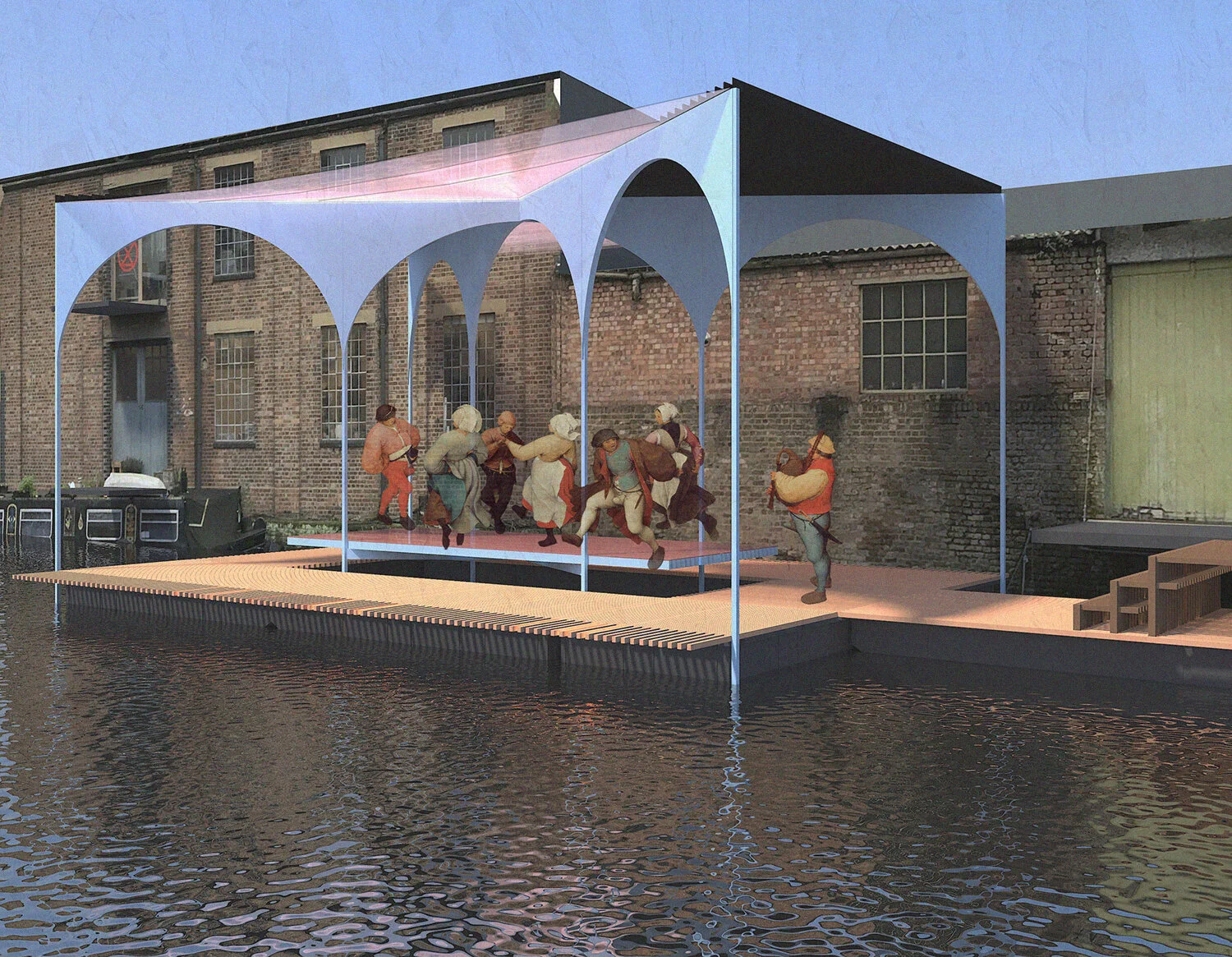
The pontoons donated to form the site are arranged in a ring to create a platform for inhabitation around the table. The standardisation of these pontoons allows the structure to reflect their use as a device of both control and liberation. The structure transforms these modules of systemisation into a space of freedom that encourages gathering and collective exchange over separation. The void left by the pontoons is completed by the table, which appears to float just above the platform’s surface and the water below. Eight columns emerge from this floating base to hold the central table and support an arched canopy whose simple crossed plan focuses the space inwards.
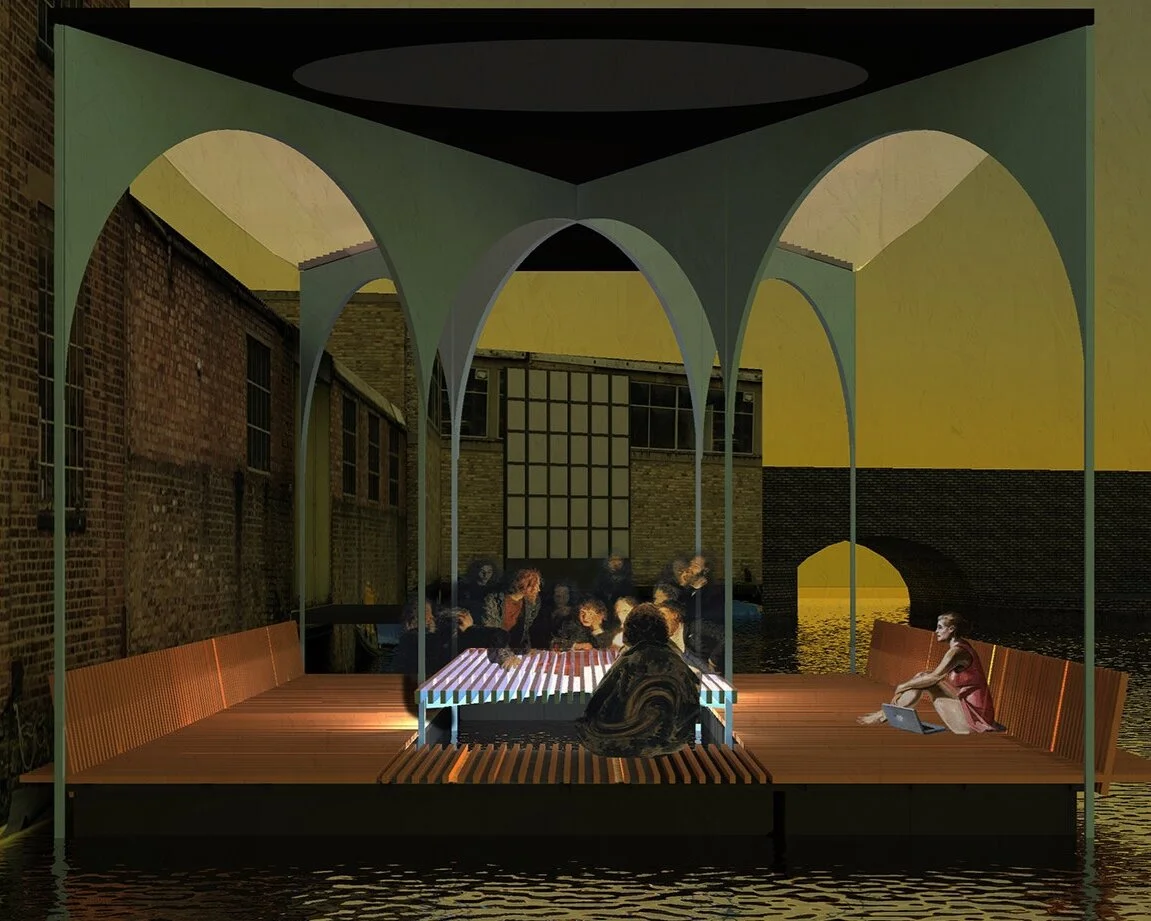
The exposed nature of this unmediated structure revels in a contrast between the formal tradition of the banquet by revealing the activities of the conspiratorial gatherings taking place within as a direct contrast to any authoritarian control of territory, space and its formal representation.
The table will be the focus for both supper clubs and soup kitchens, community and policy forums, lectures and exuberant performances, or just being together with others.
A place to table an idea and encourage debate to help challenge control…
or resolve disagreements.
Three bold ‘H’-shaped gates demarcate the main entrances to ‘The Highams Park’. They are designed to play on the heritage and grandeur of London’s historic park gates. Although unified through their consistent height, the aperture angle and width of each of the three gateways is adapted in relation to its surroundings and function.
ᗐ
London’s parks have traditionally defined their identity and territory through their own ornate bespoke ironwork. The role of these formal park gates has been equally representational and functional. They act as individual spatial markers within the city, demarcating the boundary between streetscape and parkland, giving their parks an individual identity. ‘The Highams Park’ provides an invaluable and beautiful natural space for the surrounding communities and acts as a rich resource for conservation and scientific study in the city. The three simple gates unify the park’s entrances and demarcate them as thresholds to the green space beyond. Their representative quality is intended to be further enhanced by incorporating direct input from local communities into their design.
Their simple geometry and shared materiality creates an inviting and welcoming series of entrances that are fully inclusive and accessible. The proposal aims to enable the local community to take pride in their park and to attract a wider range of visitors as a rejuvenated place for leisure, relaxation and meditation.
A facade for the designjunction exhibition at the London Design Festival. The scaffold like form reflects the temporary nature of the exhibition, combining the natural and the artificial as its grid wraps around an existing avenue of trees and bushes. Inserts of varying levels of reflection blur the distinction between the two.
ᗐ
This installation for part of the London Design Festival achieved a big impact with a minimum of means. The 70x7m grid system holds a pixelated array of panels, which are orientated to reflect or provide glimpses of the foliage beyond, merging the artifice and nature. The arrangement of the pixels directs visitors to the entrances and acts as wayfinding signage. Reflective elements multiply the structural presence of the façade and the natural elements, allowing visitors to pass through the shrouded foliage as they enter the exhibition.
Excerpts from previous projects
̌
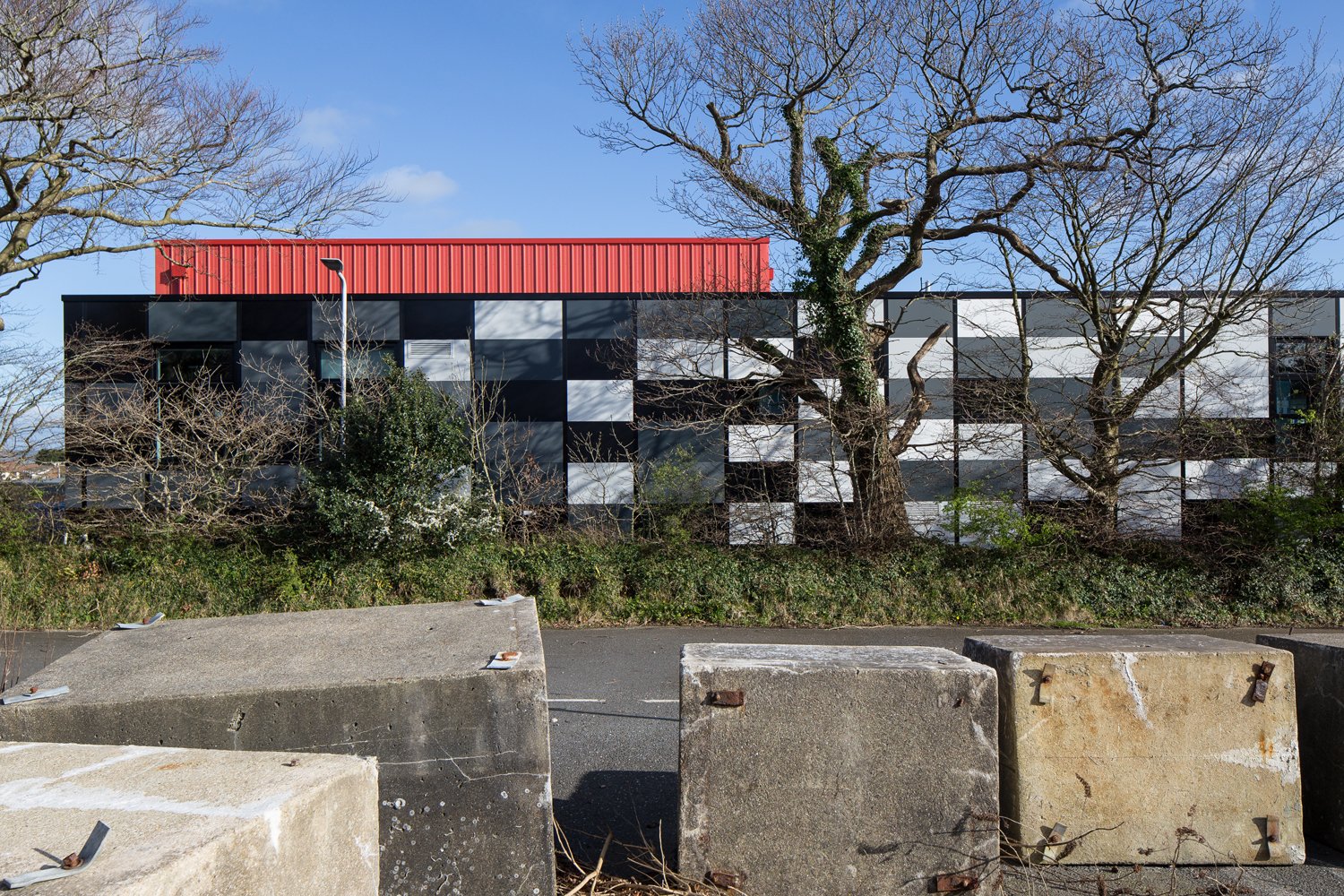
The Marriott Portsmouth hotel required extensive updating and remodelling to revitalise its appearance and operation while improving its thermal and acoustic performance. Taking advantage of a highly visible position on the main route into the city, folded metal panels were installed enliven the utilitarian building by highlighting shifting light and shade on approach and when traveling past on large adjacent roads, giving it a dynamic, beacon like appearance. (with Satellite Architects)
A meeting house for the Hammersmith Quakers is set within a tight network of Victorian terrace houses, on a site cleared following World War II bomb damage. The new building reinstates the continuous brick façades of the neighbourhood houses, looping in on itself as it crosses the empty plot. Where the wall inflects it becomes more permeable to create a welcoming entrance from the street.
This loop defines a circular, non-hierarchical meeting hall, carefully positioned to receive abundant natural light, alongside a reception space that connects the ancillary rooms. The hall is wrapped in layers of perforated brickwork, translucent baffles and timber framing, softening and dissolving its edges. Additional rooms provide flexible space for a range of community uses.
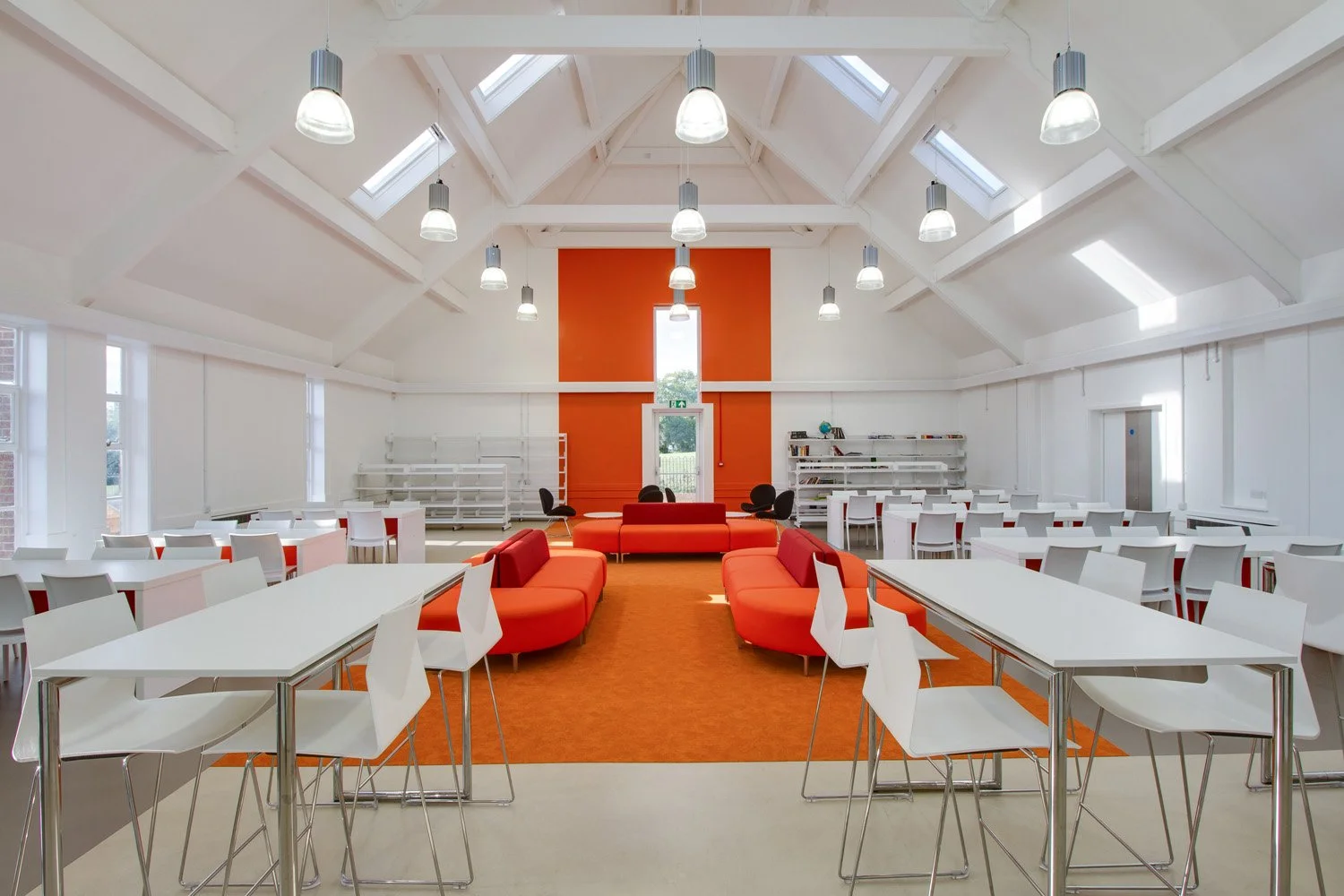
Cowes Studio School relies on the remodelling of an Edwardian primary schoolhouse. The original school’s cellular structure is opened up around a distinctive new core defining a loop of informal spaces that are connected to the activity of the classrooms through large glazed screen and reduces corridors to a minimum. The core places the staff spaces right at the heart of the school and provides natural light and ventilation deep within the plan. Bold colours are used to transform the spaces and provide orientation.
A second phase, housing specialist marine engineering rooms defines a new entrance, reorienting the old building and securing outdoor teaching areas in one move. Its form references the existing buildings, while its contrasting gable of glazed and engraved brick acts as clear marker to announce the identity of the new school.
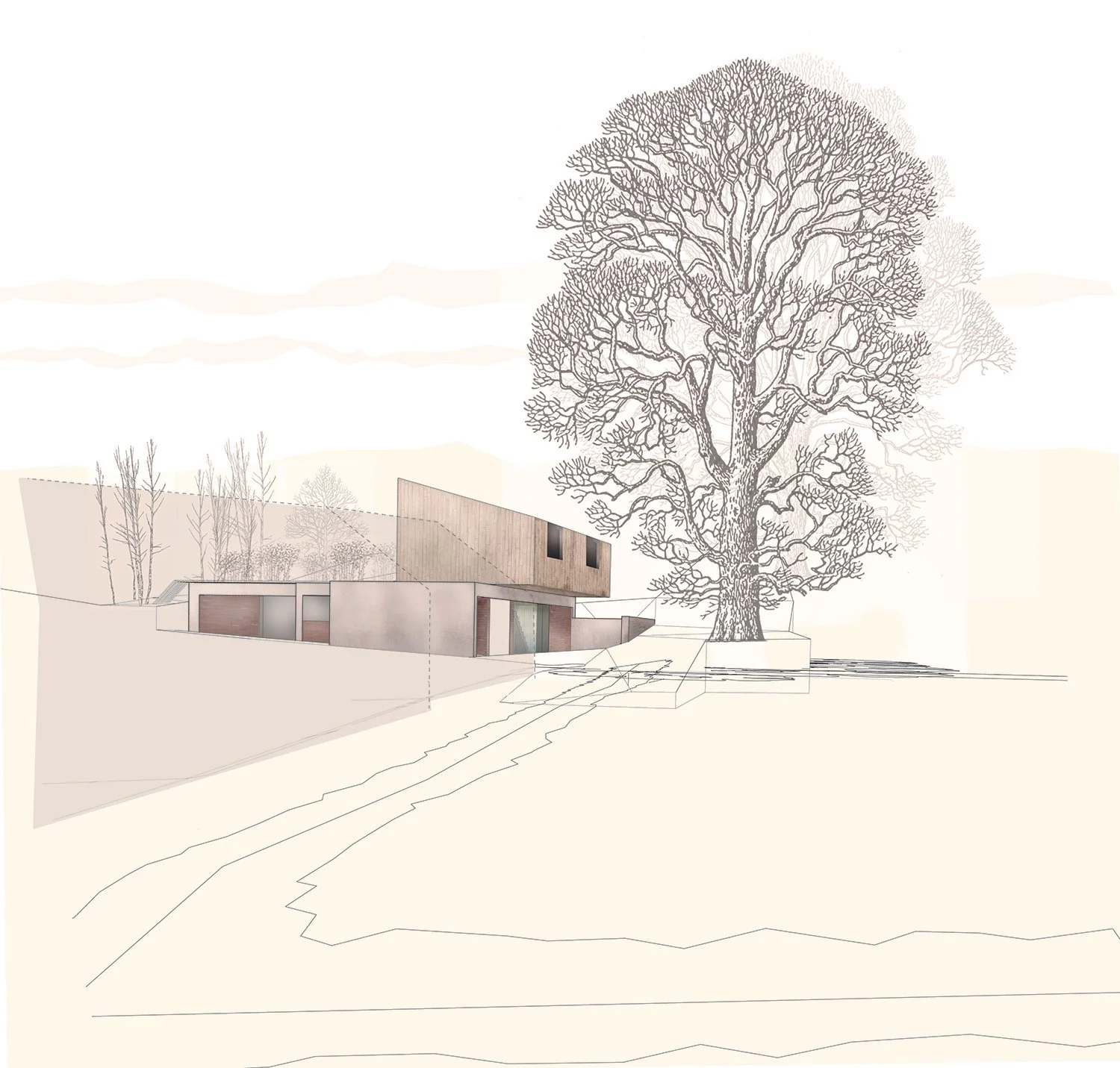
On a sloping one acre plot surrounded by hedge rows and mature fruit trees so dense it has the feel of a walled garden the proposed house seeks to retains these natural qualities by occupying the perimeter, being considered a part of the largest hedgerow. It’s facade is designed with compartmentalised voids to encourage inhabitation by birds, bats and invertebrates without affecting the durability of the building fabric.
The home swells along its length to define rooms, each focusing on the view, while receiving optimal sunlight, it abstracts the form of the hedgerow in both material and form. It is proposed under planning policy ‘Paragraph 80’ for building new isolated homes of outstanding design and innovation in the open countryside.
Careful negotiation and in-depth understanding of the planning limitations allowed the transformation and reuse of dilapidated agricultural buildings in the open countryside, which in most instances would not be possible. This spliced connection sculpturally connects two reimagined volumes of the previous buildings to form the open heart of a new family live-work home in deep rural Cambridgeshire.
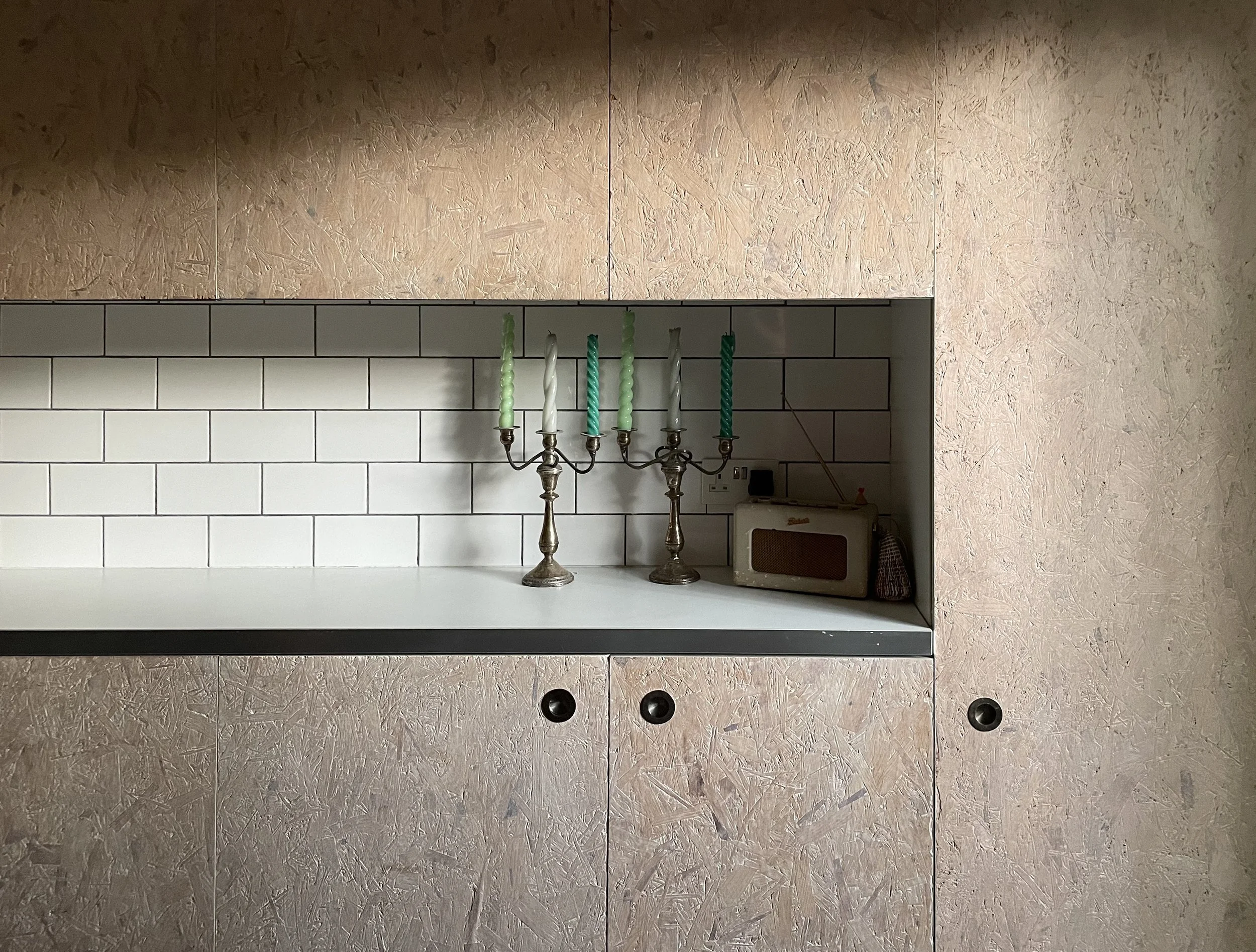
Orientated Strand Board (OSB) repurposed from construction, waxed and edged to form a natural and varied kitchen finish.
The proposal for a musical hub combining a hotel and concert venue is expressed directly through the architecture. To accommodate a wide range of musical styles, the design distils expression into a fundamental language of rhythm and tone, shaped by use and experience.
These rhythms are reflected in the slender columns and shifting canopies of the surrounding pine forest. This quality is drawn into the building, where structure is composed as a layering of standardised elements, or “notes,” each individually articulated.
Slender timber columns extend beyond the building, supporting lighting and canvas canopies for events, their arrangement shifting in tempo to define space and structure.
Walls of glass, timber planks and curtains weave between the columns, forming acoustically defined spaces and giving character to the interstitial zones. Above, a unifying roof swells and compresses, varying the “pitch” of different areas—rising from intimate spaces to larger halls. Its character is further modulated through areas of translucency, with dappled light cast across its surface.
A lightweight circulation core rises through a redeveloped tower, its skin formed from the column module into a continuous surface, like a piano roll. Glass lifts move through this vertical sequence of light, shadow and framed views beyond the tree line to the sea.
Corridors extending from the tower use acoustic relief to dampen sound, creating moments of quiet that heighten contrast elsewhere. These lead to rooms where light is finely controlled through layered, slotted screens, continuing the interplay of rhythm, tone and atmosphere.
A reconfigured portal frame barn creates spaces for solace and contemplation as the ceremonial hub for an environmental burial initiative. Its very nature is of continuity and transformation, converting the utilitarian to a procession of sculptural spaces leading out to the burial grounds.
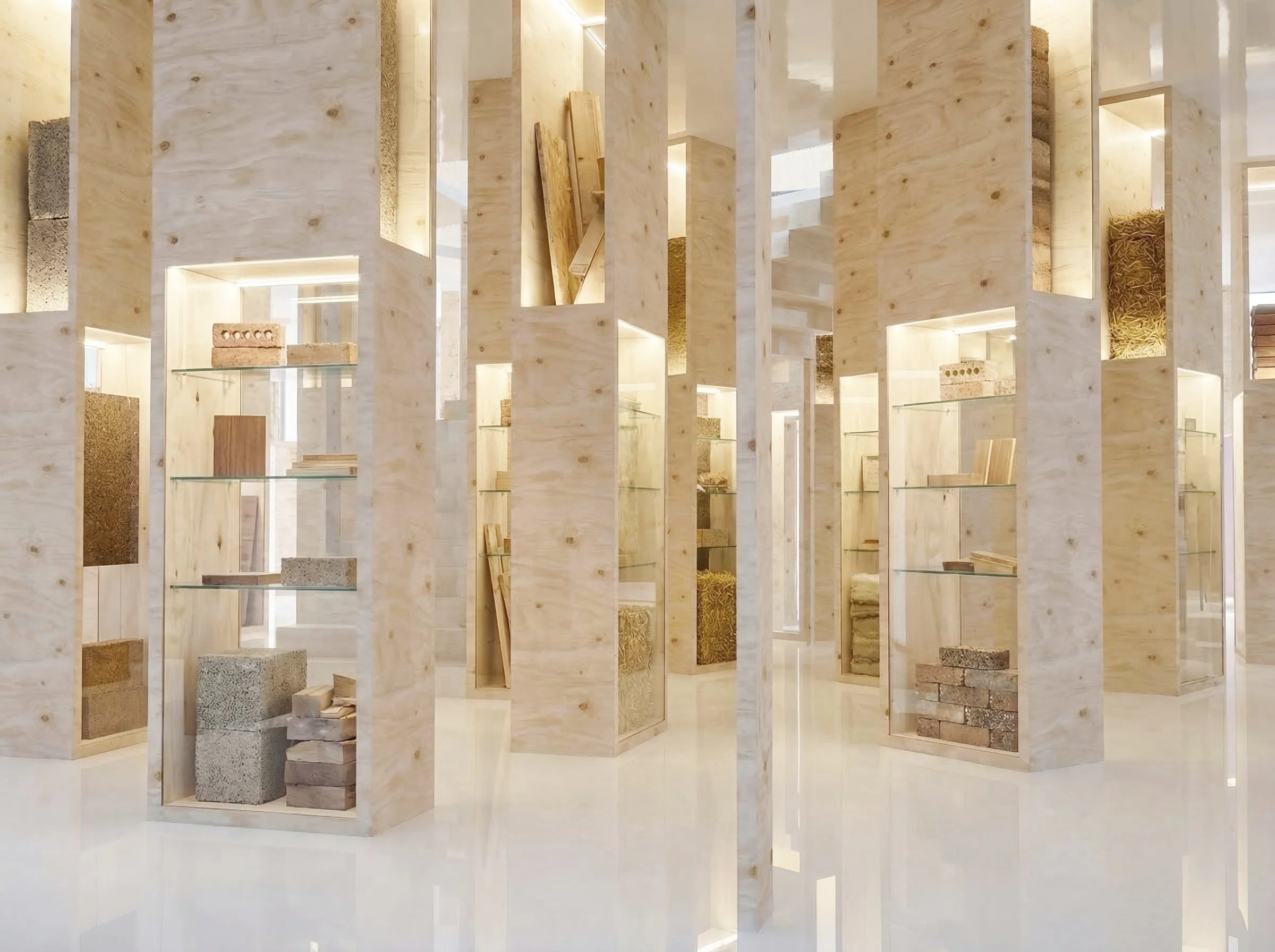
When asked to make a proposal for the centrepiece of a large trade show ‘Ecobuild’ our proposal was to break the relentless grid of these events, creating an assemblage of simple vitrines, removing directionality, but promoting diversity and juxtaposition. These support an open terrace above for visitors to retreat above the datum of competing pavilions.
Temporary pavilion for a consortium of contractors and material suppliers - internal
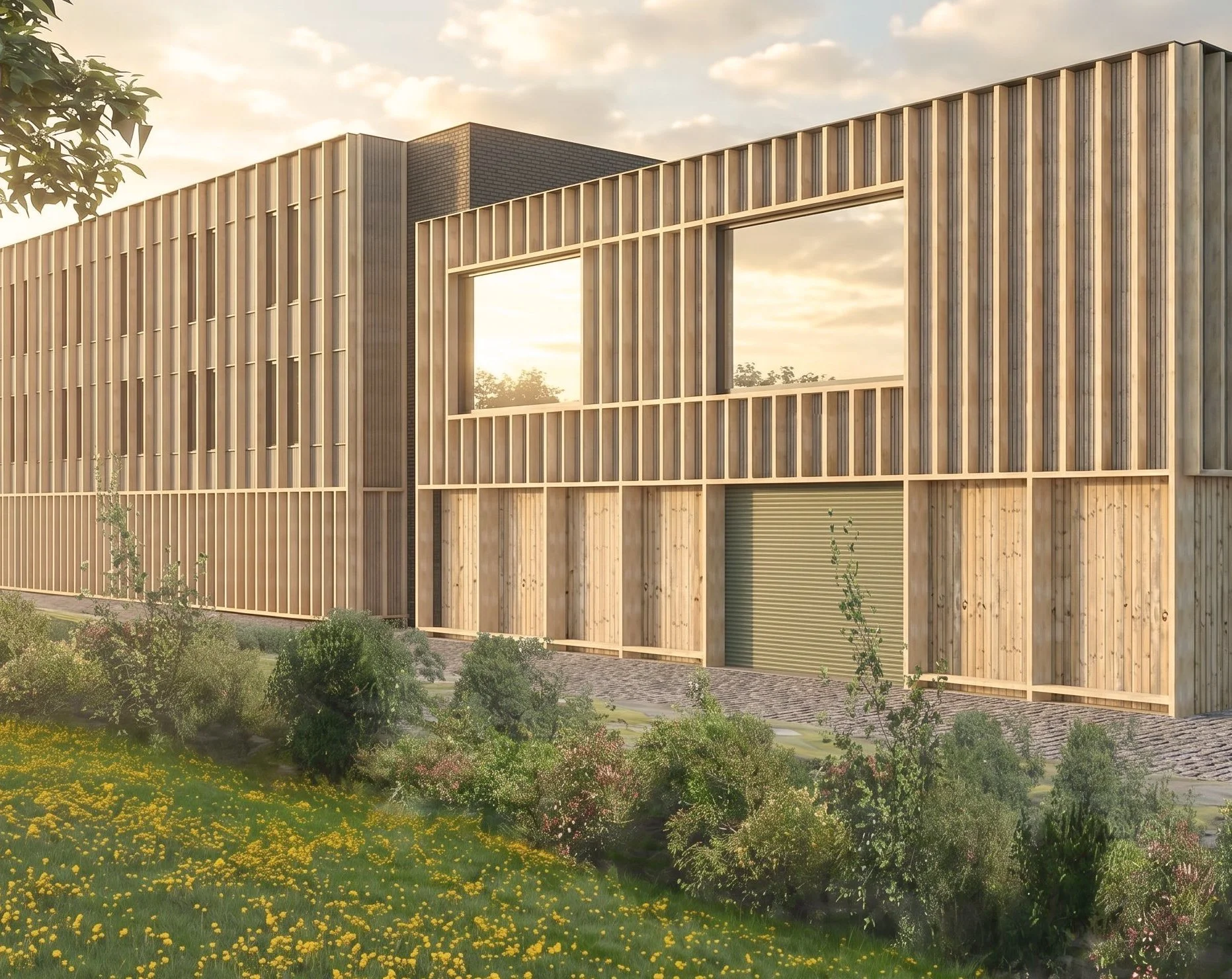
Temporary pavilion for a consortium of contractors and material suppliers - external
A large low carbon insertion transforms and modernises a tired hotel near Gatwick, providing additional rooms, conference and dining facilities, within a modular skin that balances light and privacy, offering a new unifying identity.
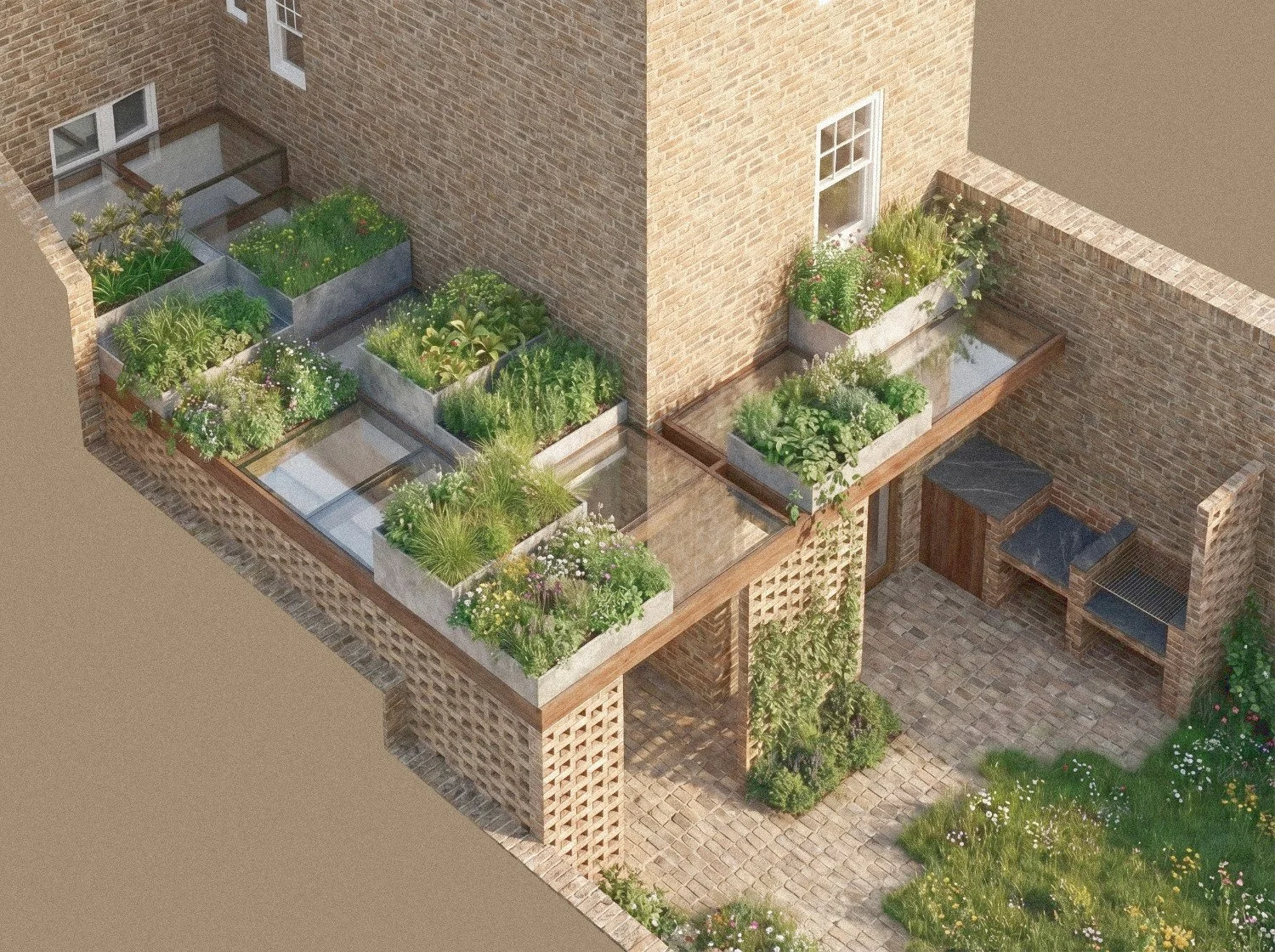
An extension in Hammersmith for a TV chef provides a suitably large kitchen, with a highly distinct roof that seeks to convey the sensation of being within the herb garden itself.
A new house for a constrained site in a beautiful semi-rural location in Kent. The main living spaces are located on the upper floor, taking advantage of long views and optimised natural light. The bedrooms are arranged below, set around a sunken courtyard, with generous terraced steps rising to roof gardens on either side.