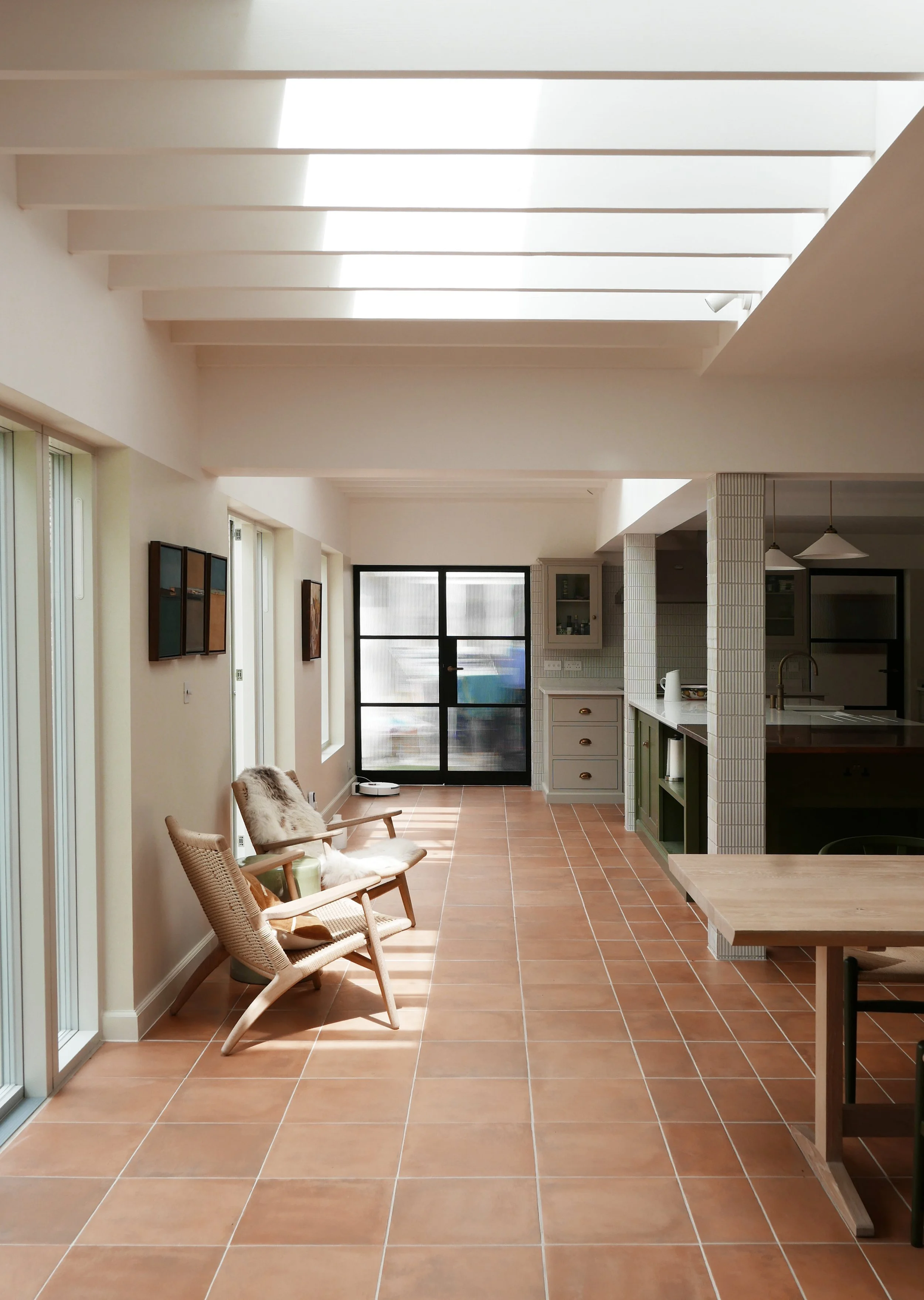
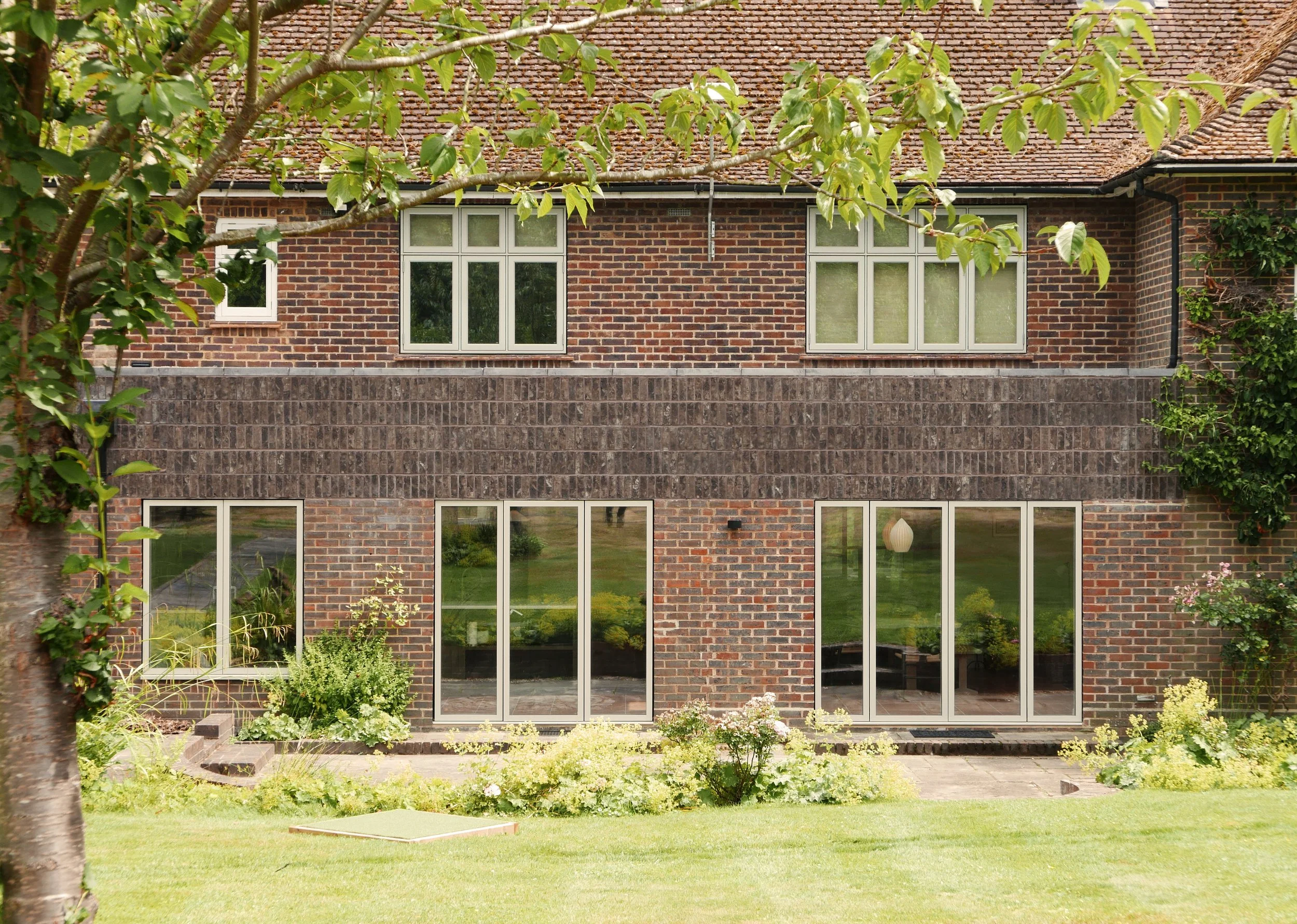
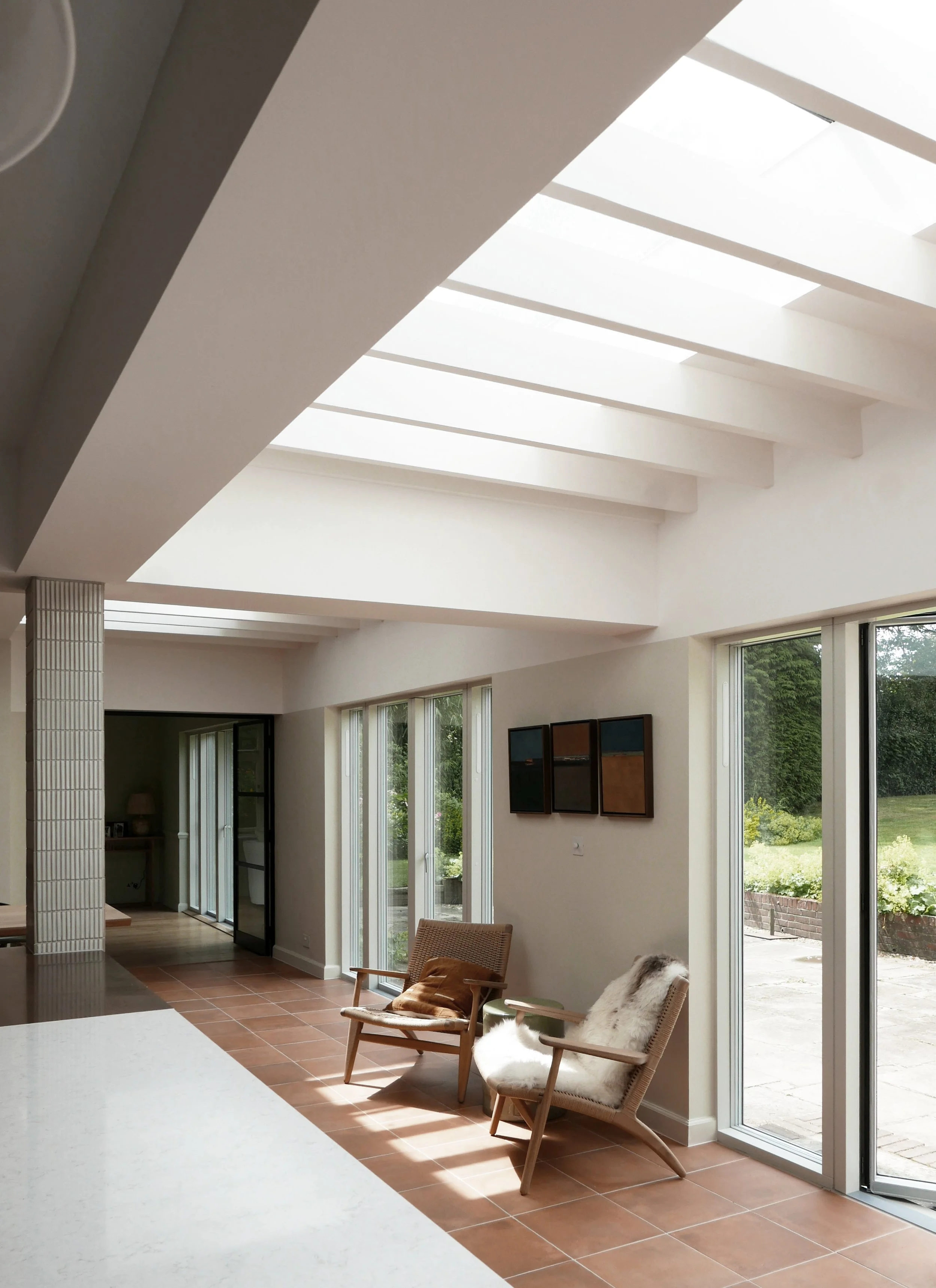
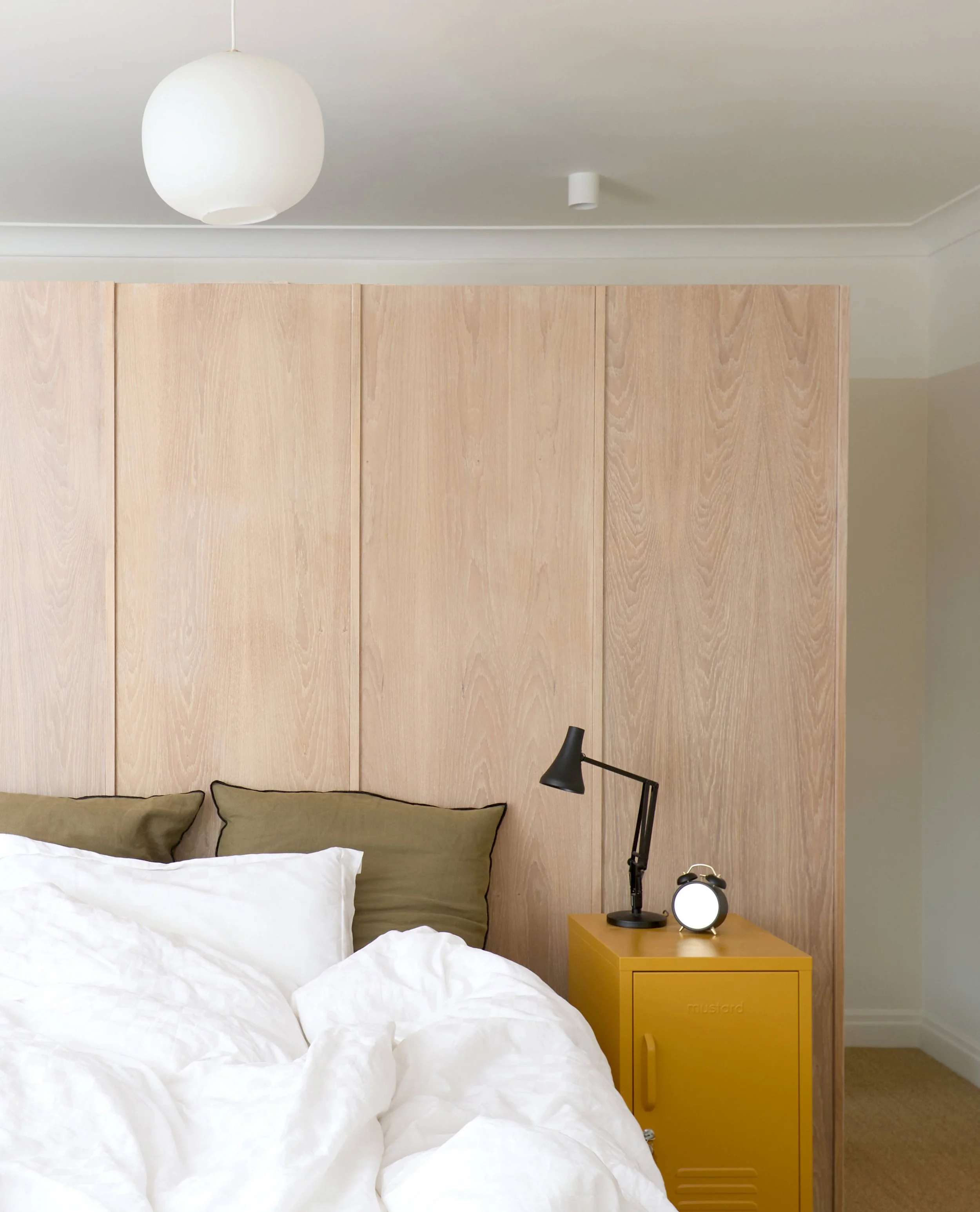
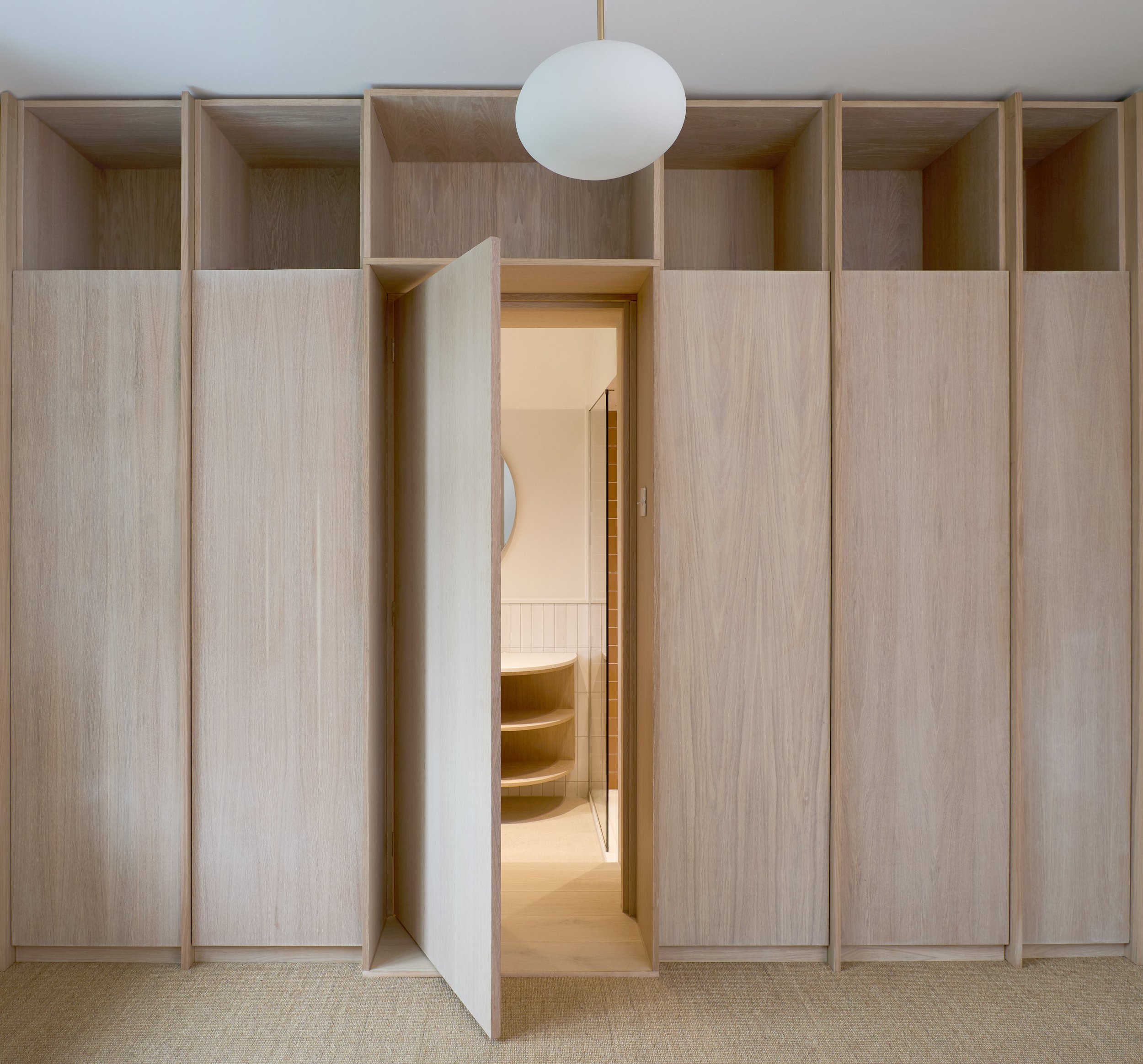
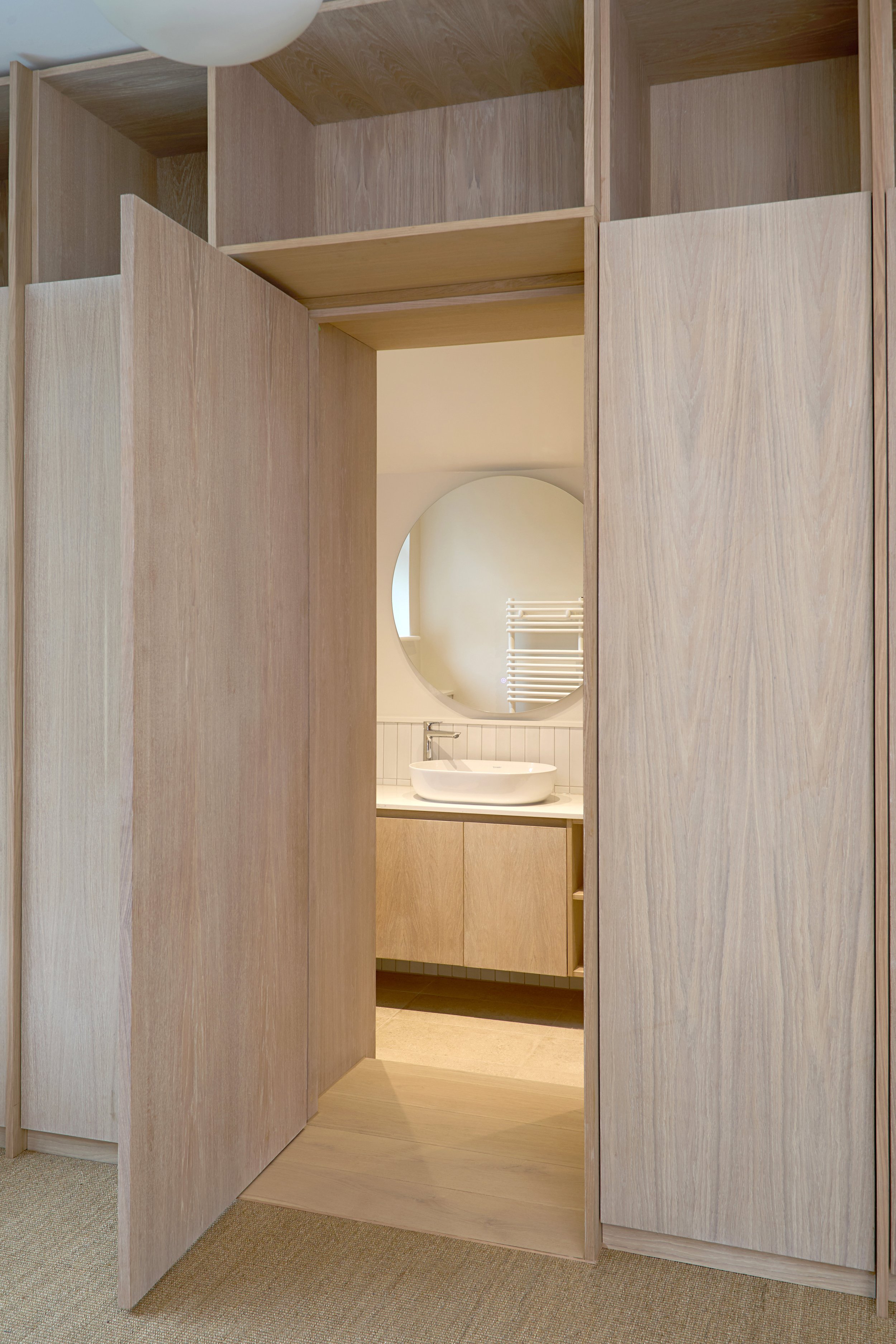
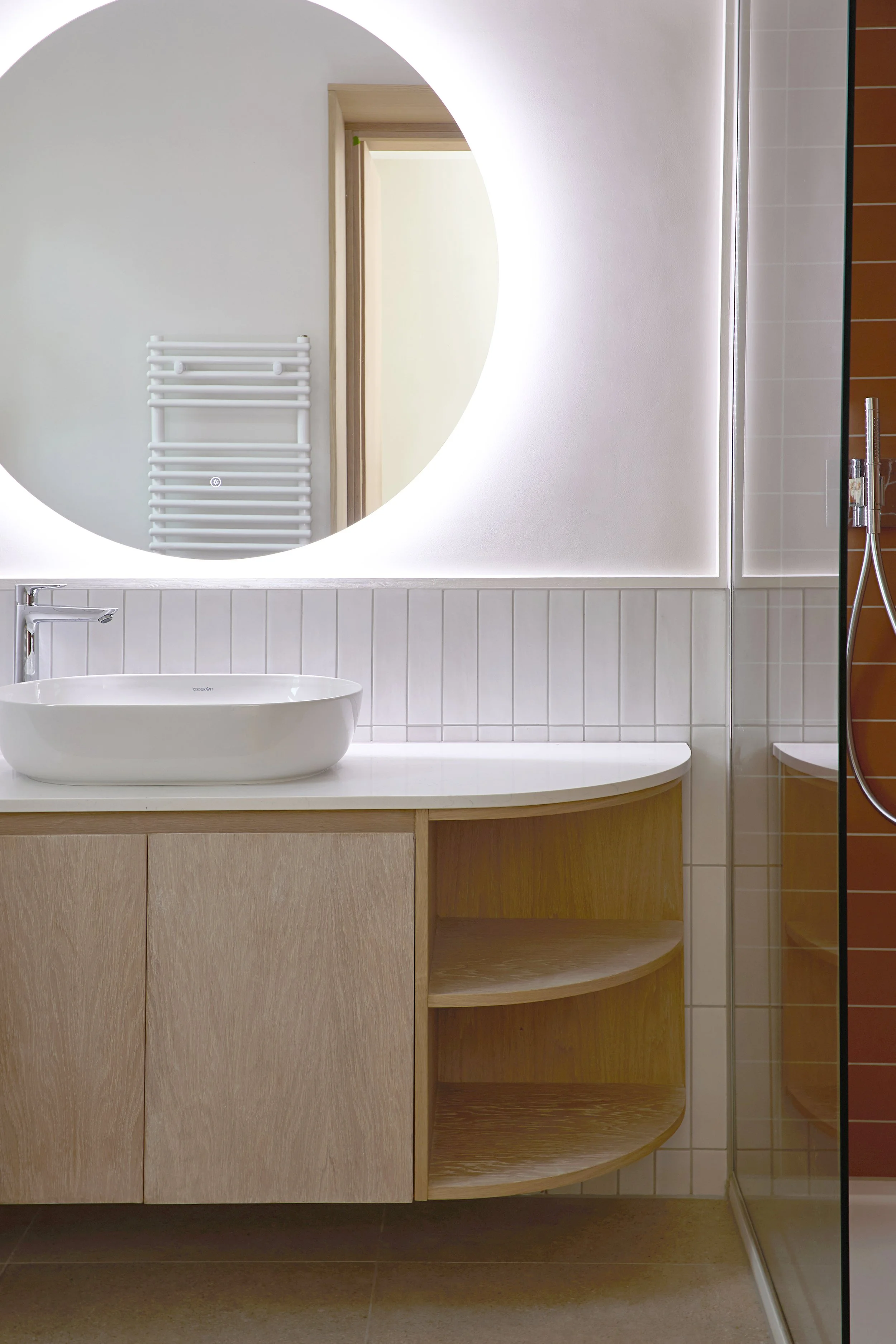
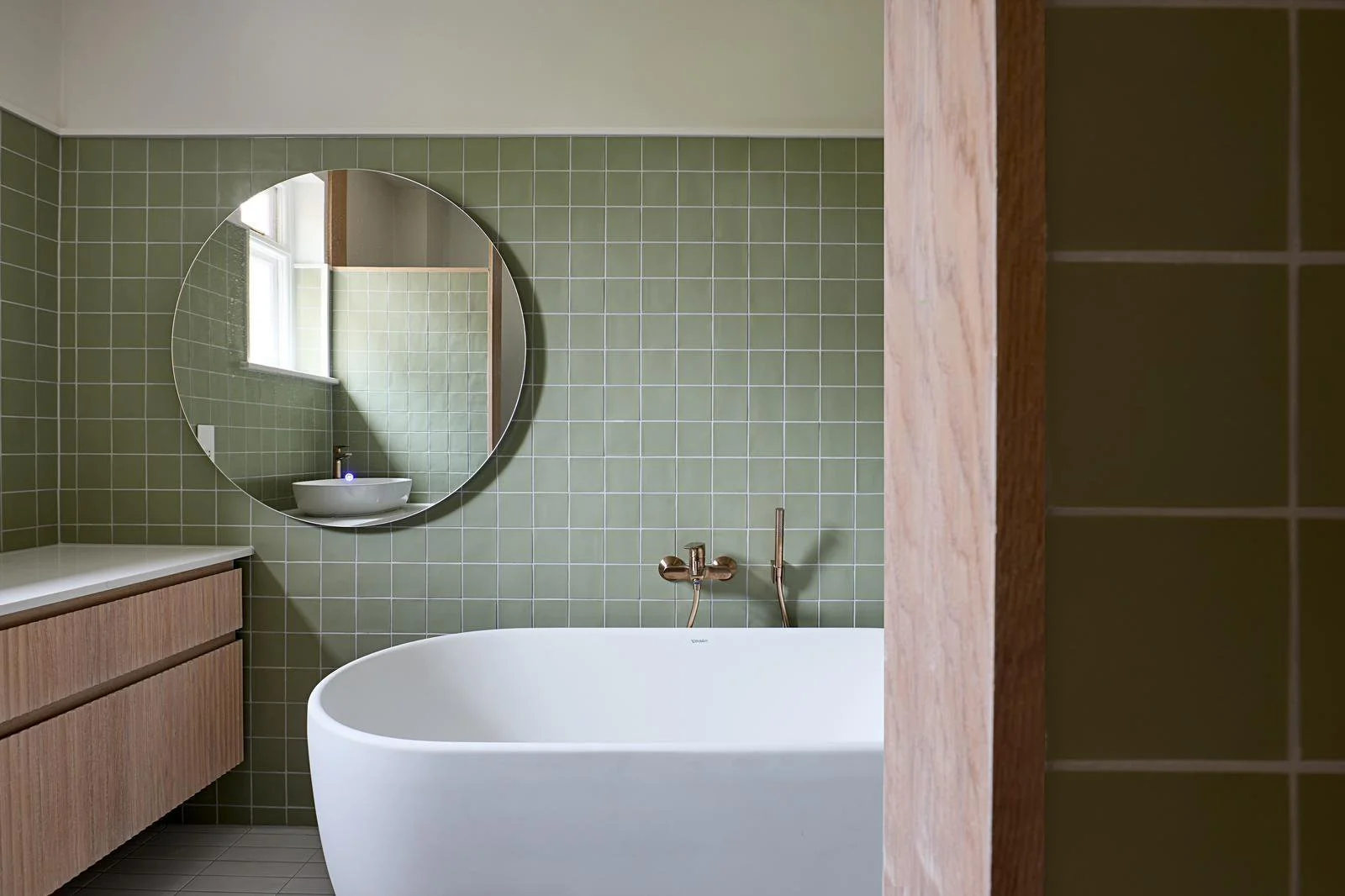
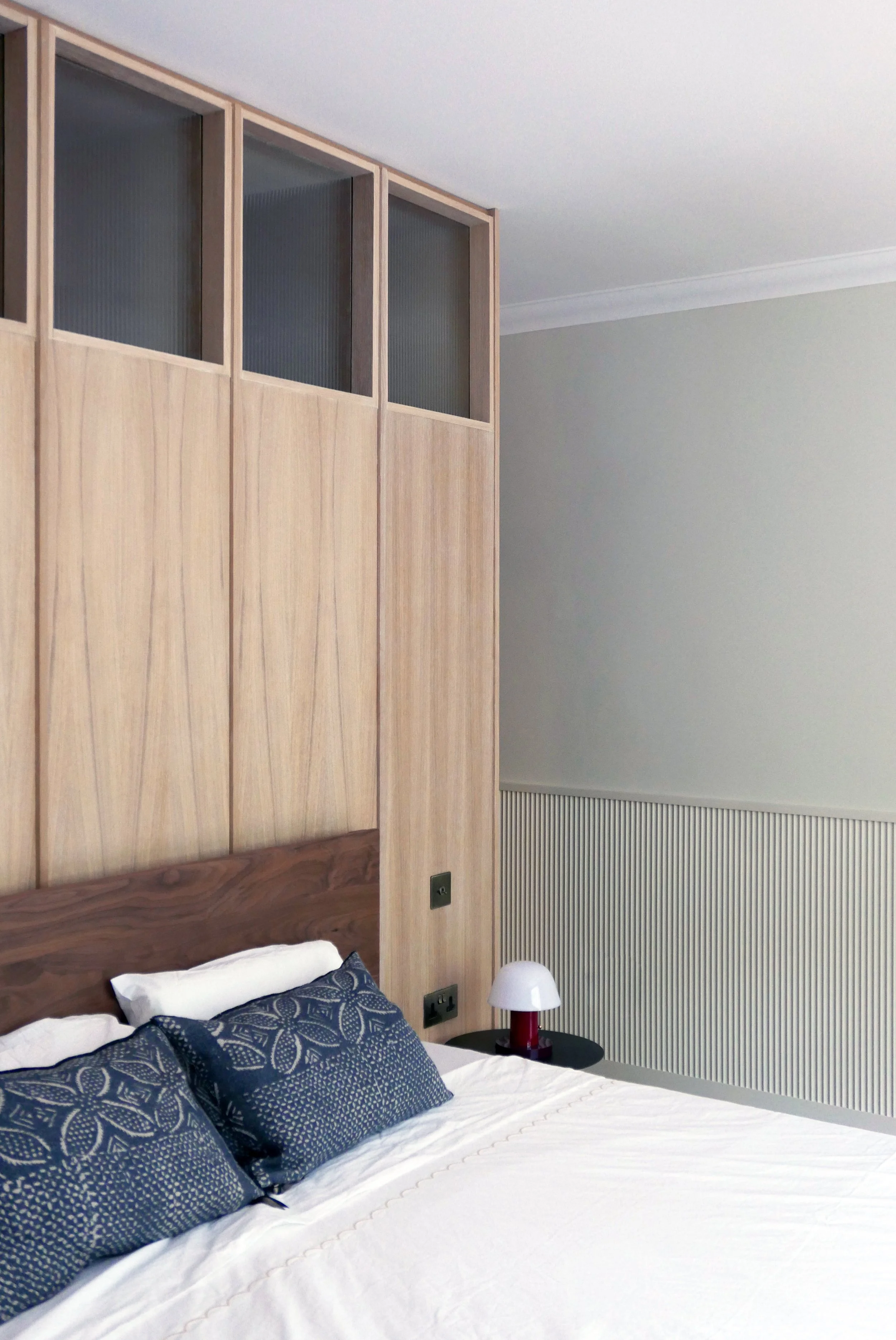
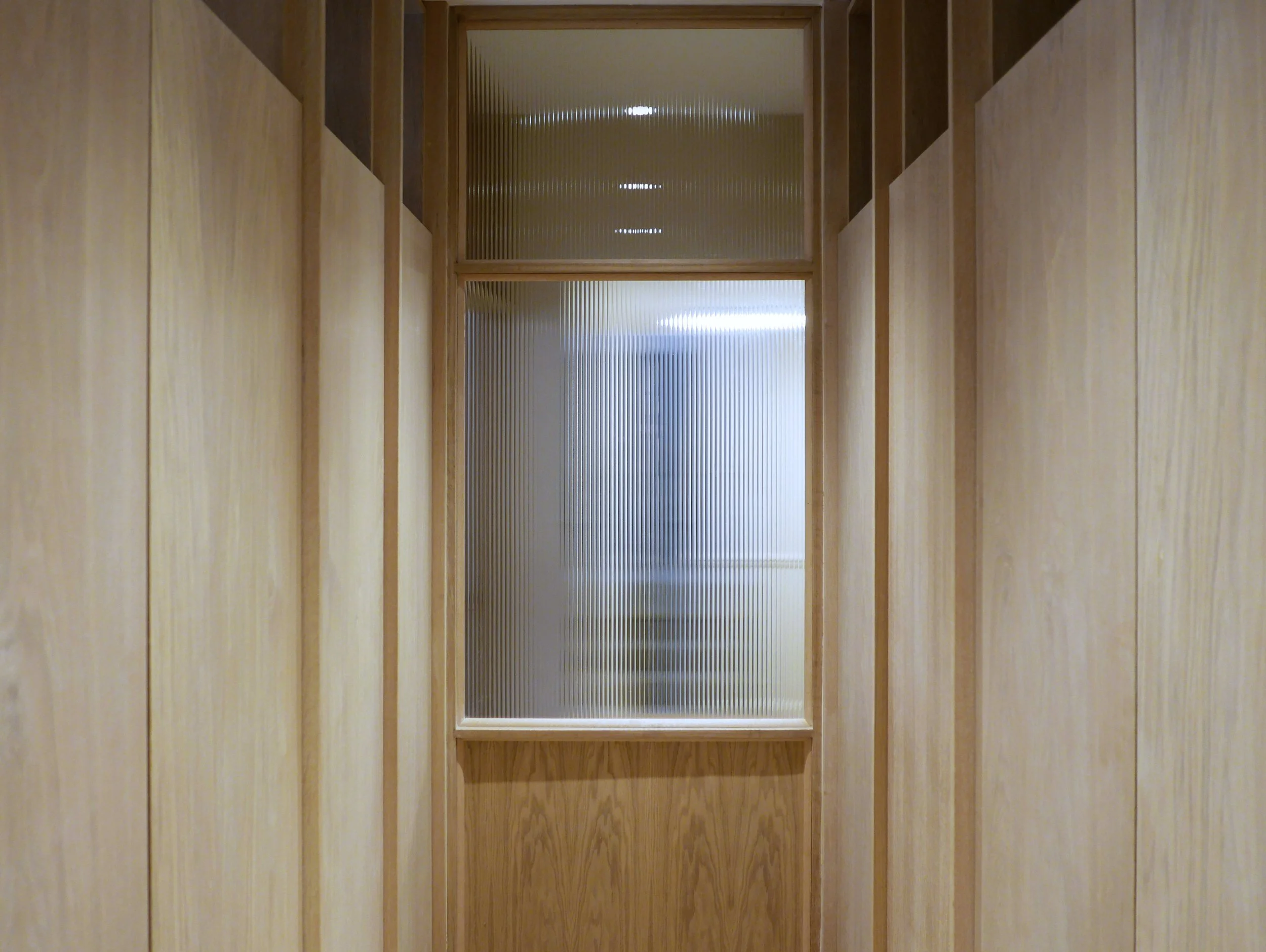
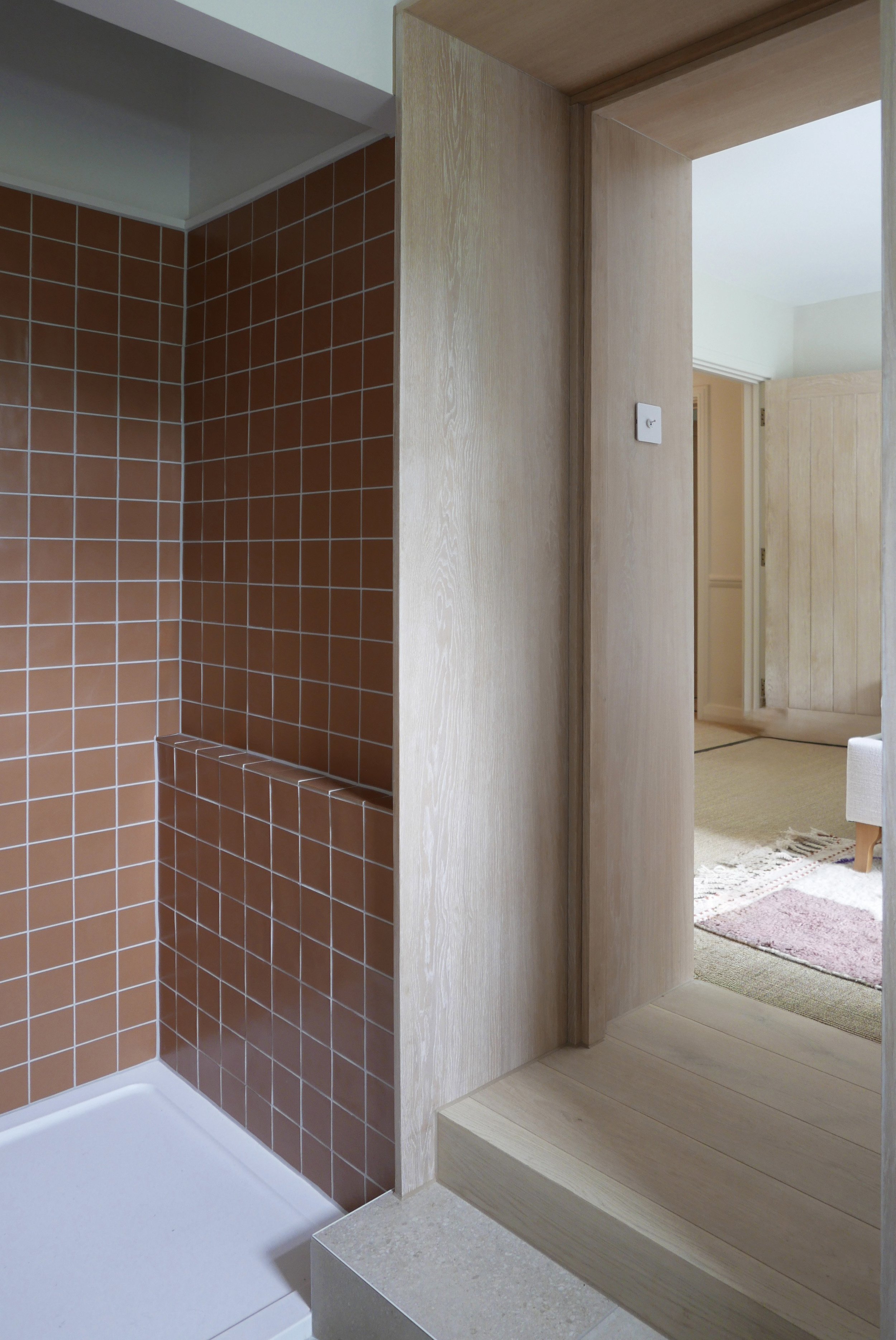
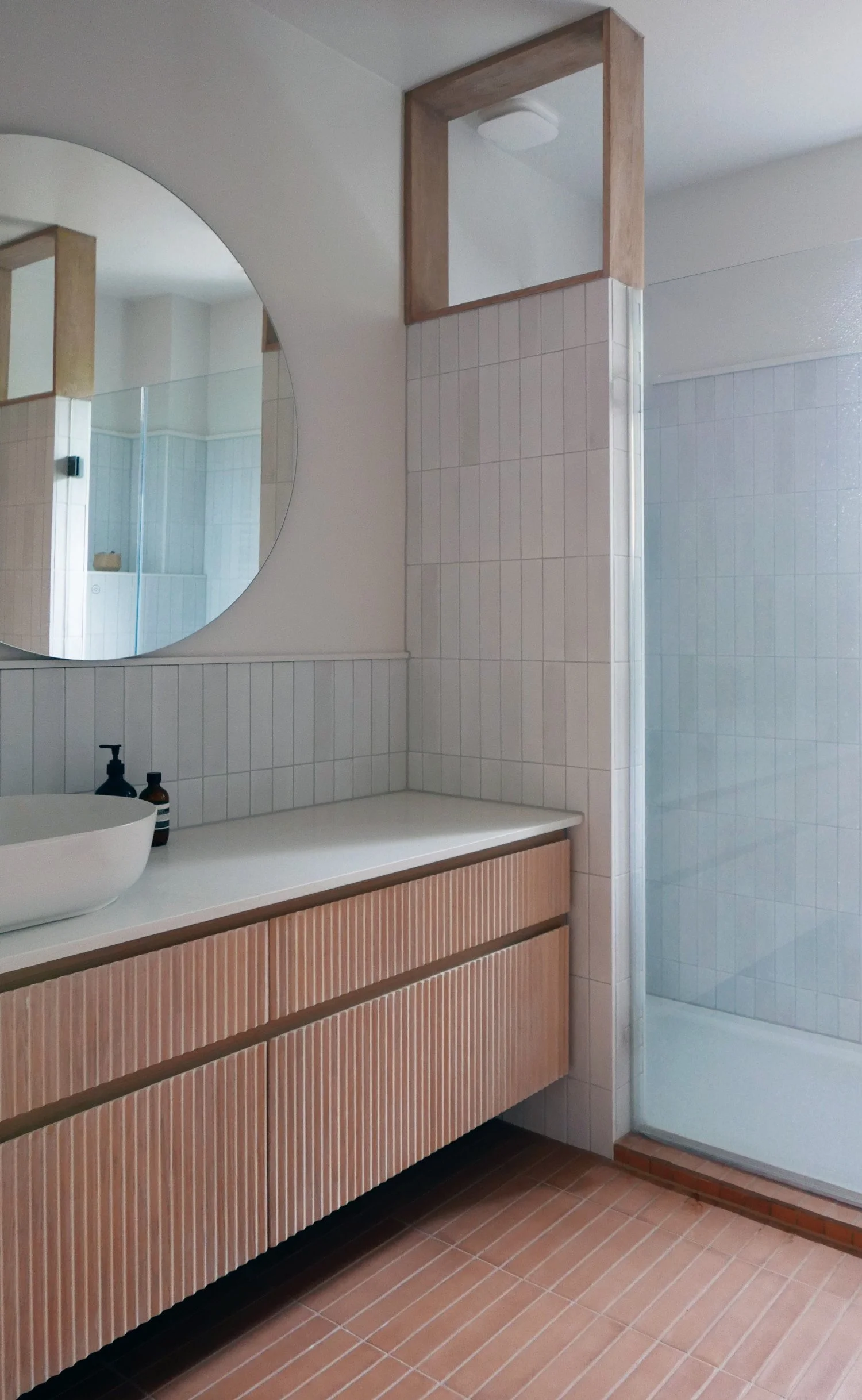
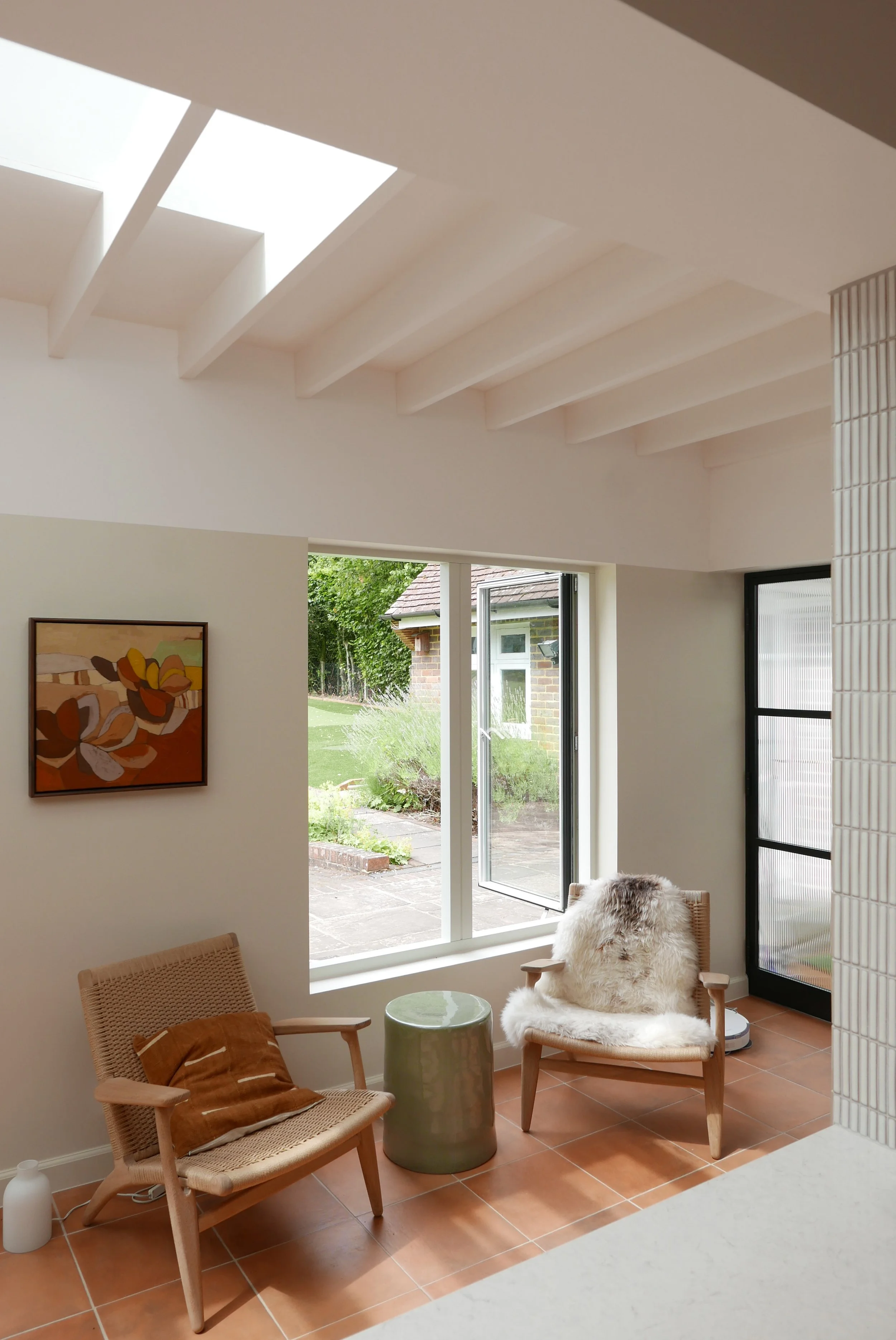
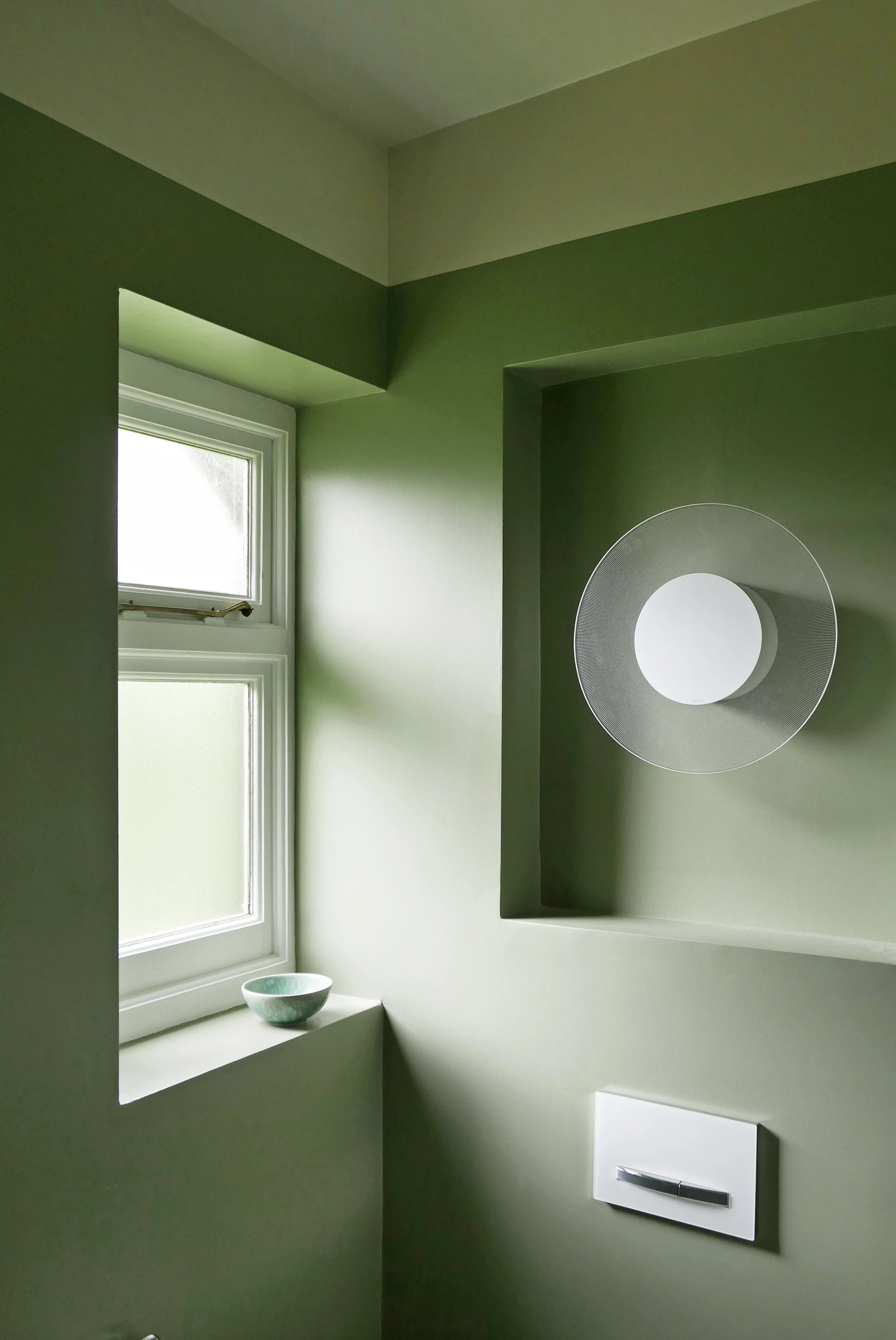
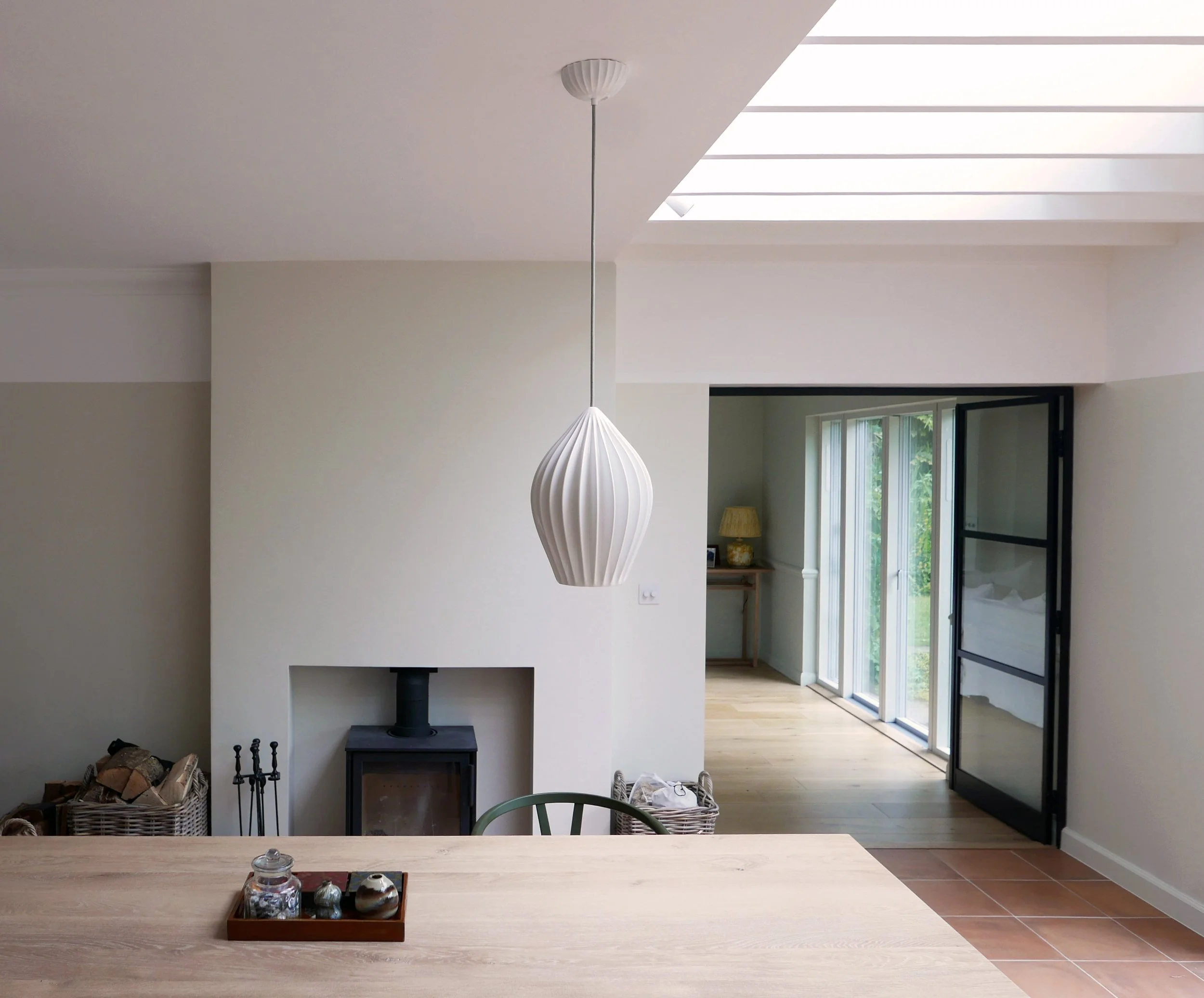
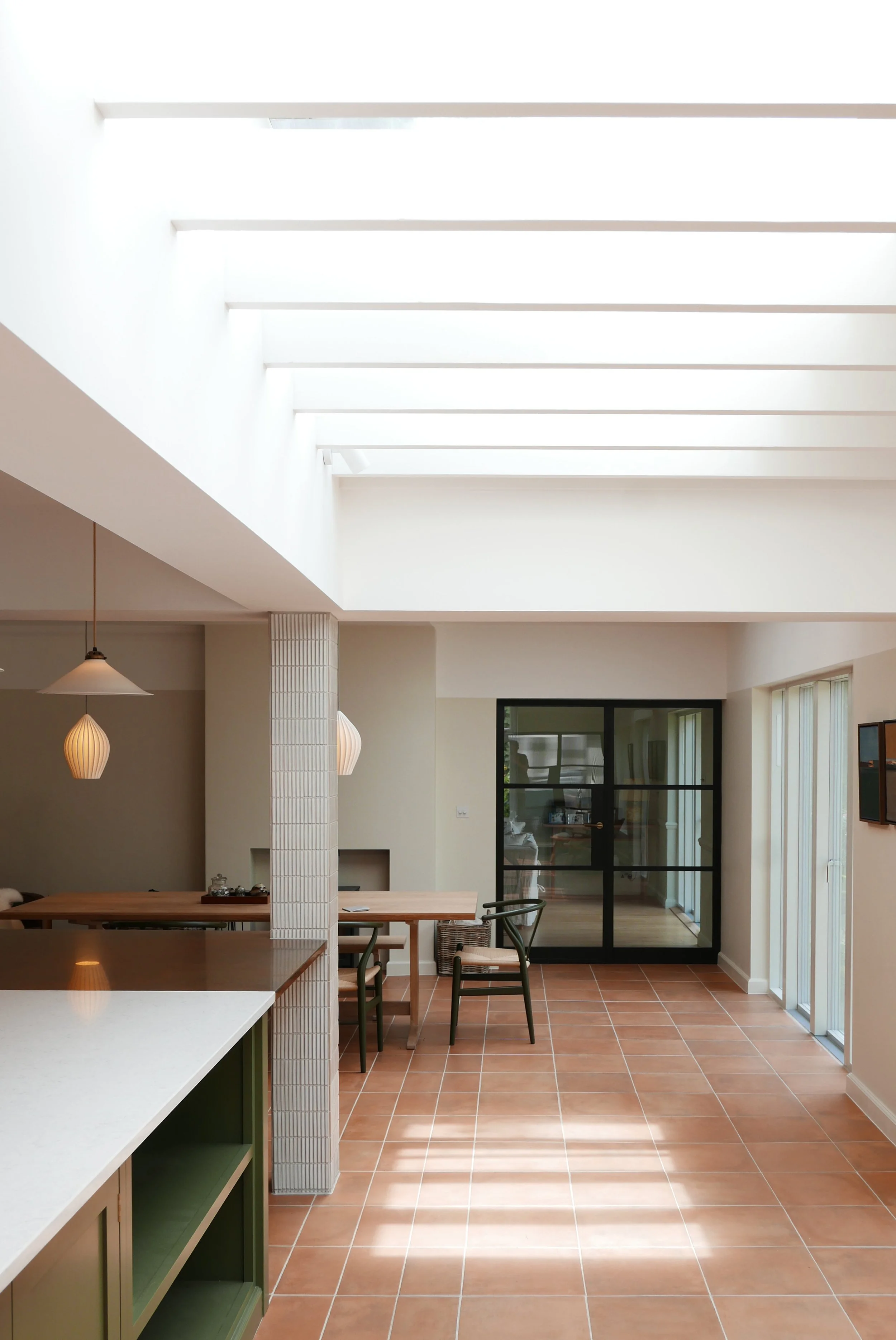
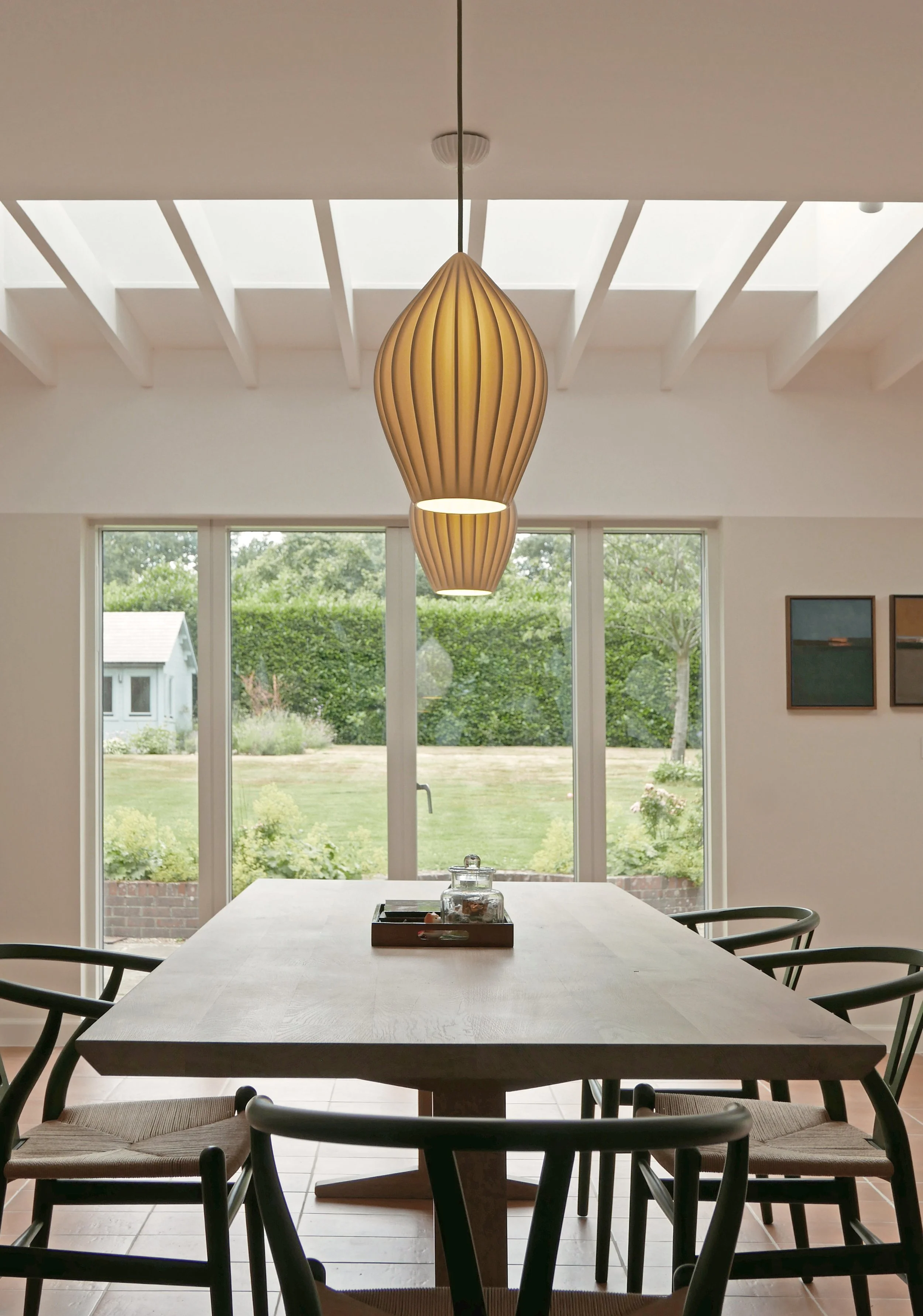
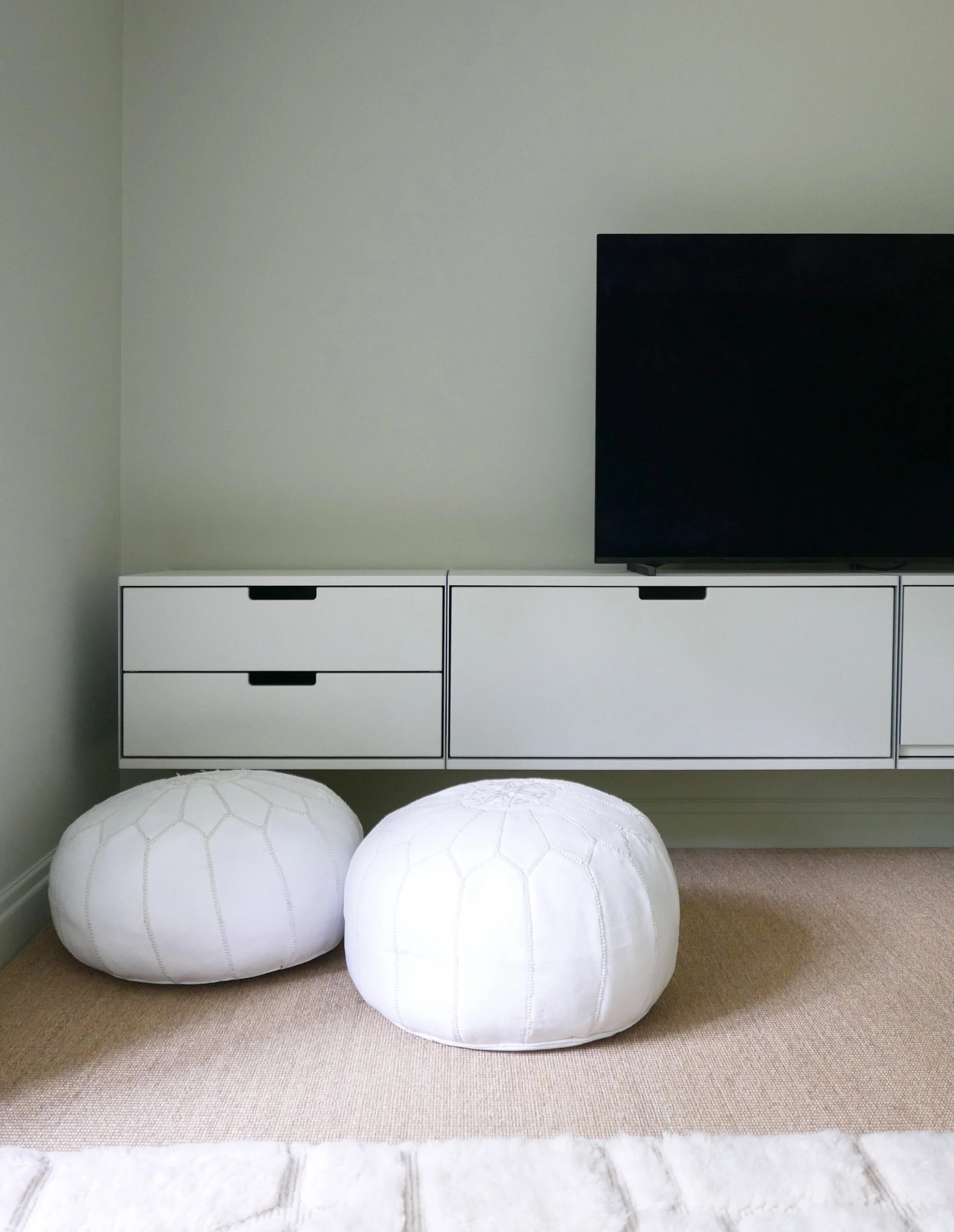
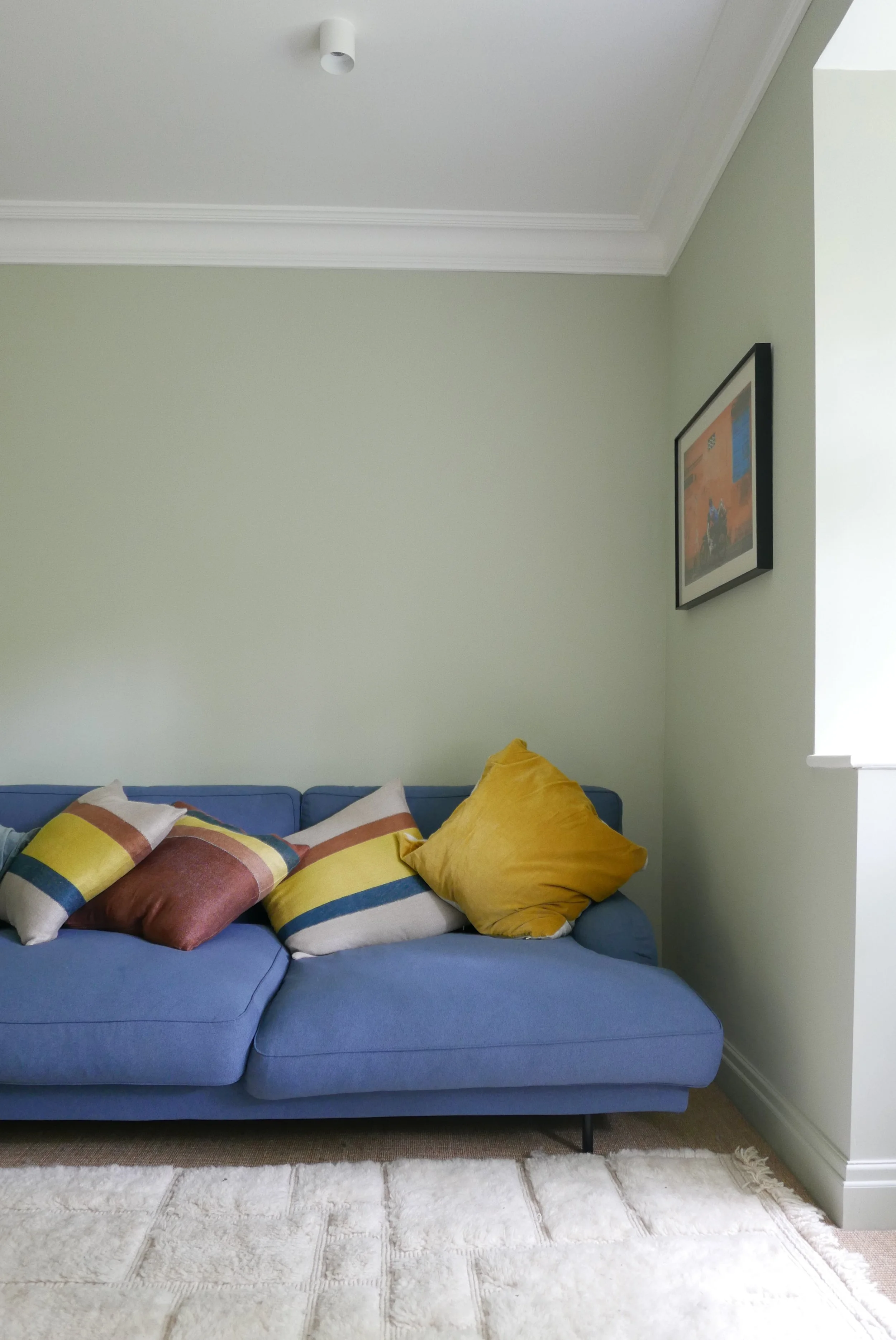
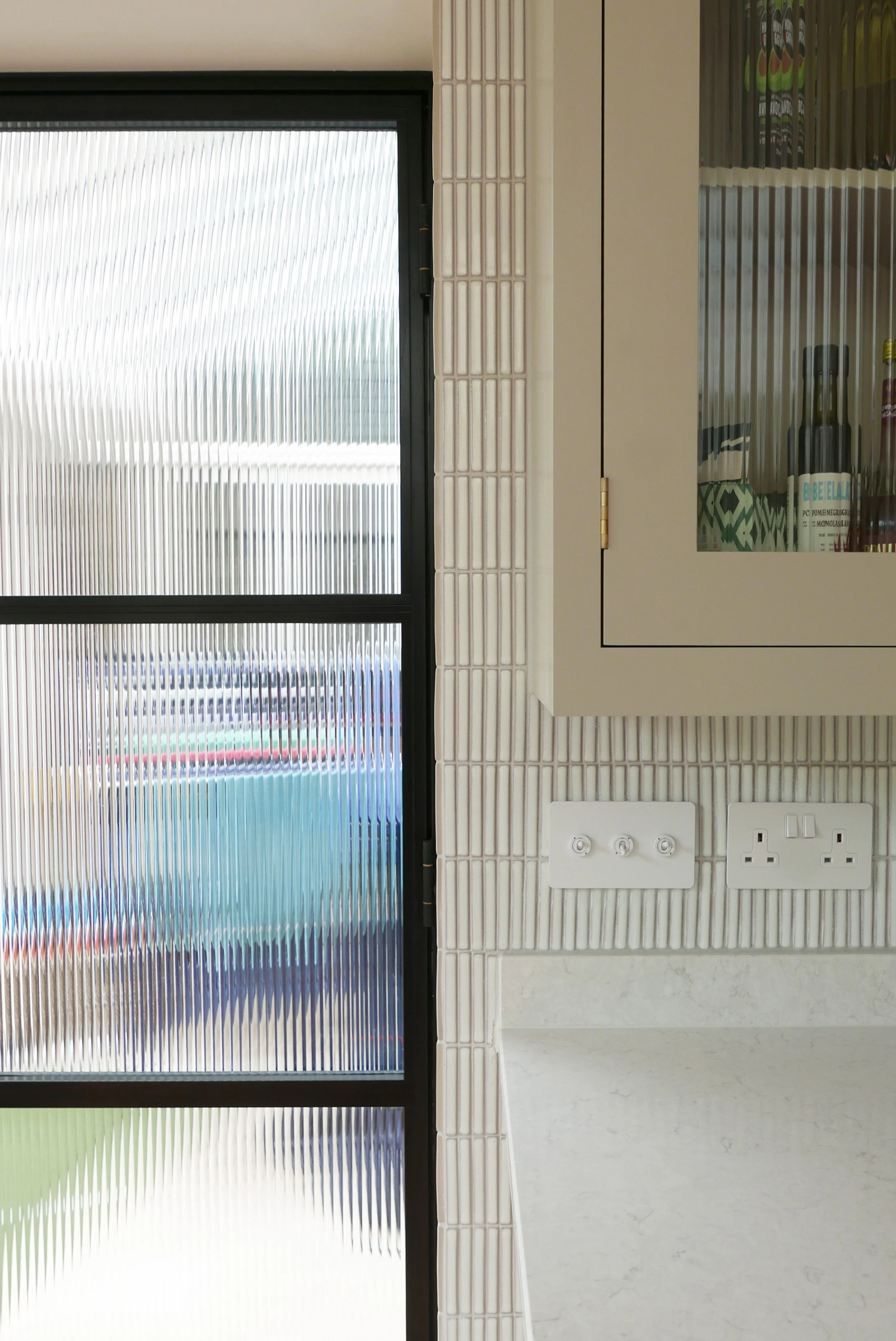
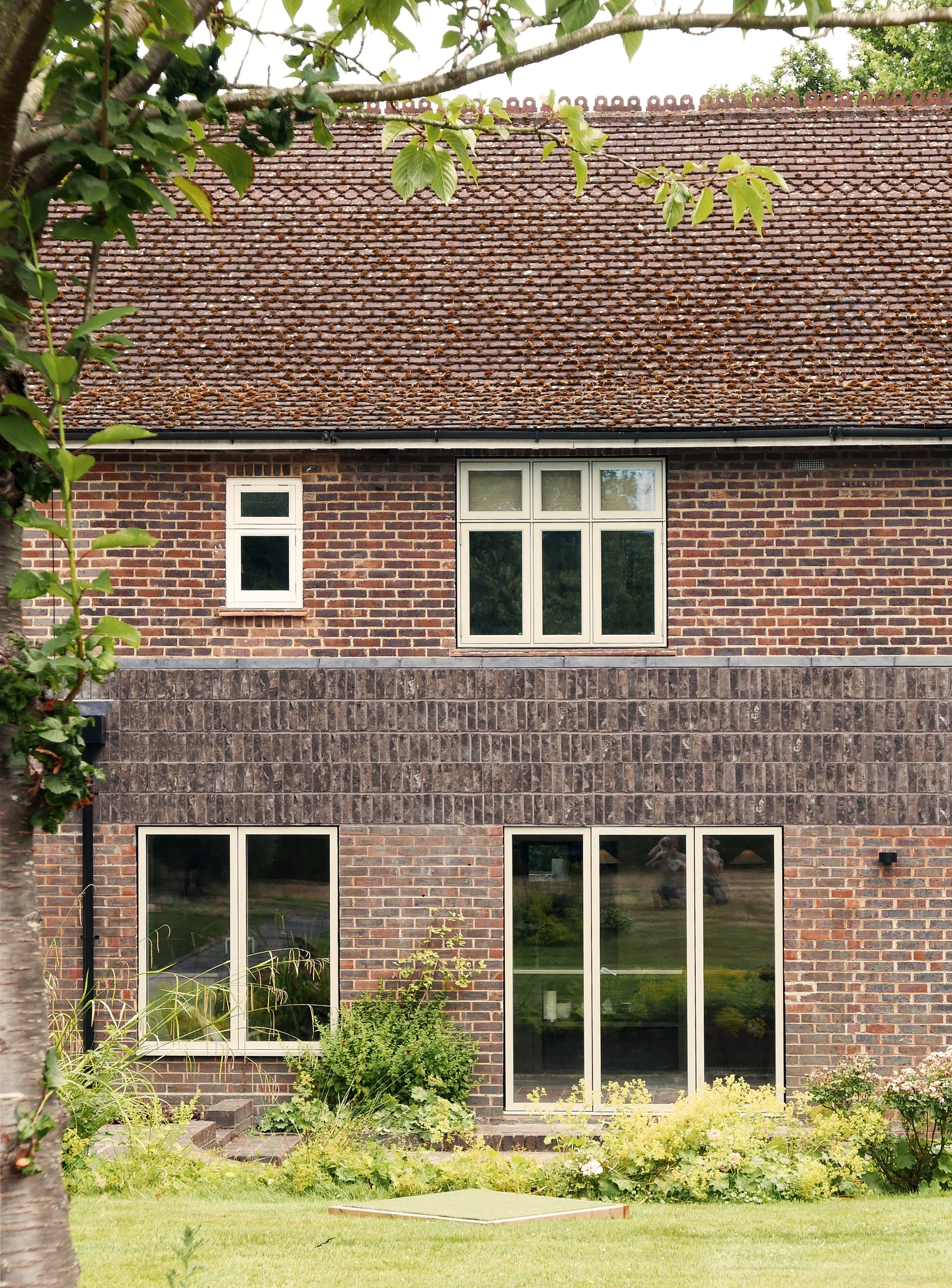
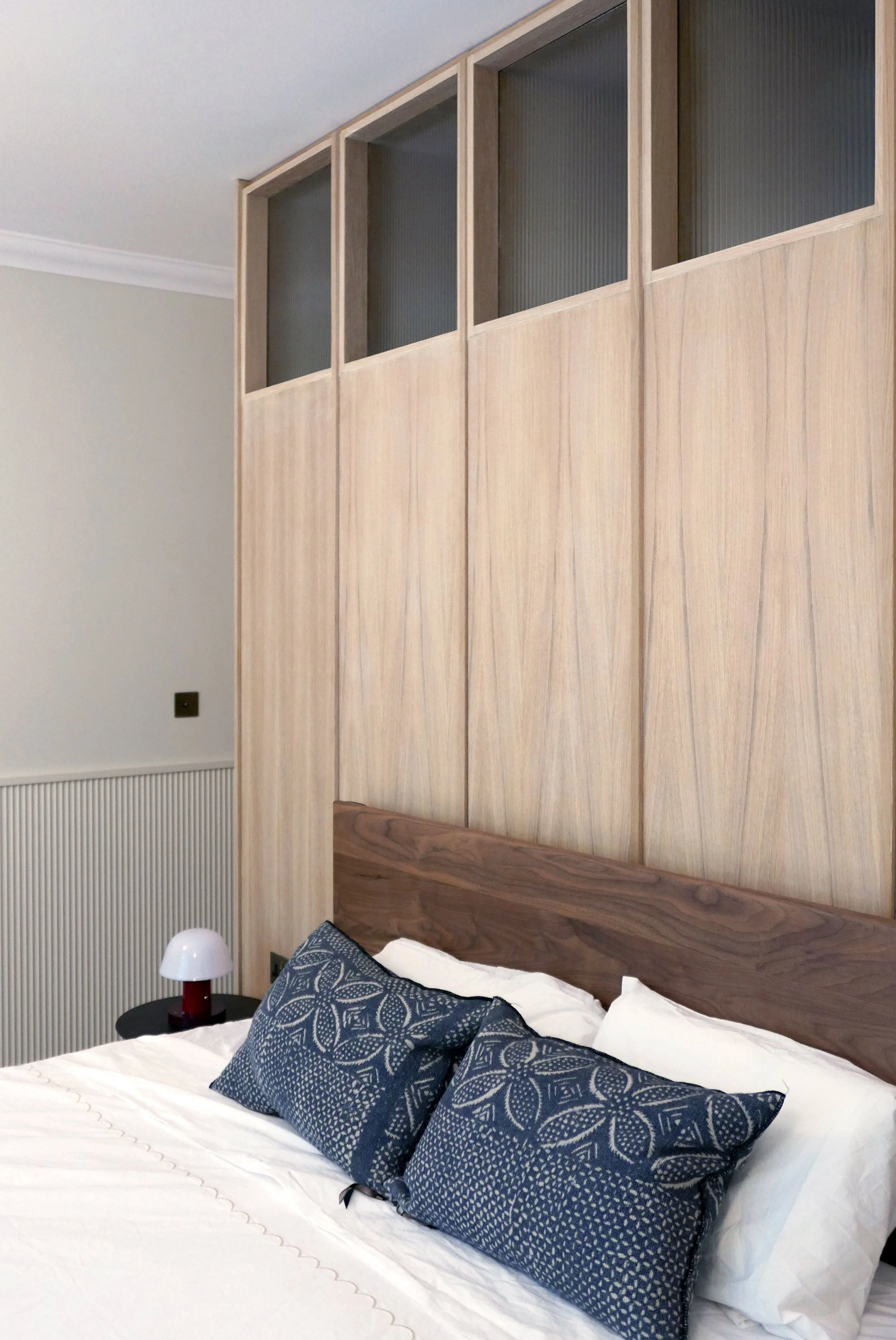
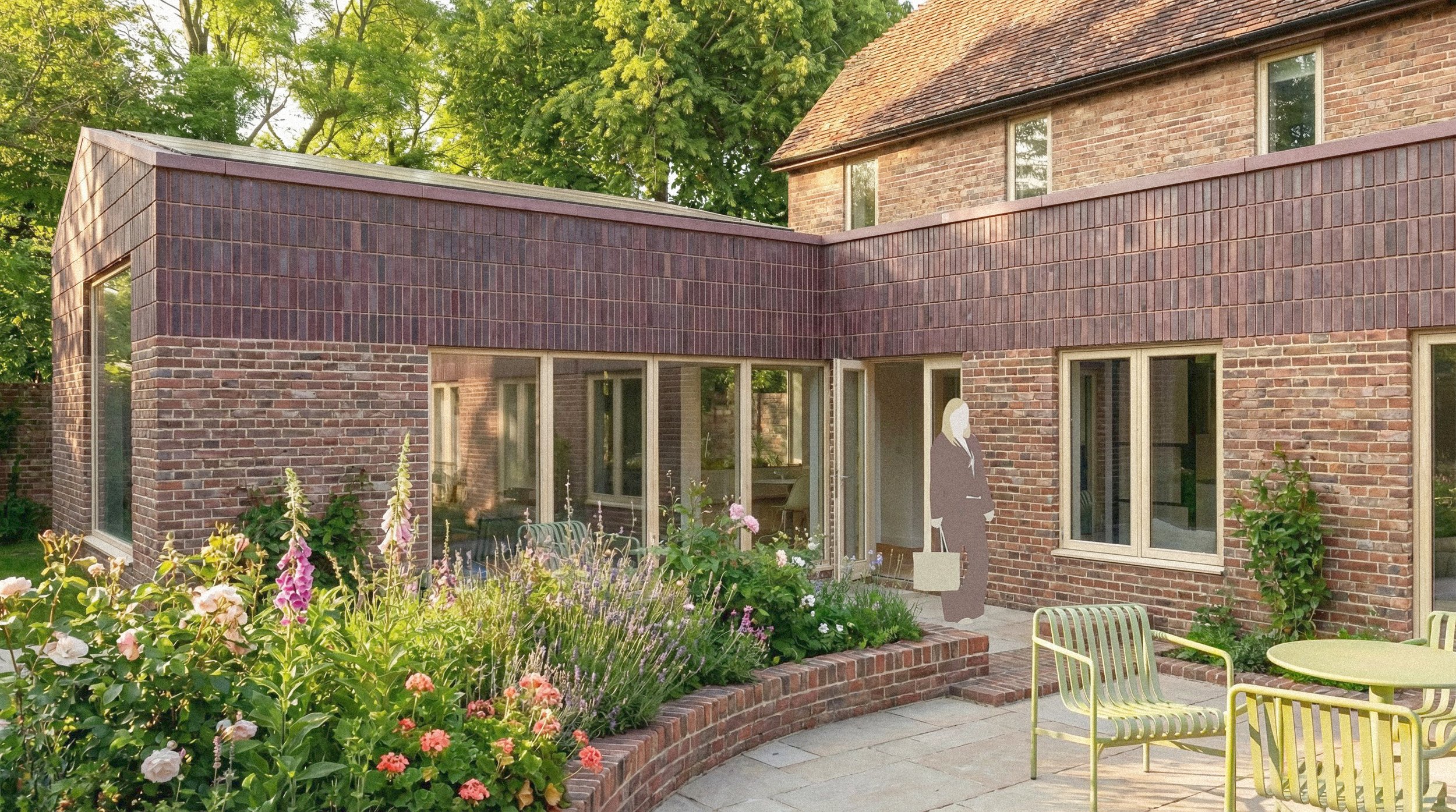
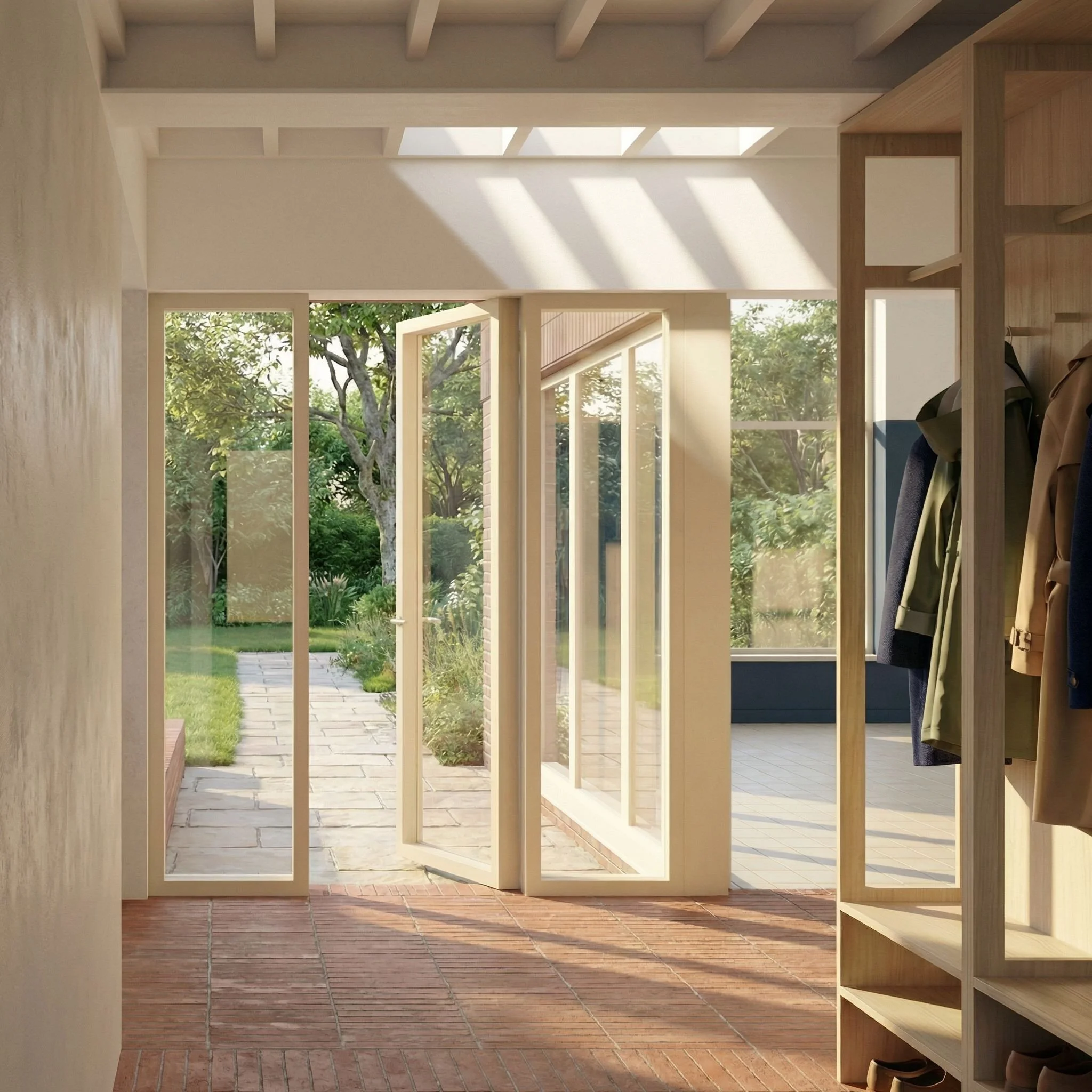
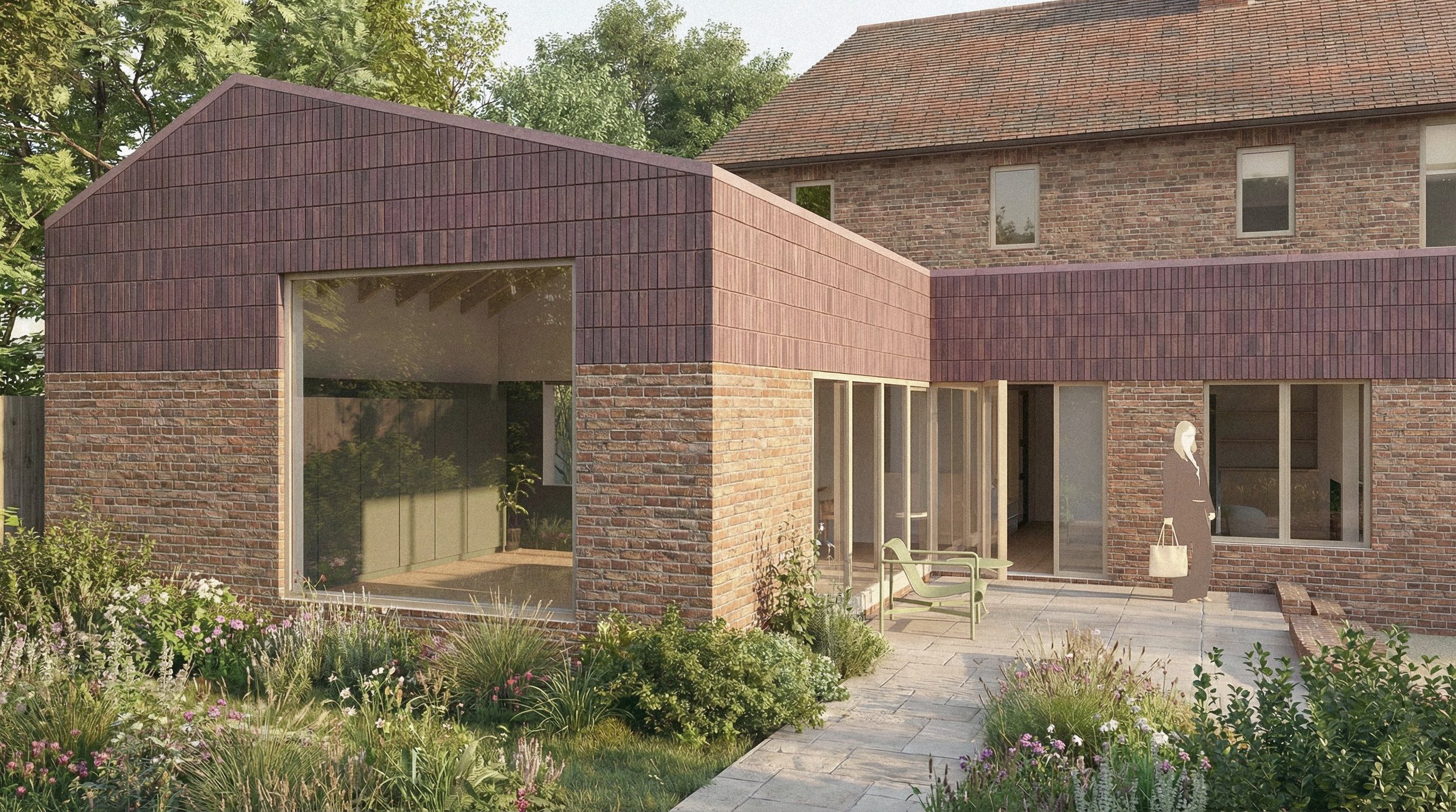
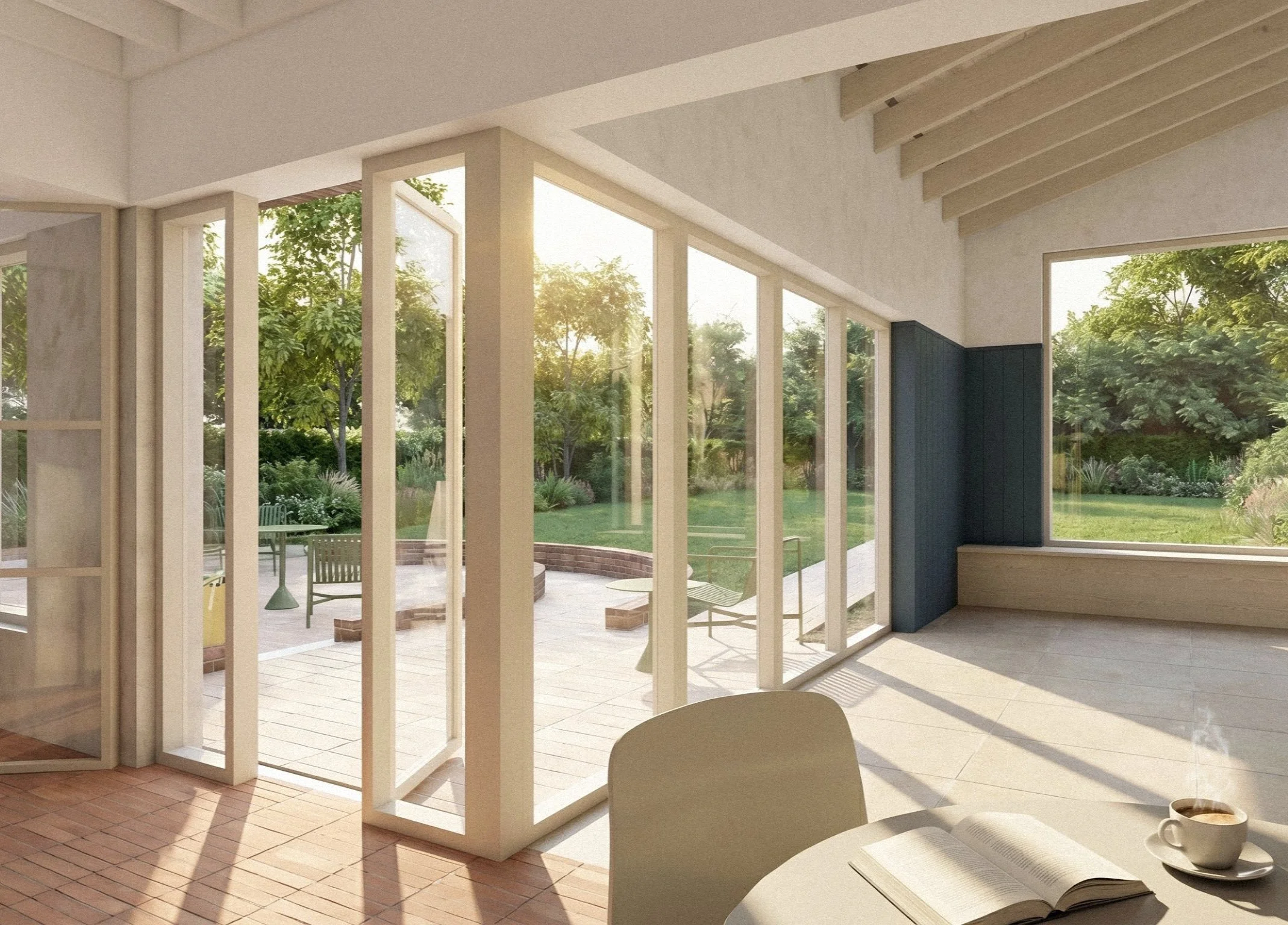
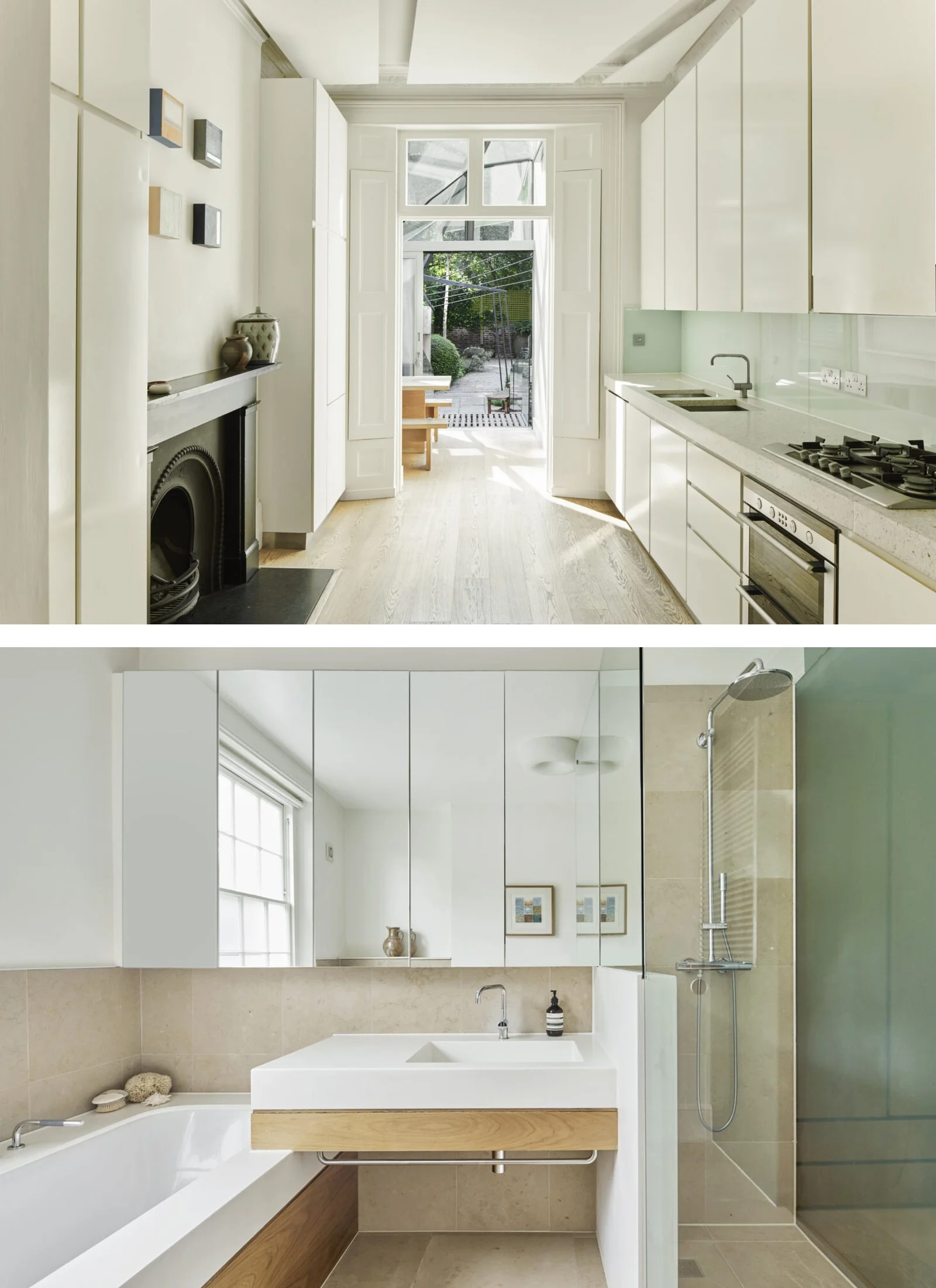
The extensive renovation of an Arts and Crafts–style property in the Surrey Green Belt transforms the home through a series of subtle interventions. More generous spaces, clean lines, and a unified material palette redefine its character.
Natural light—central to the family’s brief—drives the transformation. Externally, the changes are contemporary yet contextually sensitive.
A house and pool that folds and steps into the hillside of an ‘Area of Outstanding Natural Beauty’, its sculpted form opening out to frame privileged views and allow fluid, effortless movement around its interlocking, light-filled rooms.
ᗐ
This substantial house addition stretches out from the pitches of the original arts and crafts style building, folding and stepping down into the steep surrounding site. Its fold’s open fissures that highlight views around its interlocking rooms. Occupants move through a complex variety of spatial conditions and are provided with a series of carefully framed glimpses to the landscape around.
An extended living room forms a transition point between the old and new. This space links the disparate programmes of the house and provides views out and reflected light in via the swimming pool below. The house employs highly insulated sustainable materials, heat exchange systems, stack ventilation and water harvesting.
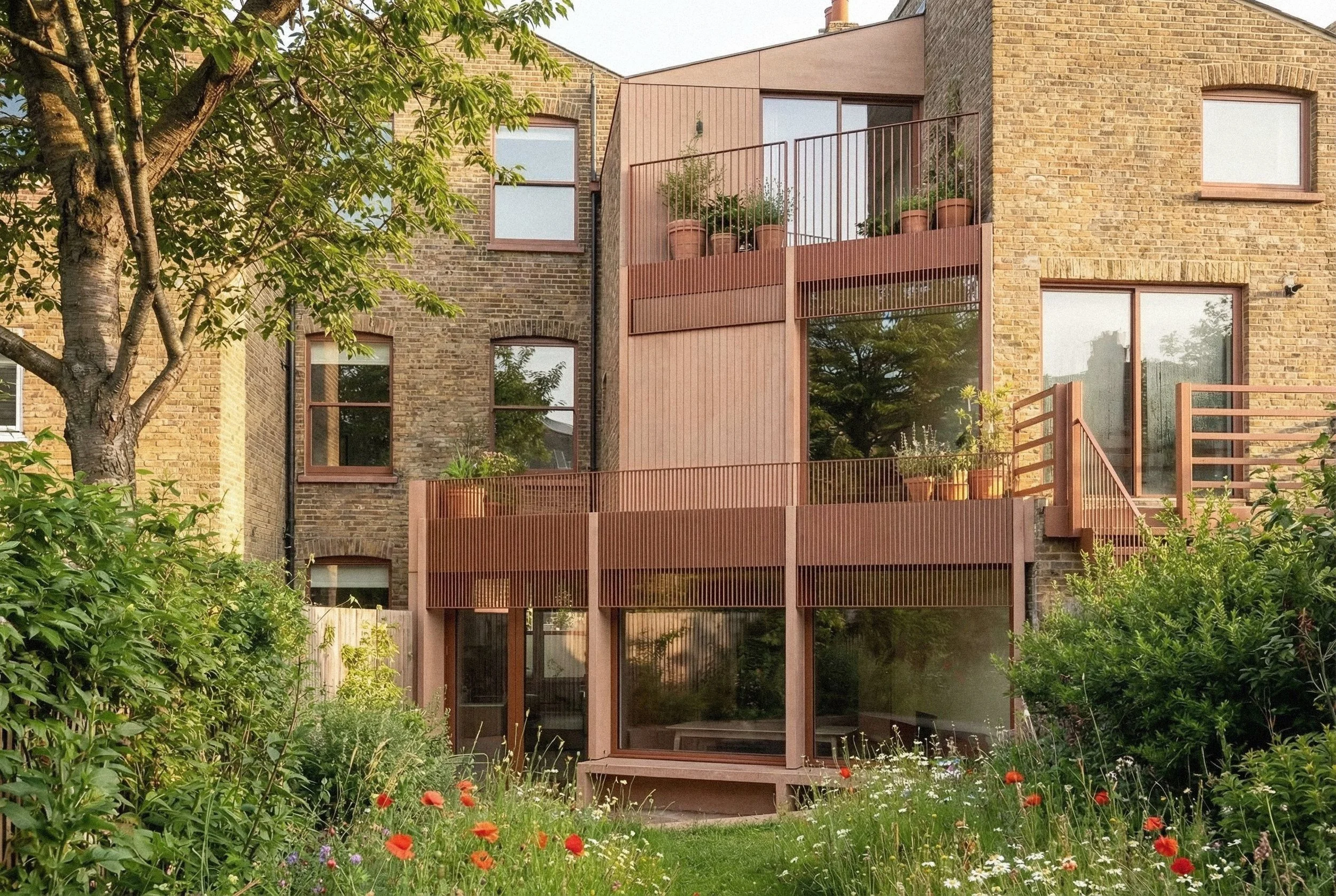
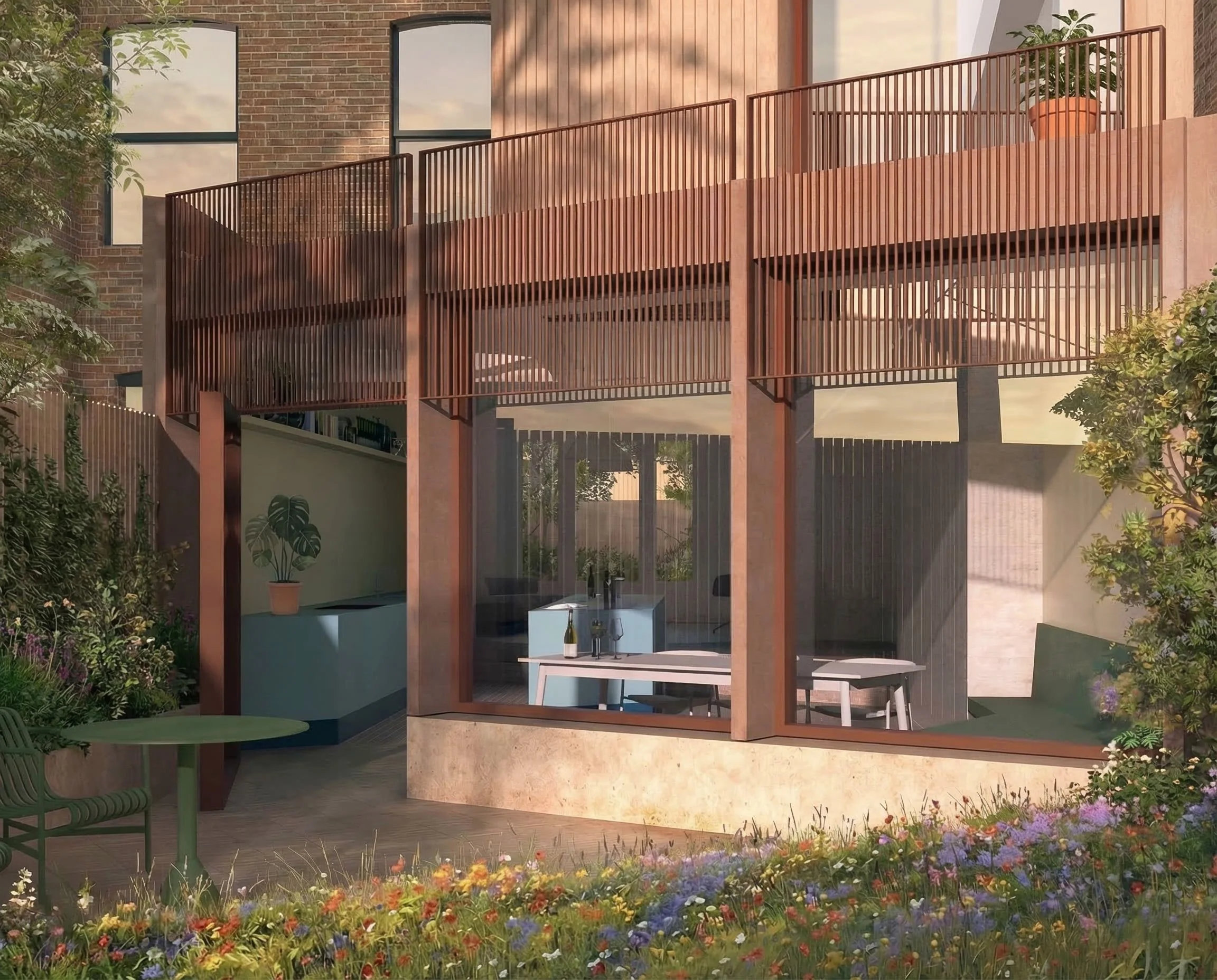
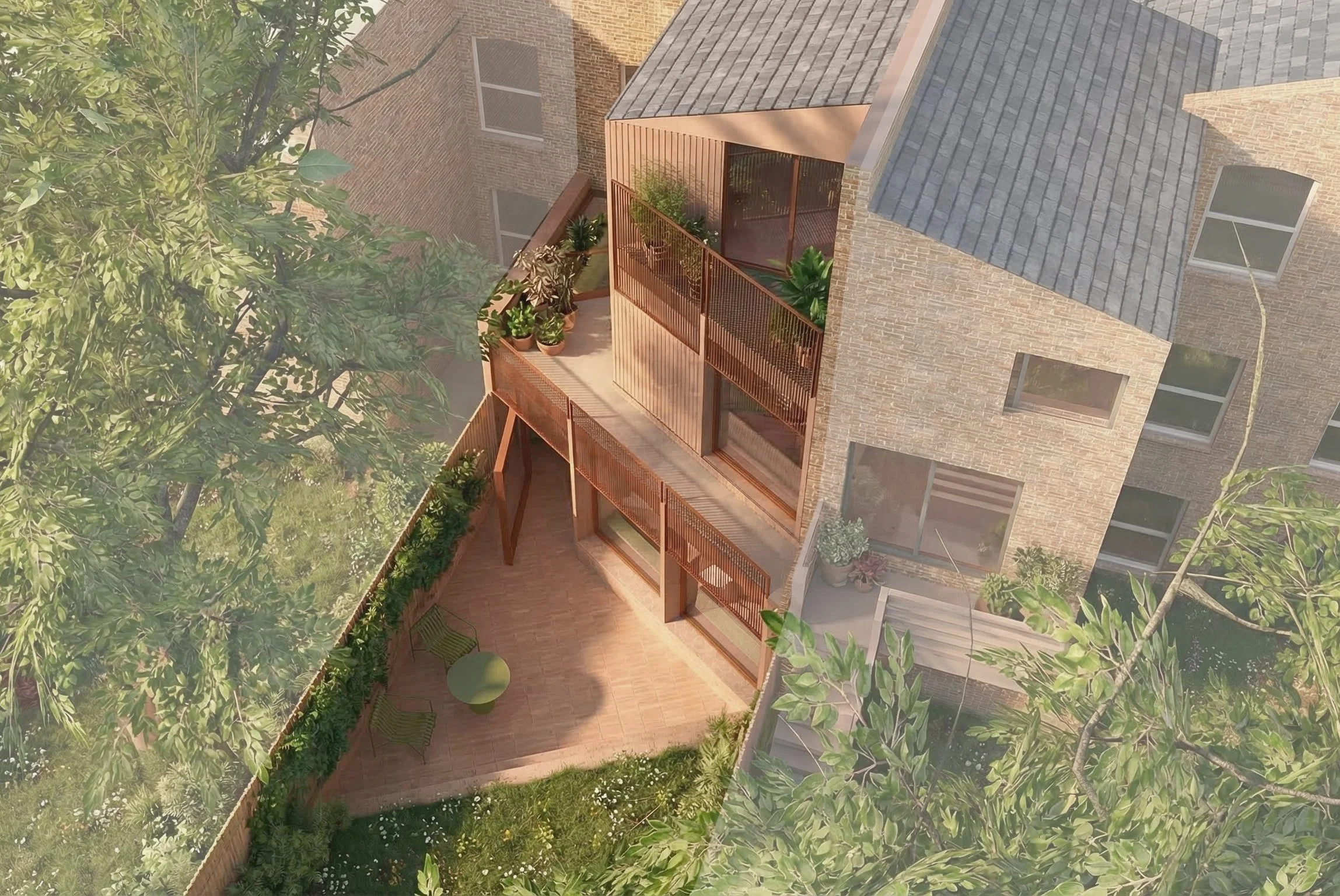
Creating space in a typical Edwardian terrace for a growing family, this project extends the house both up and out. The rear extension swells into the garden maximising this new connection, and the natural light and volume within. The material and form is continued into a roof dormer, together forming something precious amongst the surrounding ad hoc extensions and previously uncared for backlands.
ᗐ ̌
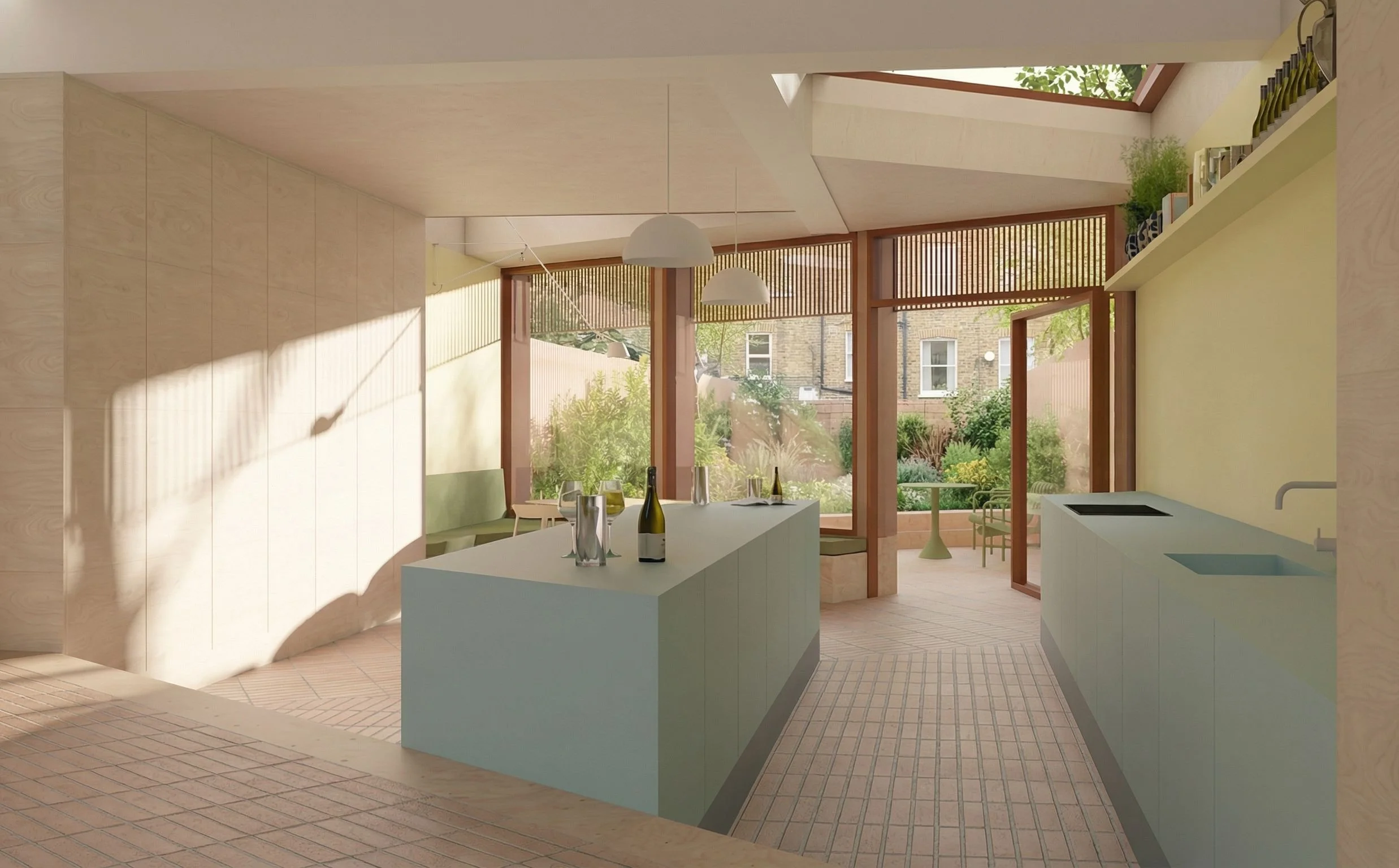
The ground floor is opened up with views and light right through. An Edwardian green joinery ‘island’, shared between the utility and kitchen spaces, forms the heart of the plan. The kitchen connects contrasting living spaces, occupying the awkward centre of deep London house plans that is so often an afterthought. Concealed pocket doors allow all the various spaces to be fully separated.
Structural alterations are kept to a minimum with an exiting spine wall concealed within the large central joinery unit around which the ground floor plan operates.
Materials and colours are carefully selected to reference the original Edwardian building, blending the historic with the contemporary.
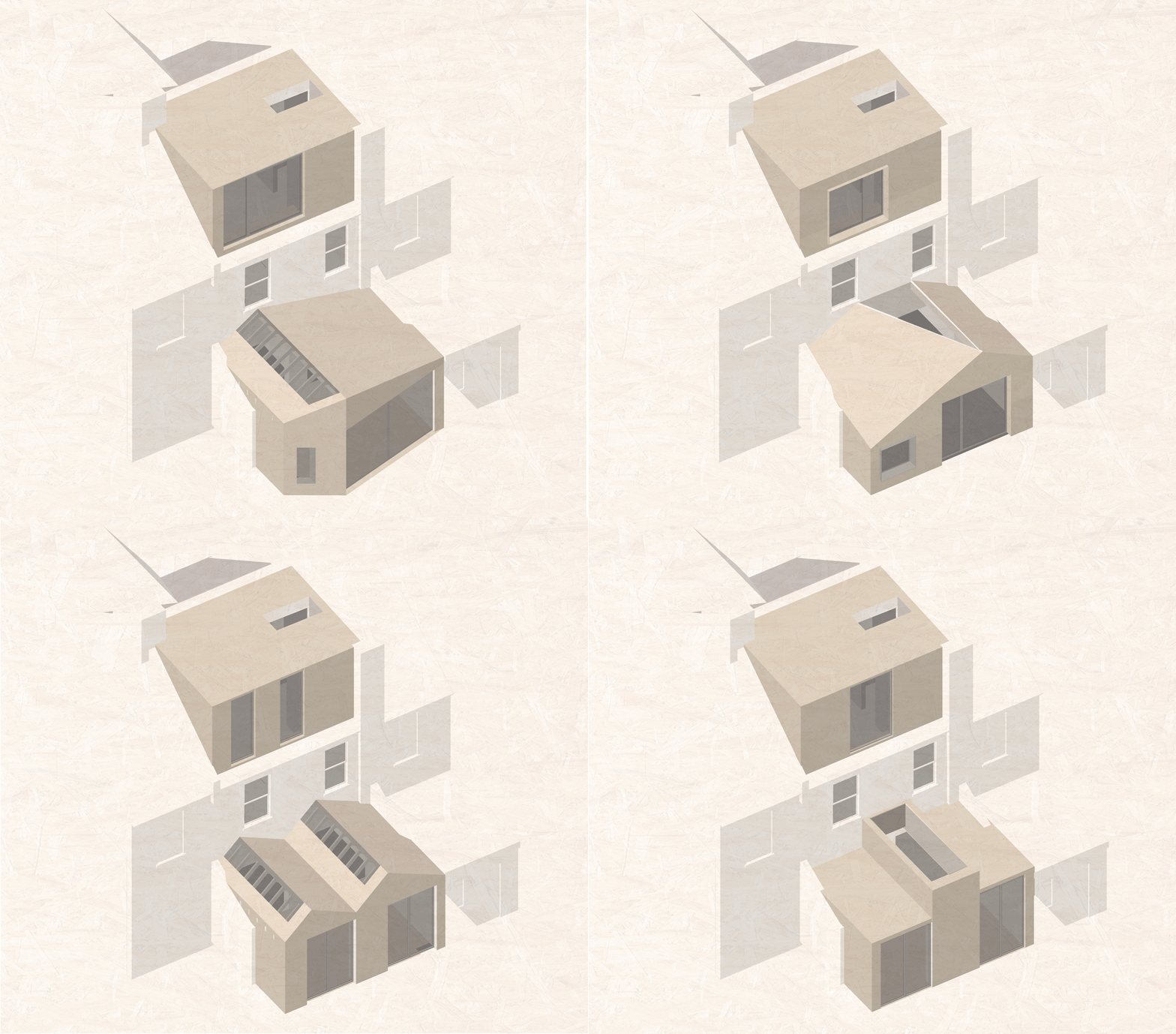
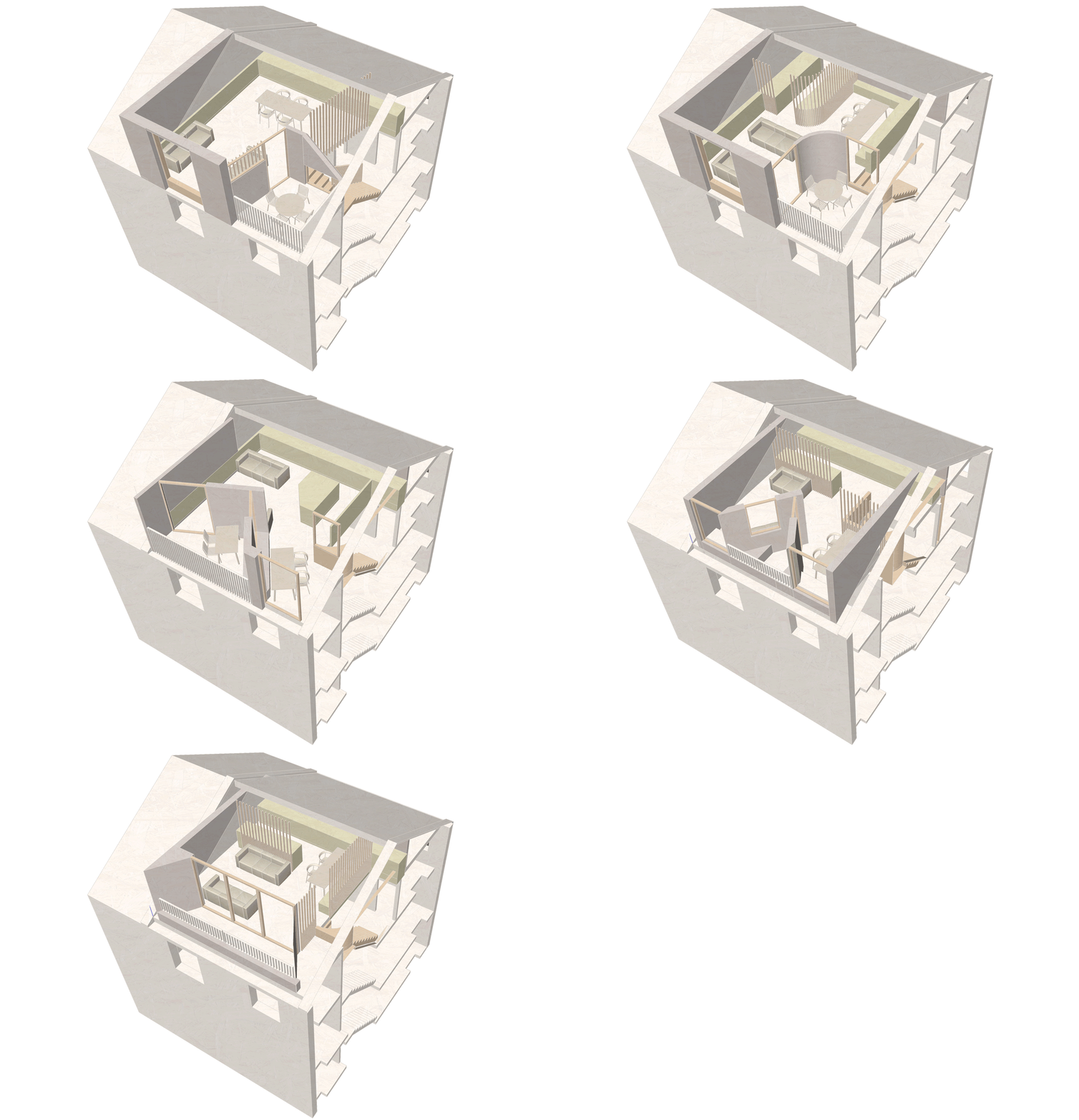
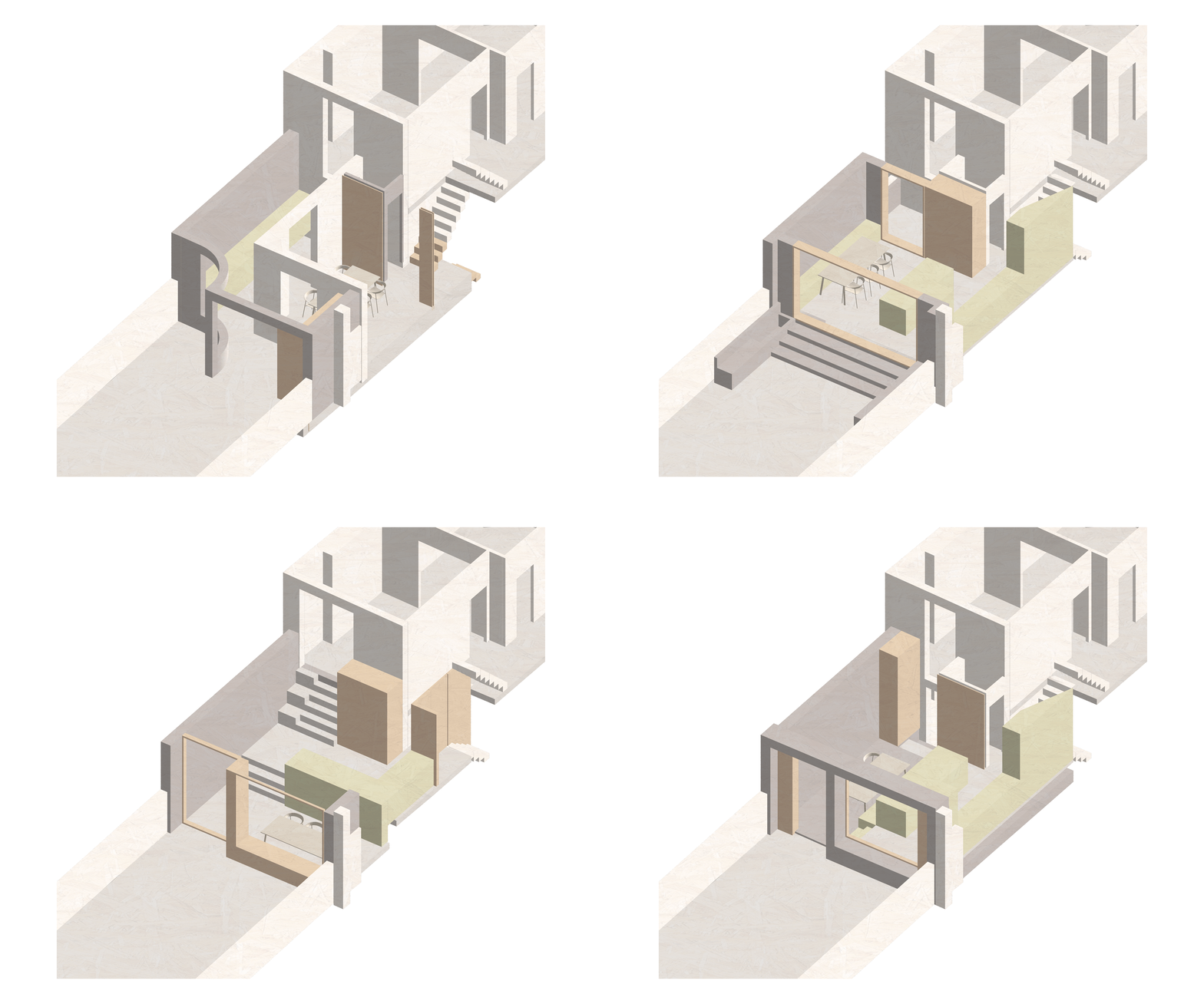
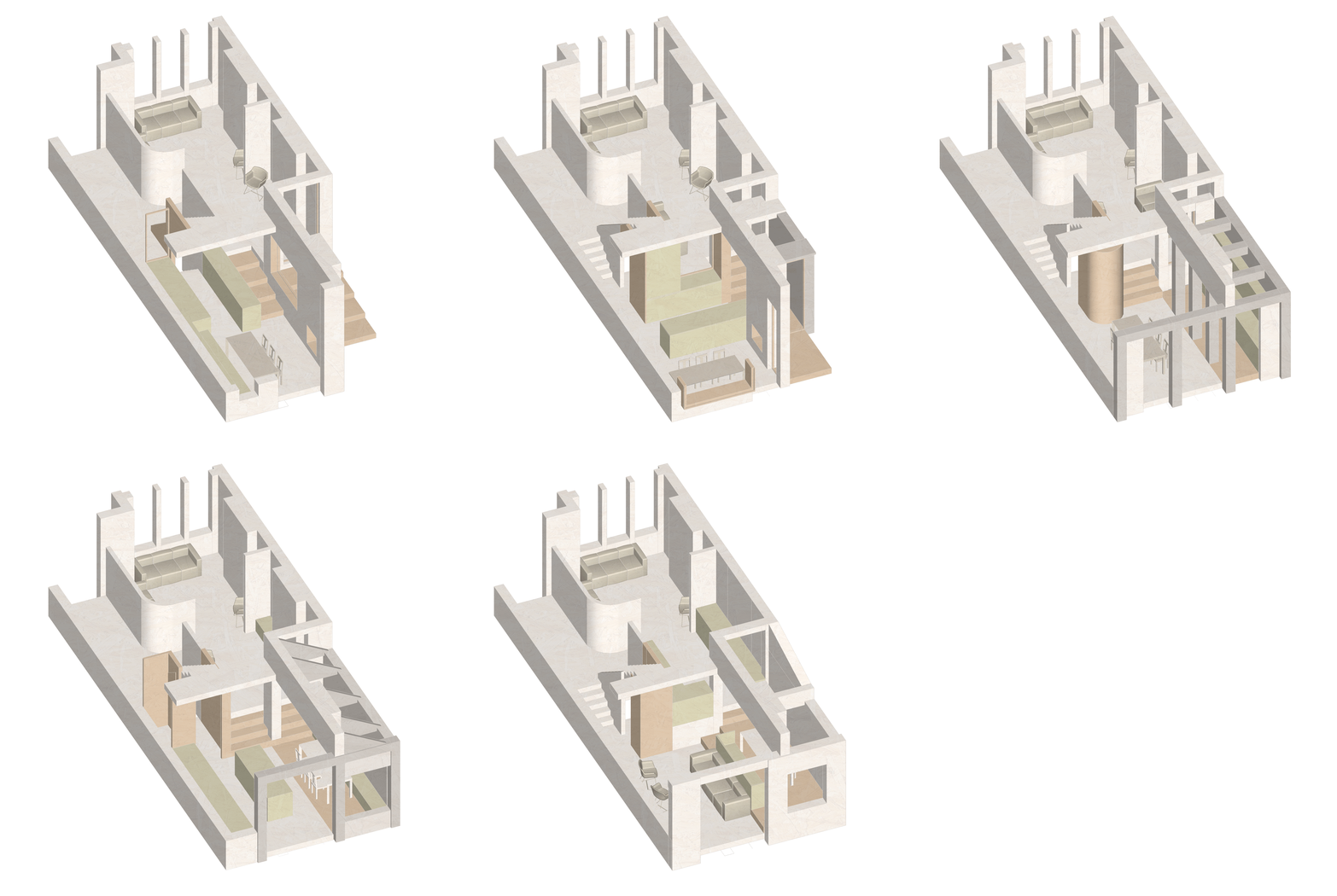
Various forms and arrangements were tested in the early design stages.
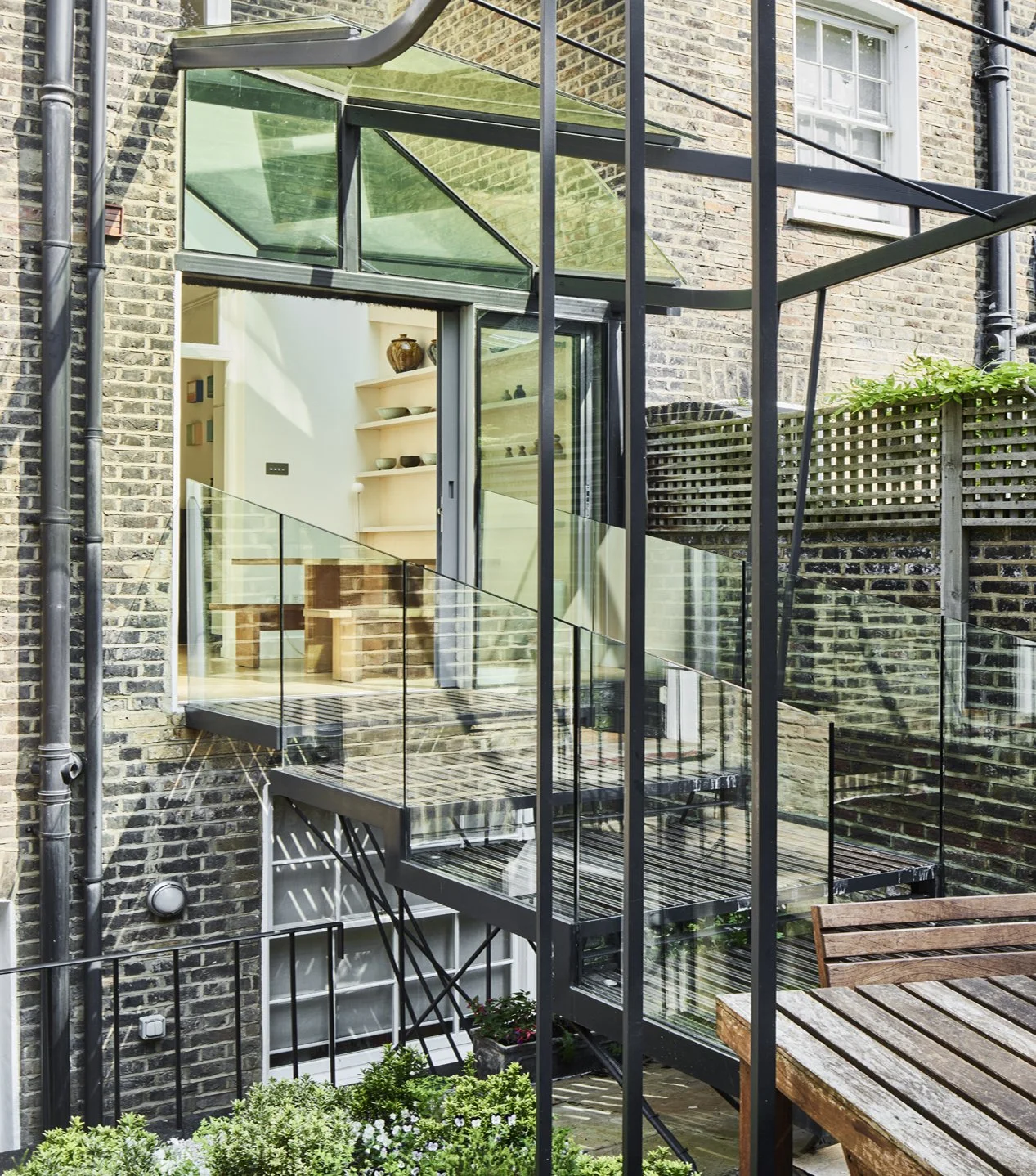
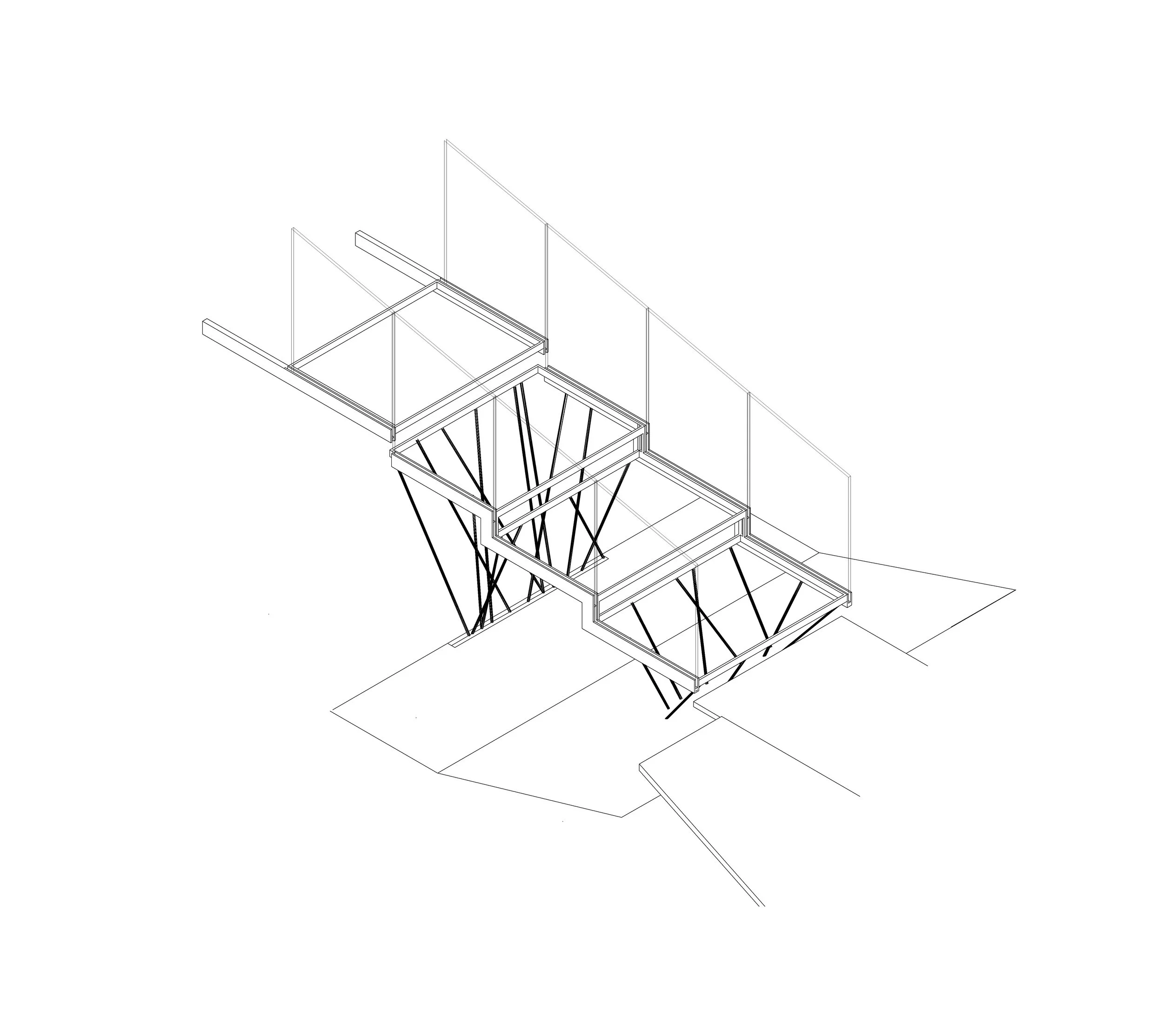
To enlarge and open up this family house, this scheme takes advantage of a step in the existing outriggers. By folding the extension folds back, it achieves a terraced multi-storey volume that maximises the south-west afternoon sun while still respecting neighbours and tight planning requirements. This geometry is then extended inwards, creating playful spaces and light wells that connect to the surrounding rooms.
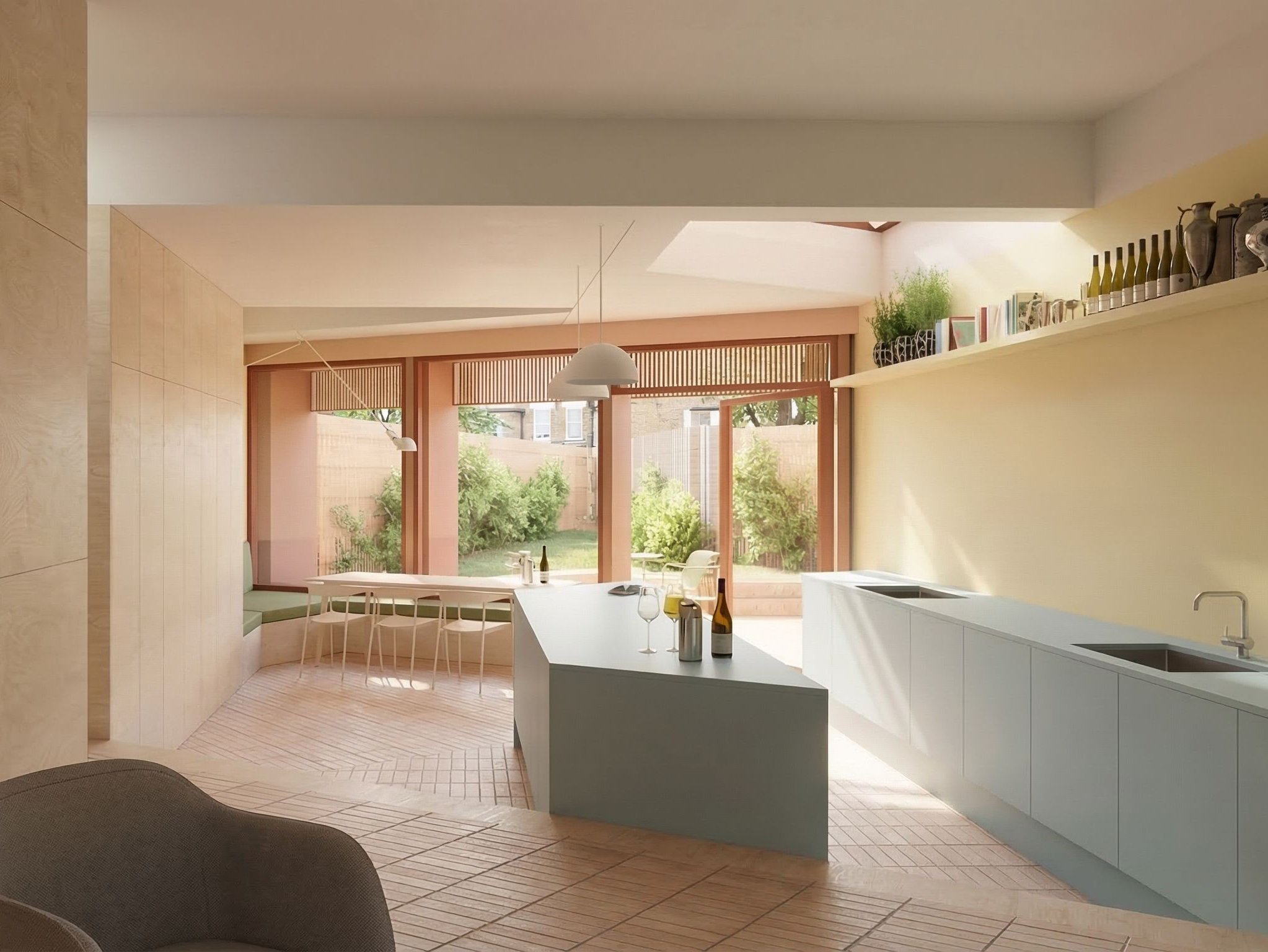
Designed for clients whose home life centres on cooking, entertaining and enjoying the outdoors, this project reconfigures the ground floor to bring those activities together seamlessly, ensuring they can be enjoyed comfortably in any season. The kitchen is the focus of a large space designed for entertaining.
ᗐ
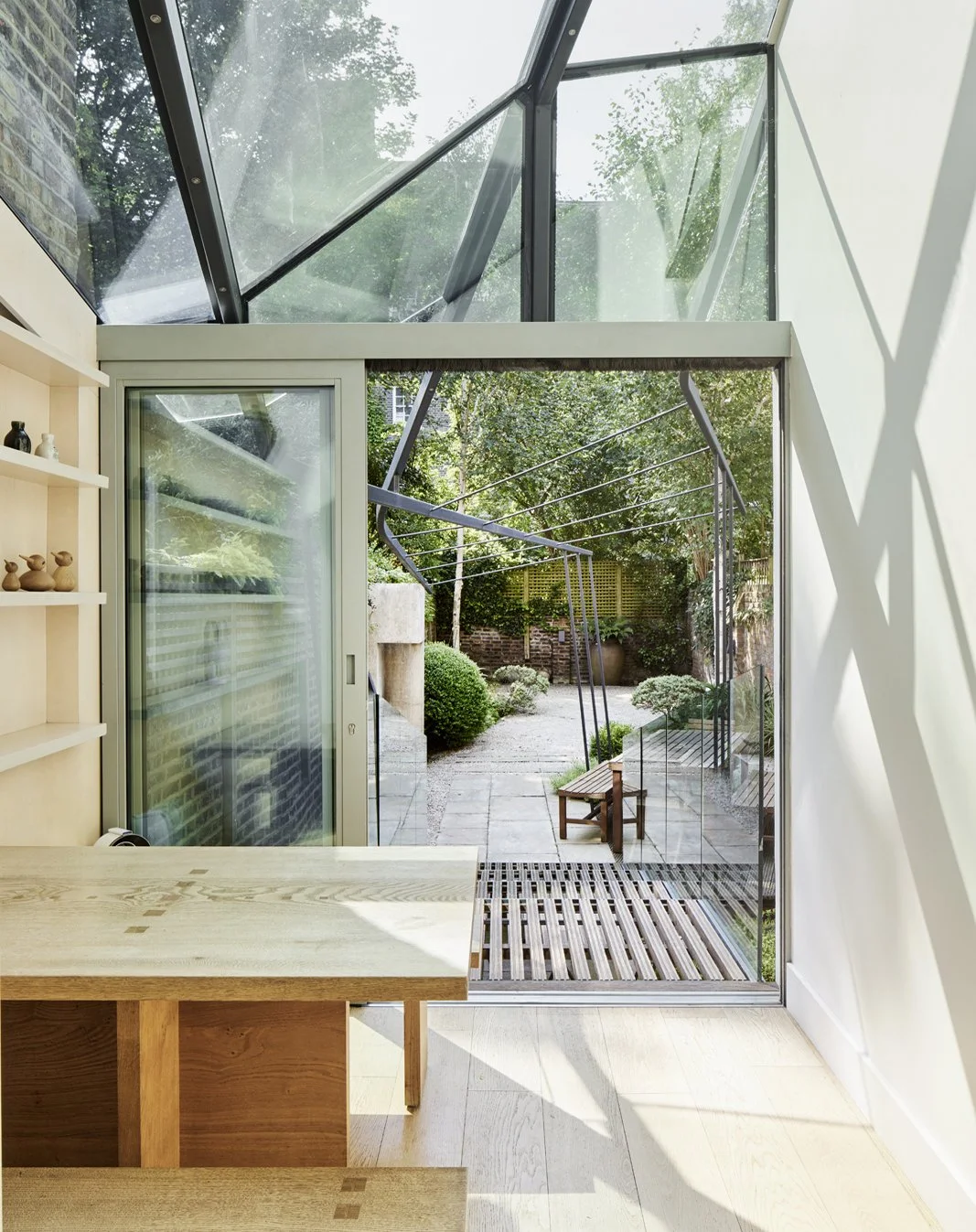
The kitchen area looks out across an open, bright top-lit dining space to the garden, where a window seat allows dining with the closest connection to the garden in all seasons, both inside and out. The dining is flanked by informal bench seating/storage that extend out into the external garden ‘room’.
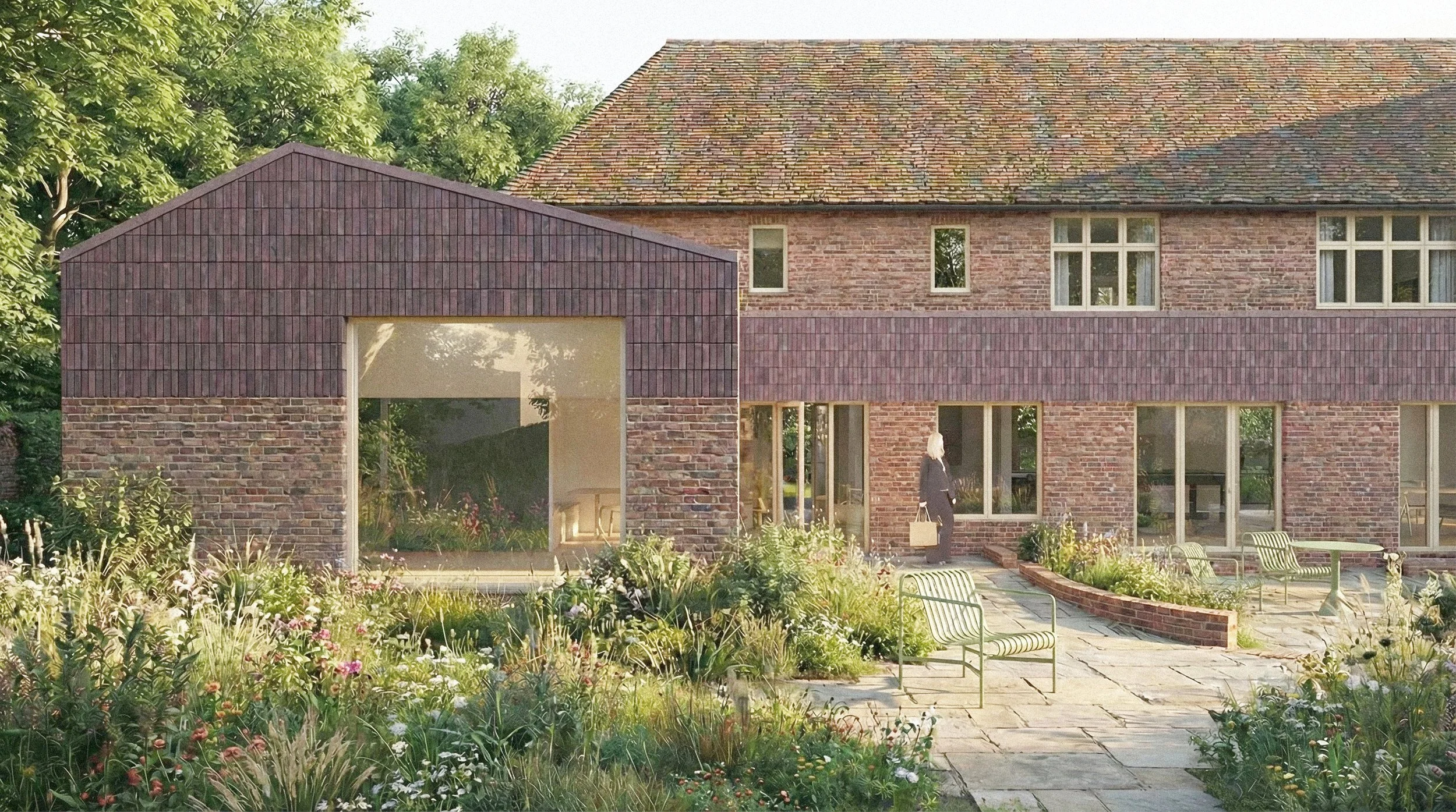
A simple adaptive extension brings living space into a garden setting with minimal means, utilising existing foundations. The proposal activates external areas, creating heat traps with thermally absorbant materials to prolong outdoor use in a fickle climate.
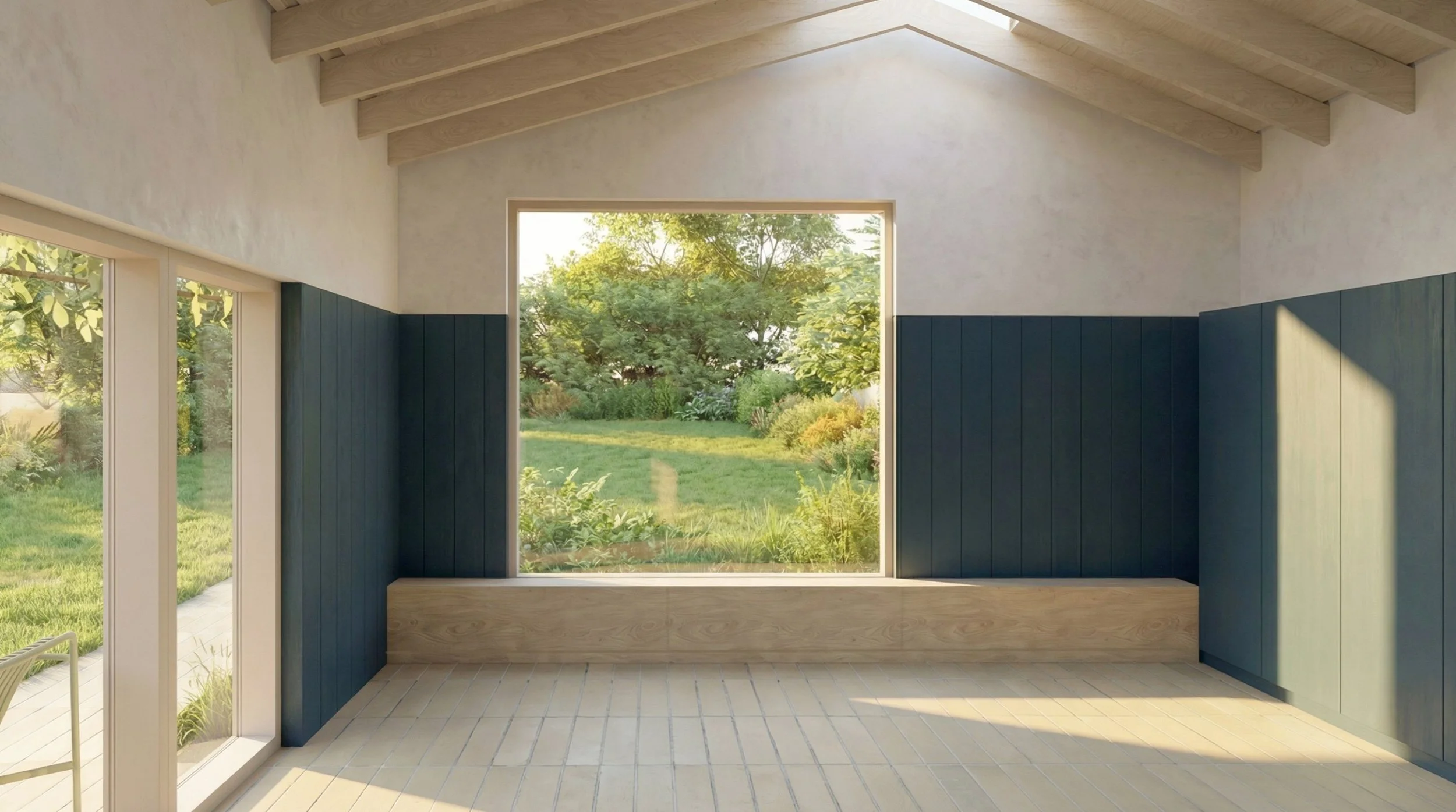
At the junction the existing house, the layout unlocks the space’s potential. An opened corner forms a light, airy vestibule, creating a reading or breakfast retreat with generous views and a strong connection to the new addition. Expanded service areas support the main house and allow the garden building to operate semi-autonomously while establishing a strong spatial entry sequence.
Materiality and proportion link the extension to the existing building while maintaining a contemporary language.
Providing a bright open space above the surrounding neighbourhood, it was critical to the client that this also provided an outdoor space to retreat to, while still feeling connected to the community.
The scheme extends a 4th storey apartment into a large existing roof void, held within the shared freehold, bringing the living spaces up to the open and playful new storey.
̌
The folded terrace enclosure, chosen after careful discussion of numerous proposals, defined various internal conditions within a fluid space and shelters the south facing outdoor space form neighbouring properties within a conservation area.
Three internal zones (kitchen, dining, living) pin wheel around the arrival from the head of the new stair. Each is given its own character: screened kitchen ‘mezzanine’, splayed lounge and terrace, dining ‘lookout’ alcove. The reconfiguration of the existing floor below provides 4 bedrooms.
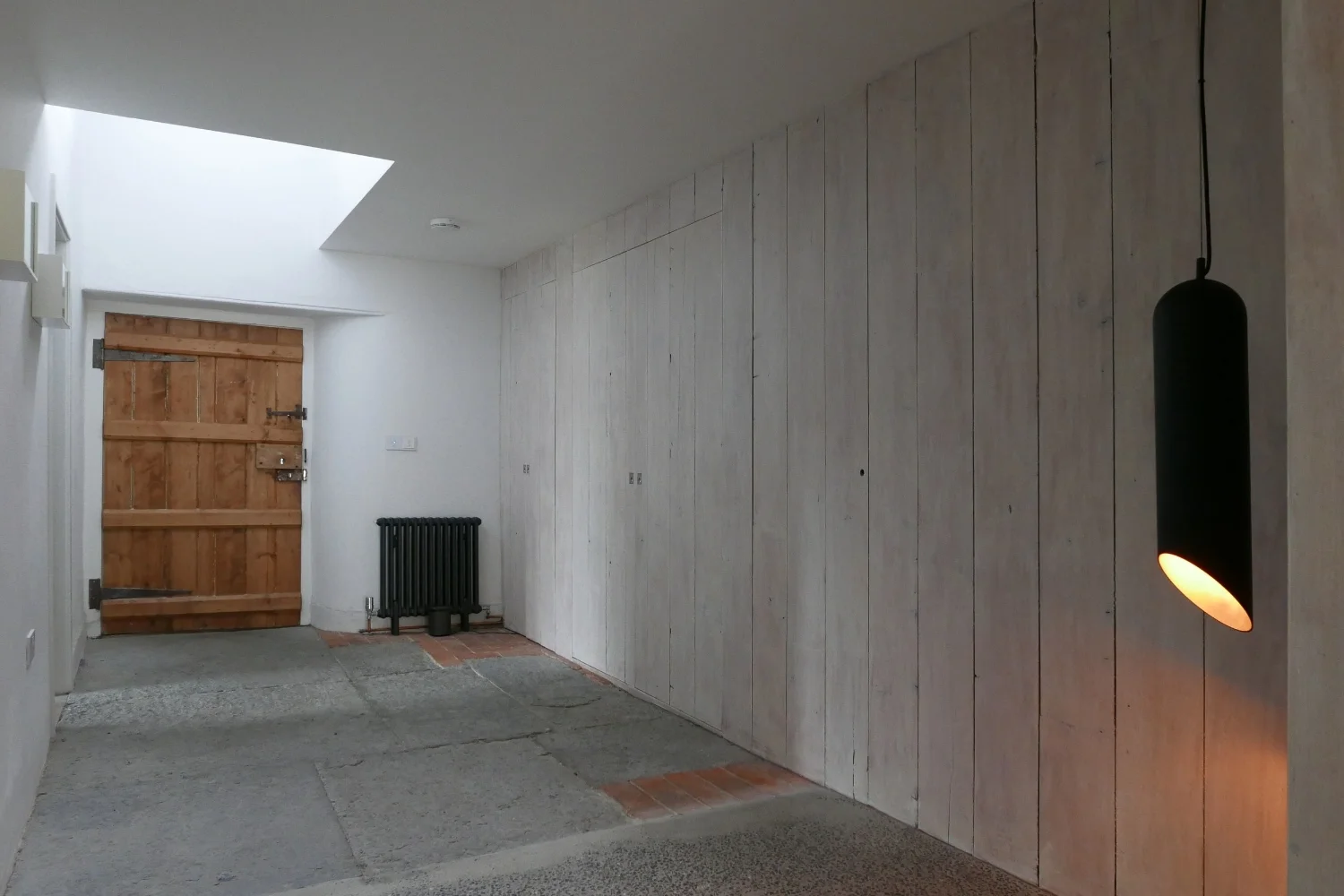
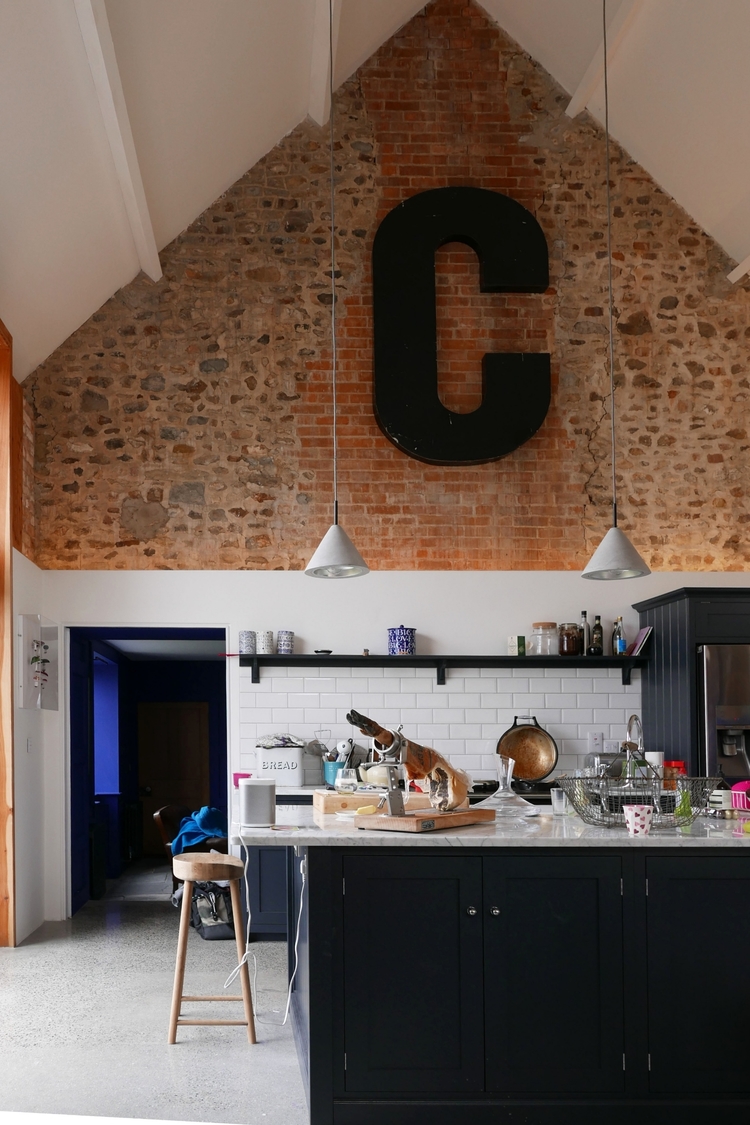
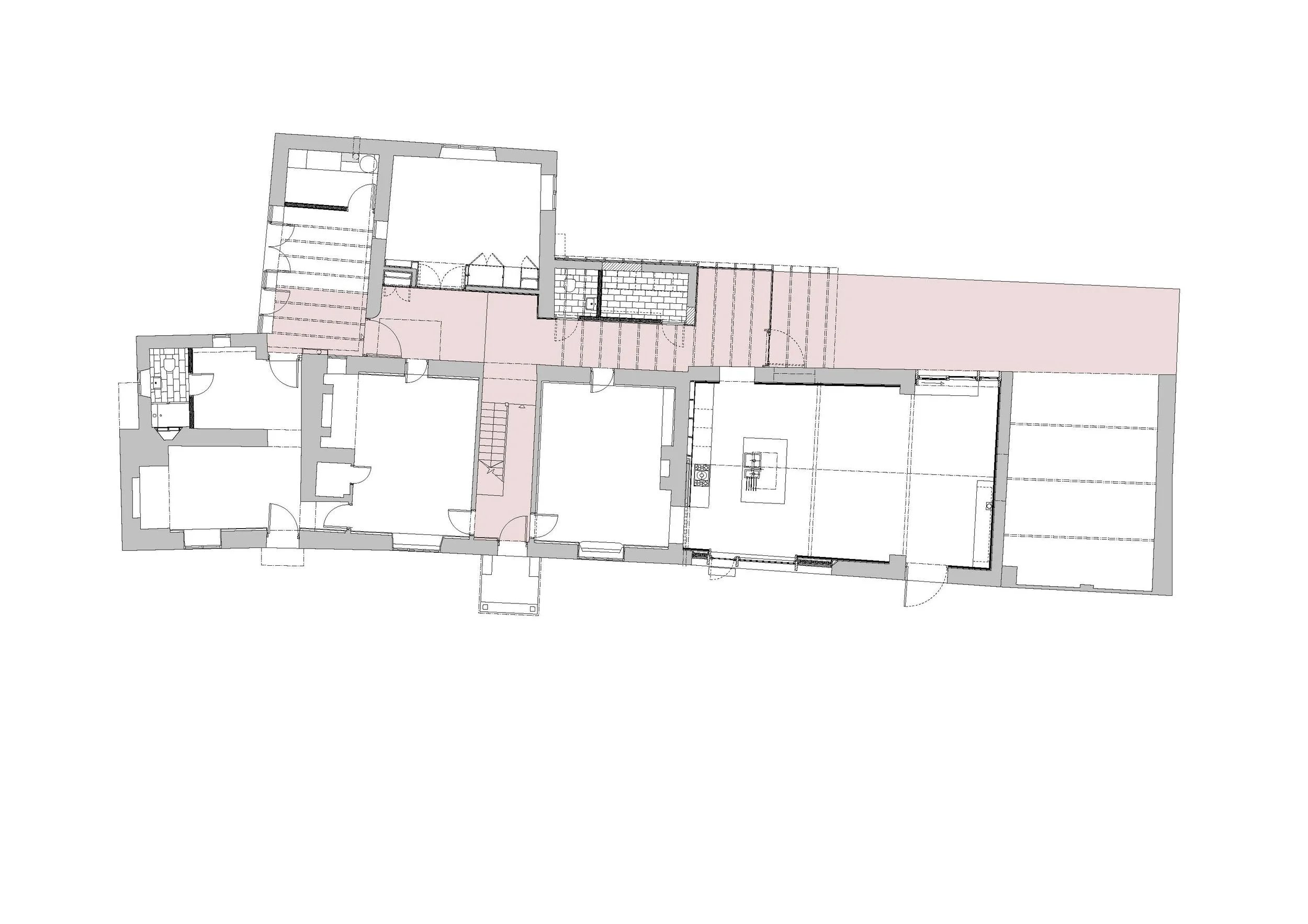
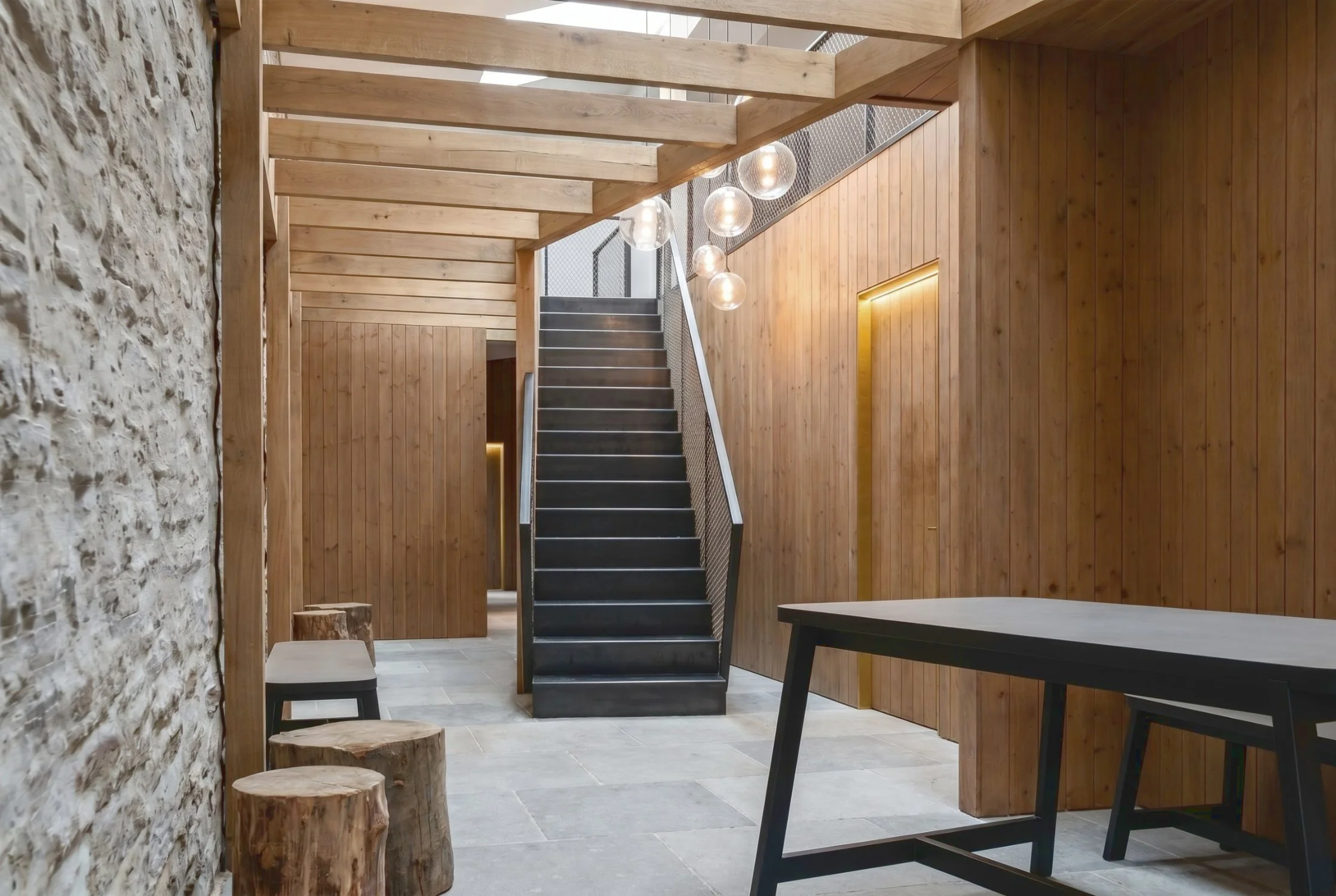
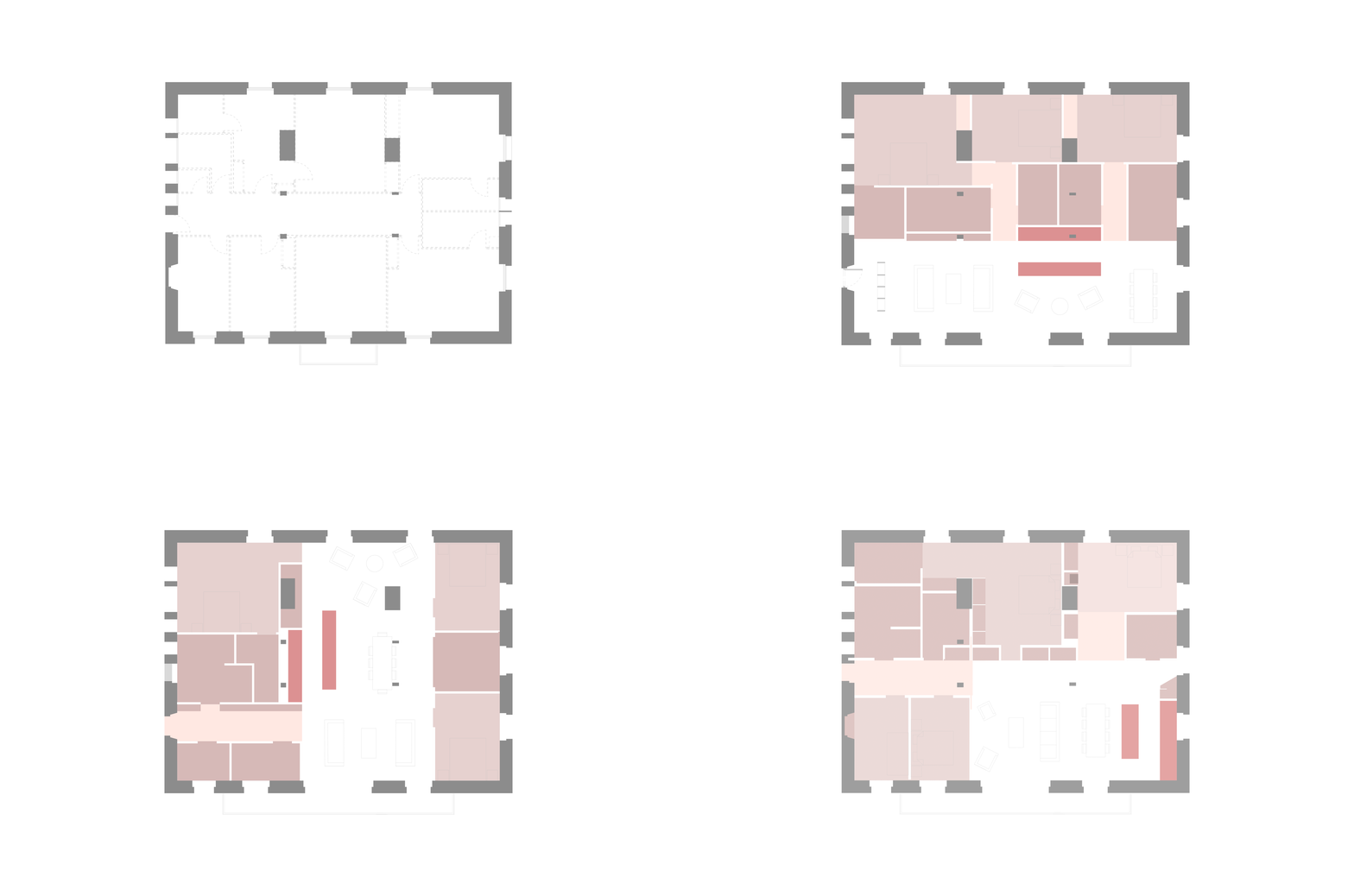
A transformation of Coggans Farm focuses on re-organising the supporting spaces into an efficient spine that runs the full length of the house, leading to a living ‘hall’ housed within the old barn and a bright breakfast area that opens up wide views to the garden. This provides a simple, clear link in place of the previous room-to-room circulation, and establishes a cruciform axis anchored by an opened-up entrance hall and a reconfigured stair.
ᗐ
The proposal re-organises the stores and service spaces of the existing farmhouse into an efficient spine that runs the length of the house alongside a bisecting hallway that extends into a living ‘hall’ within the old barn itself. This move replaces the original room-to-room circulation of the farm with a simple link space that opens up the entrance hall and stairs to connect a formal and informal routes through the home. The new spine terminates in an east facing breakfast area that open up views into the garden. The contemporary materials used are honest, suited to the farm’s agricultural context, and expressive of the alteration and development of the building.
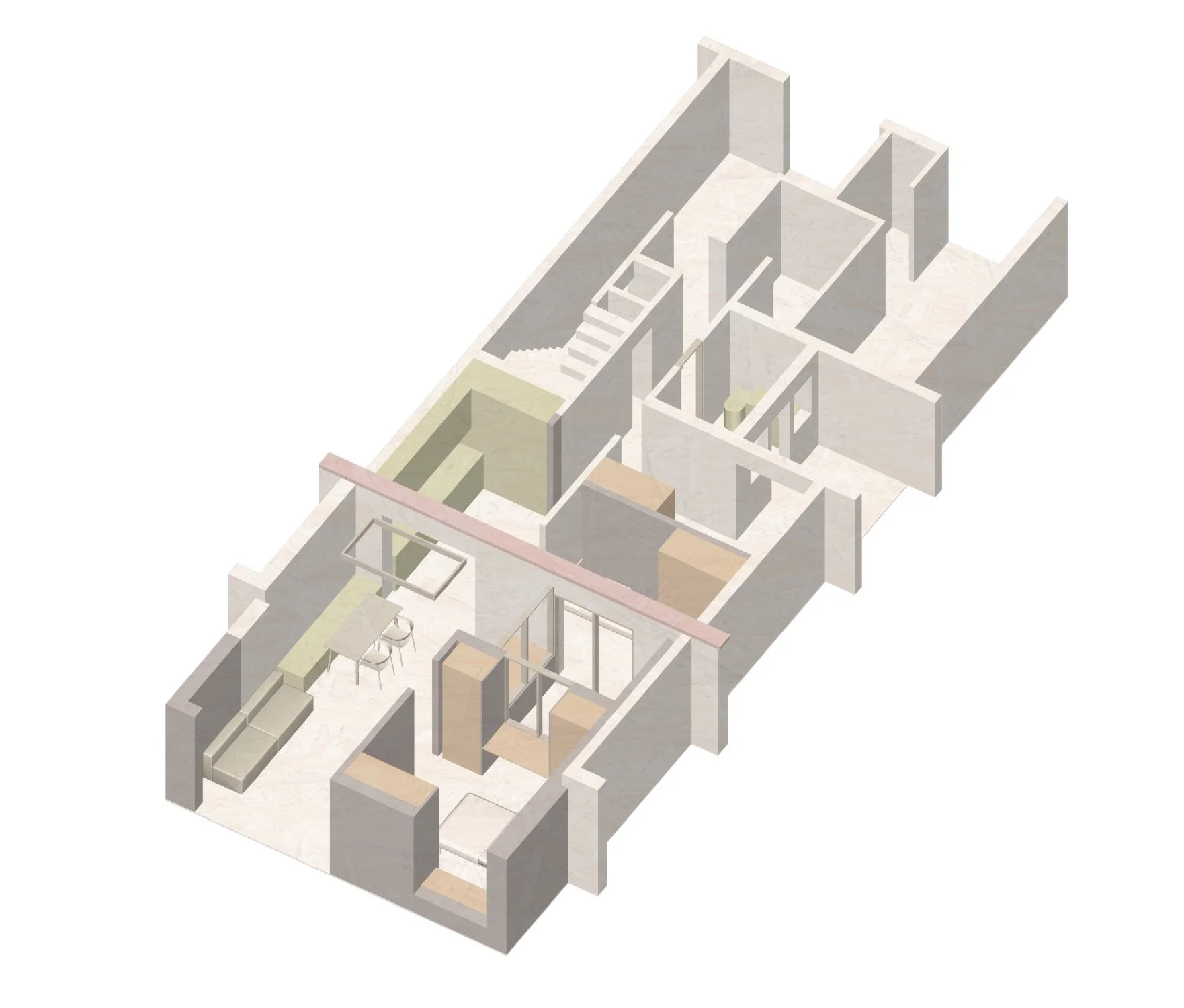
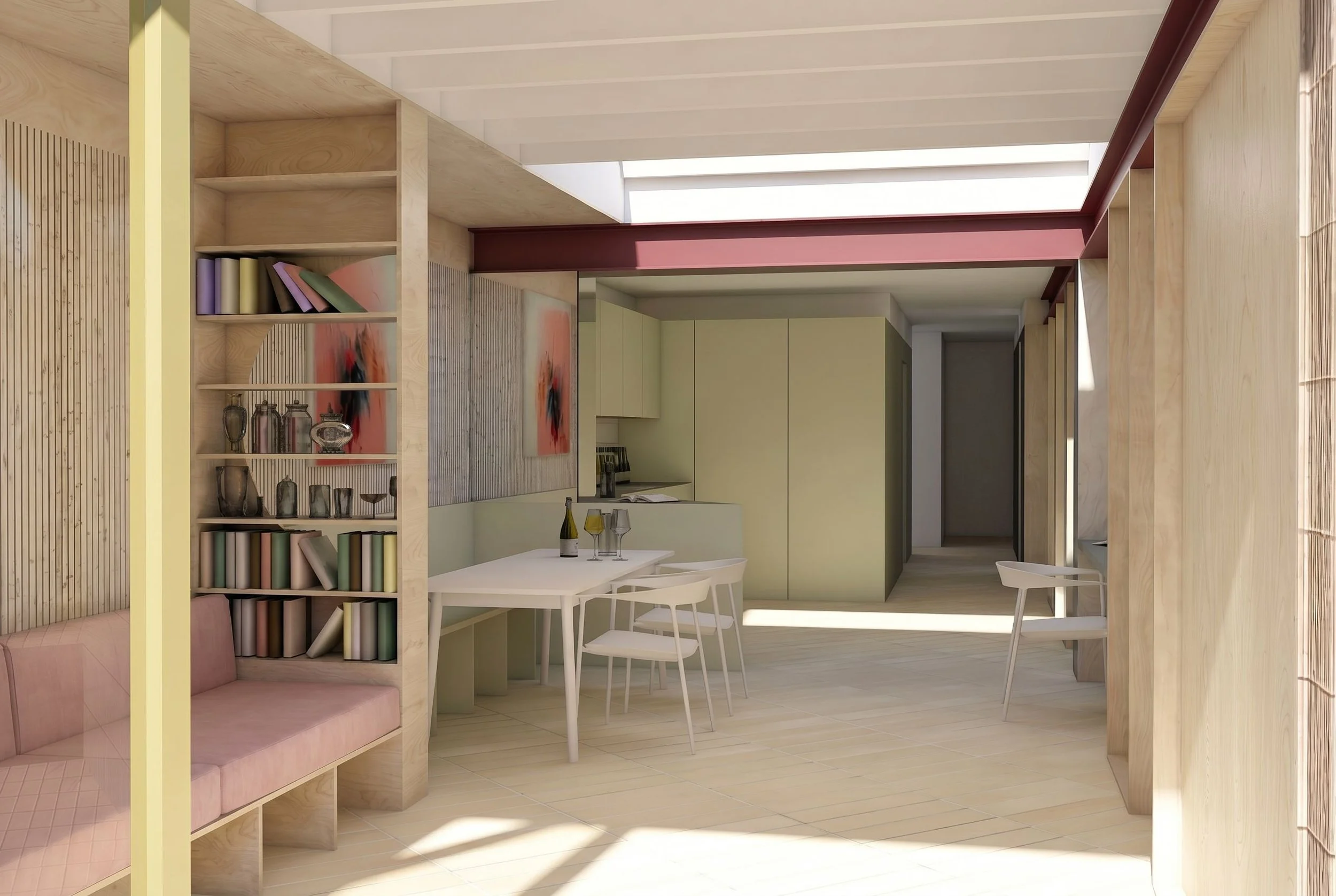
A ground-floor apartment in Crouch End is reconfigured to optimise space for a growing family, with a deep plan split lengthways into living and sleeping zones.
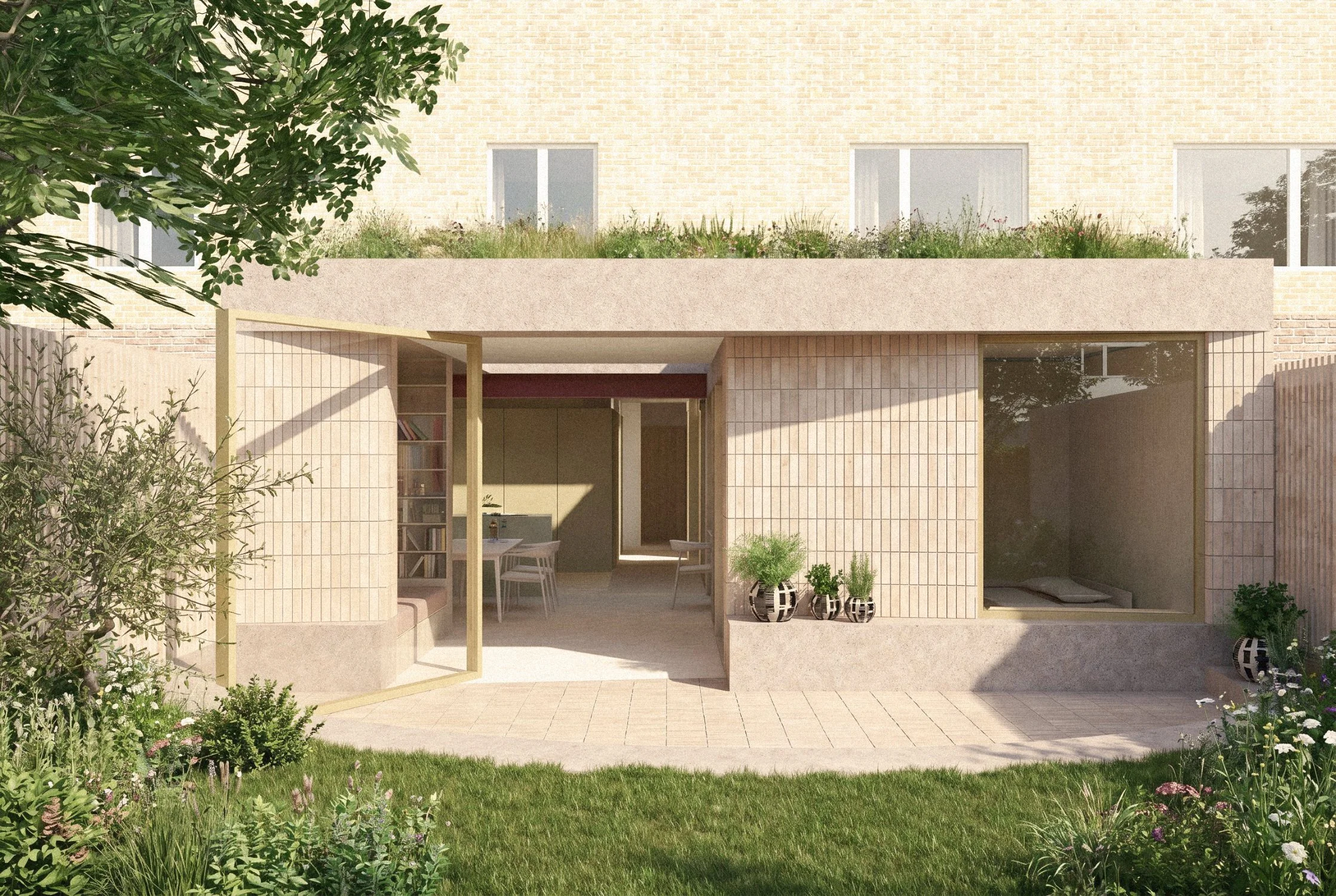
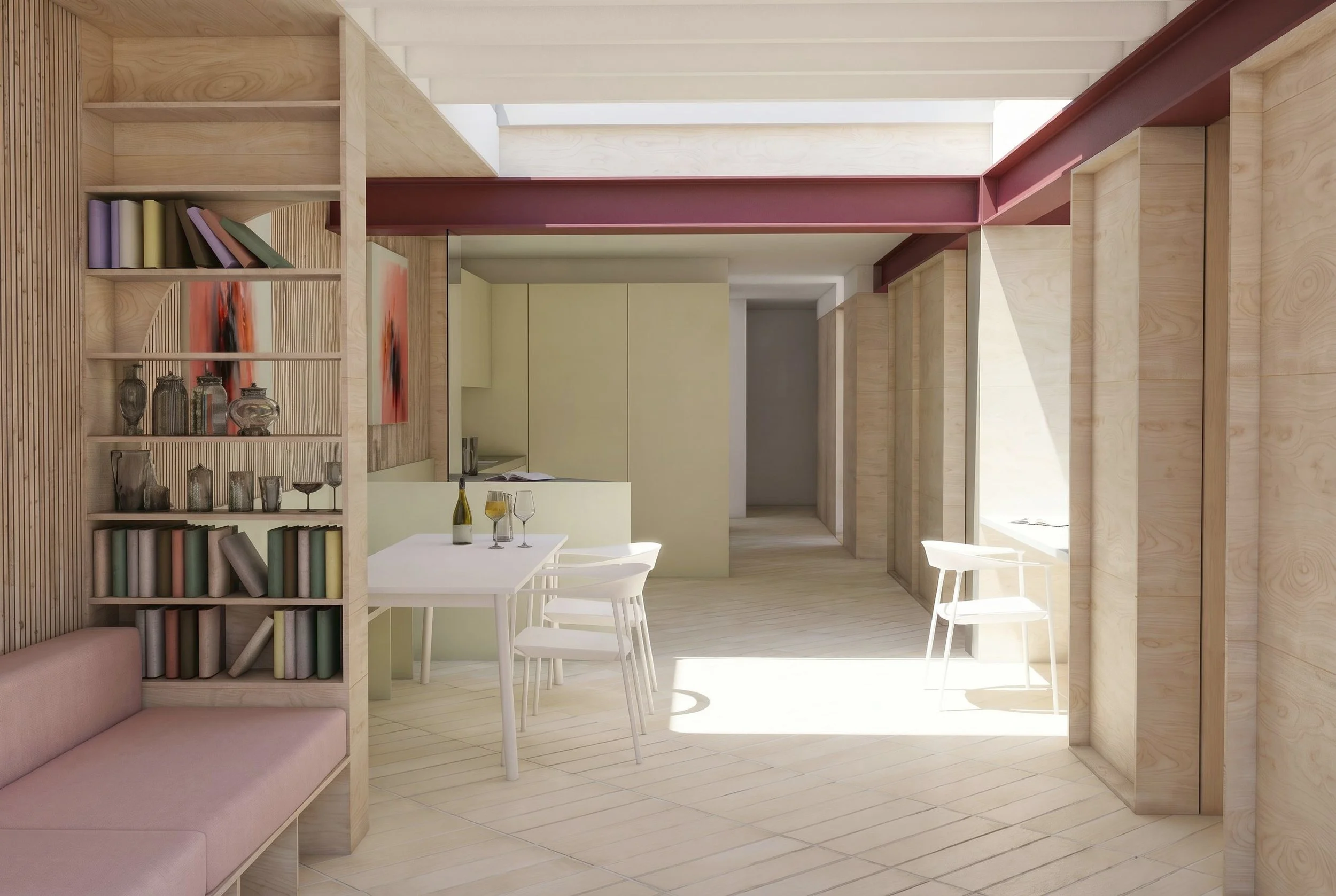
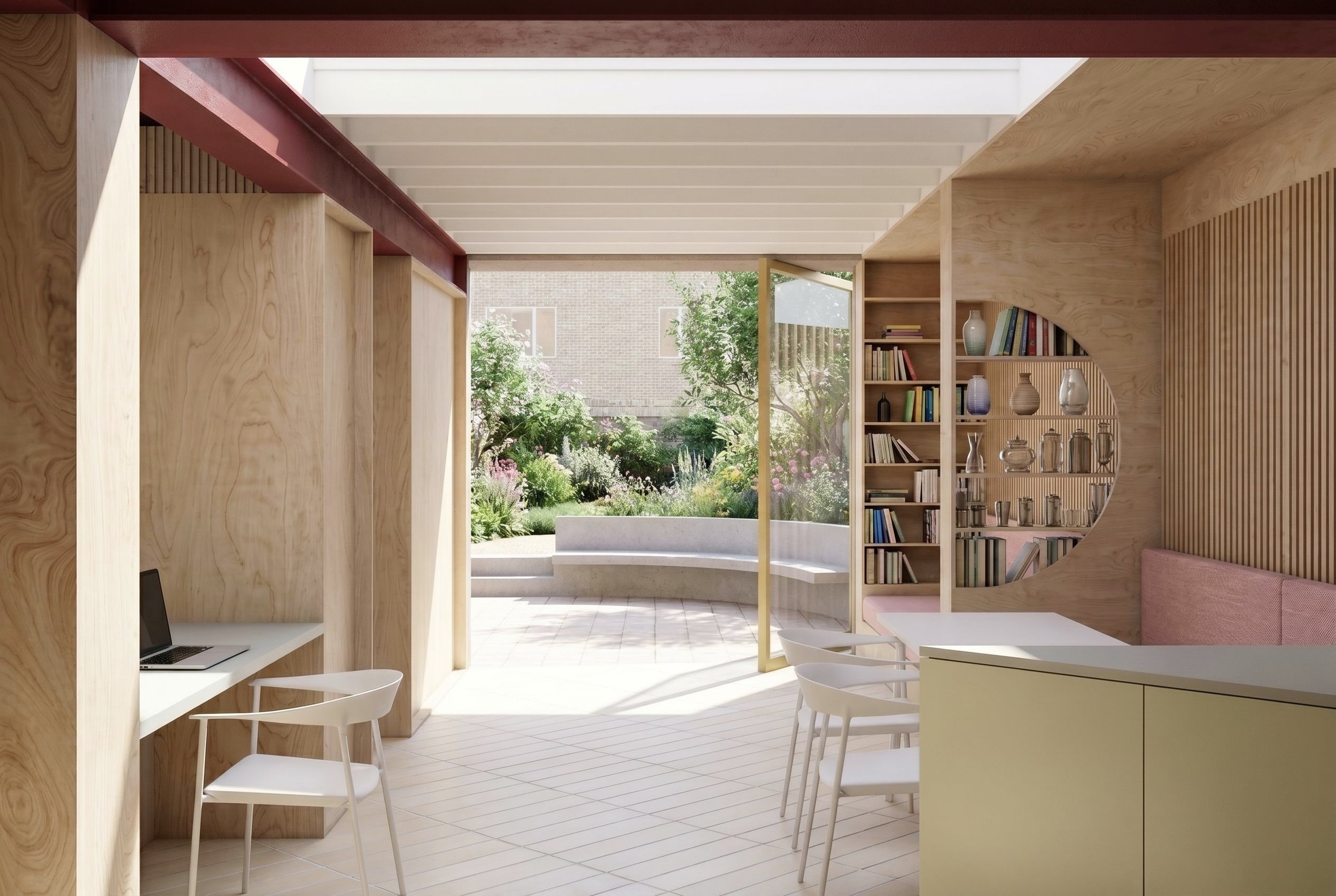
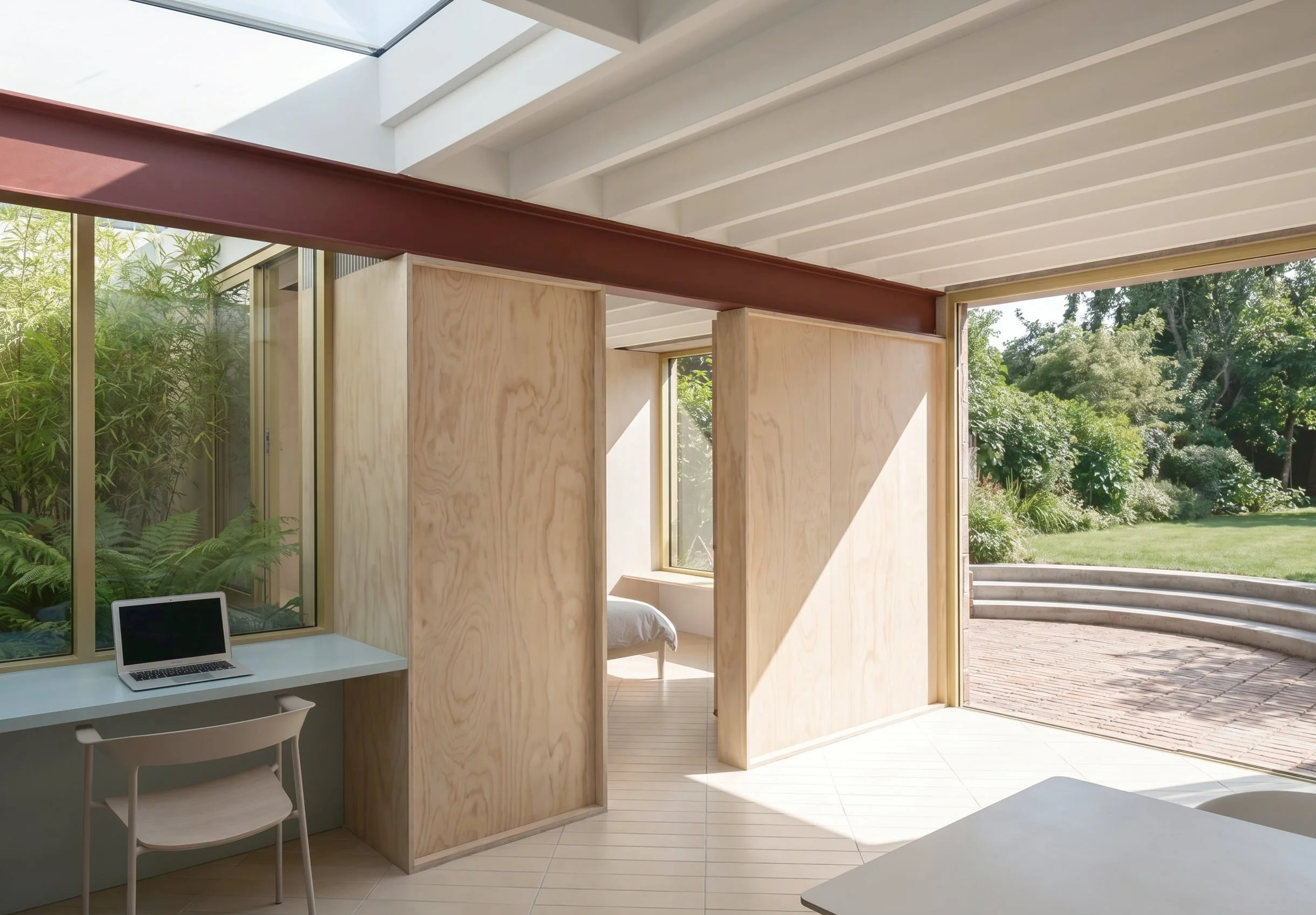
A series of lightwells bring generous daylight and ventilation in bedrooms and bathrooms, while a large rooflight illuminates an open living organised into distinct zones for cooking, dining, relaxing, and working, with the desk overlooking a planted lightwell.
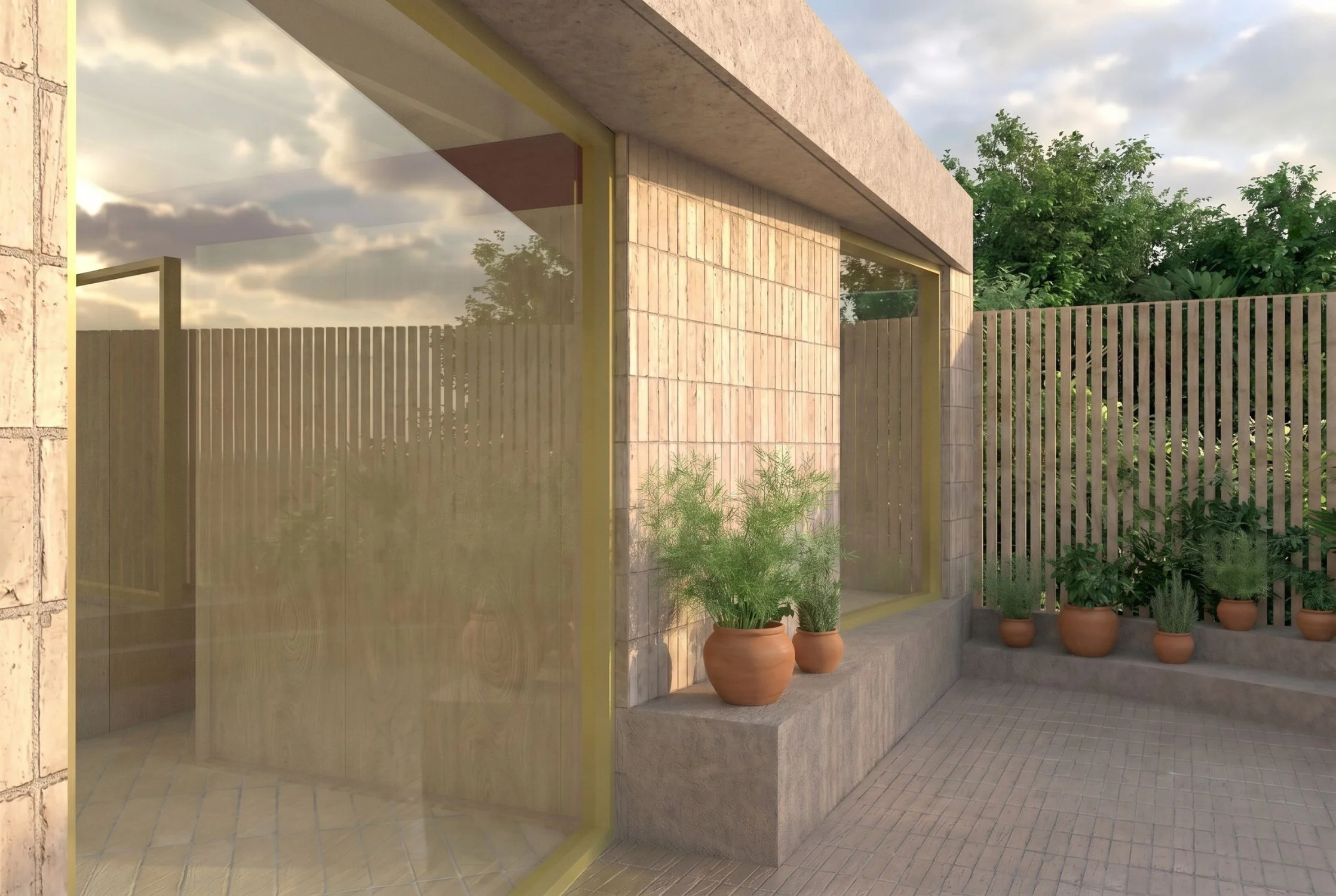
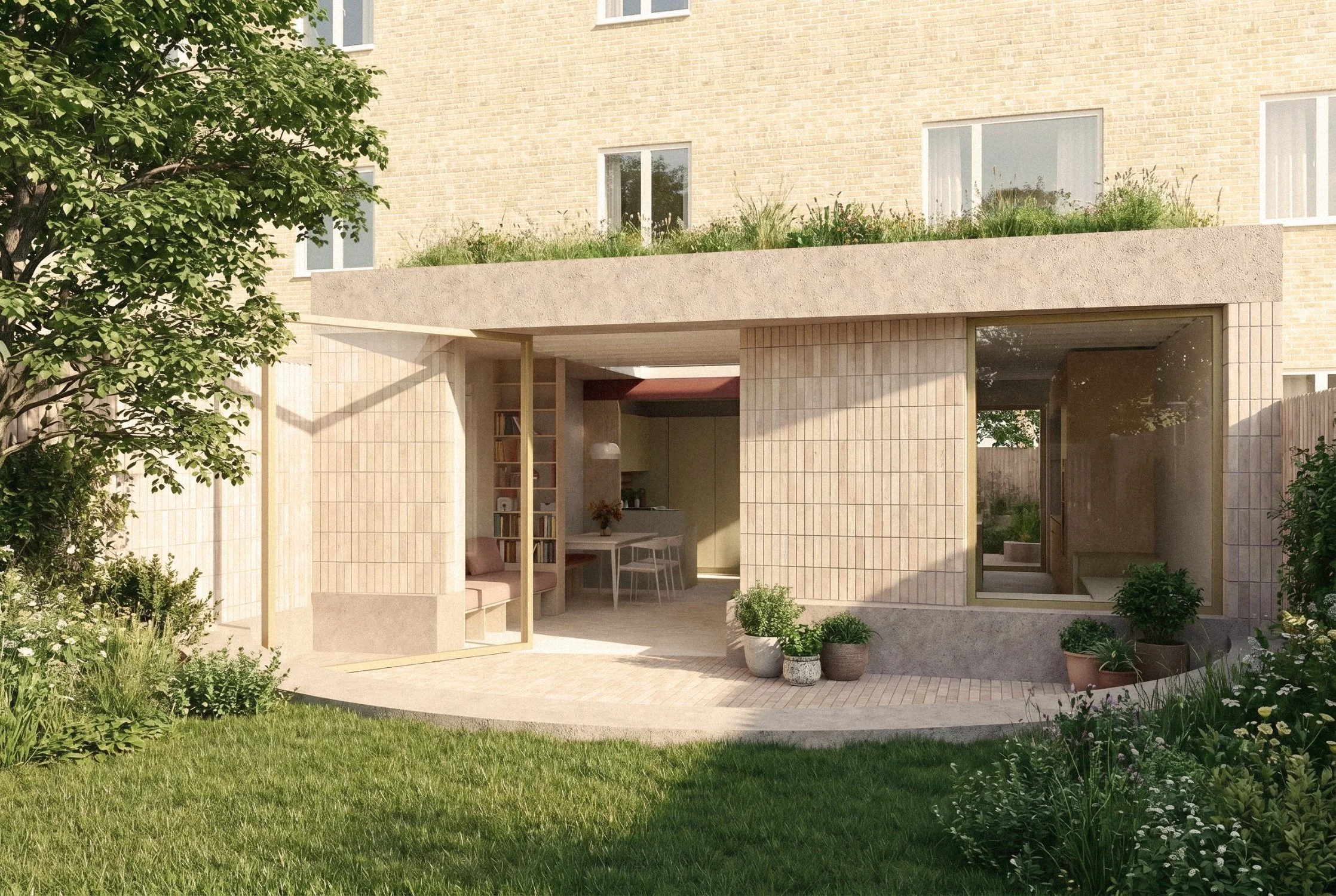
The garden connection is enhanced through subtle geometric interventions, including inflected walls and a semicircular sunken patio and seating.
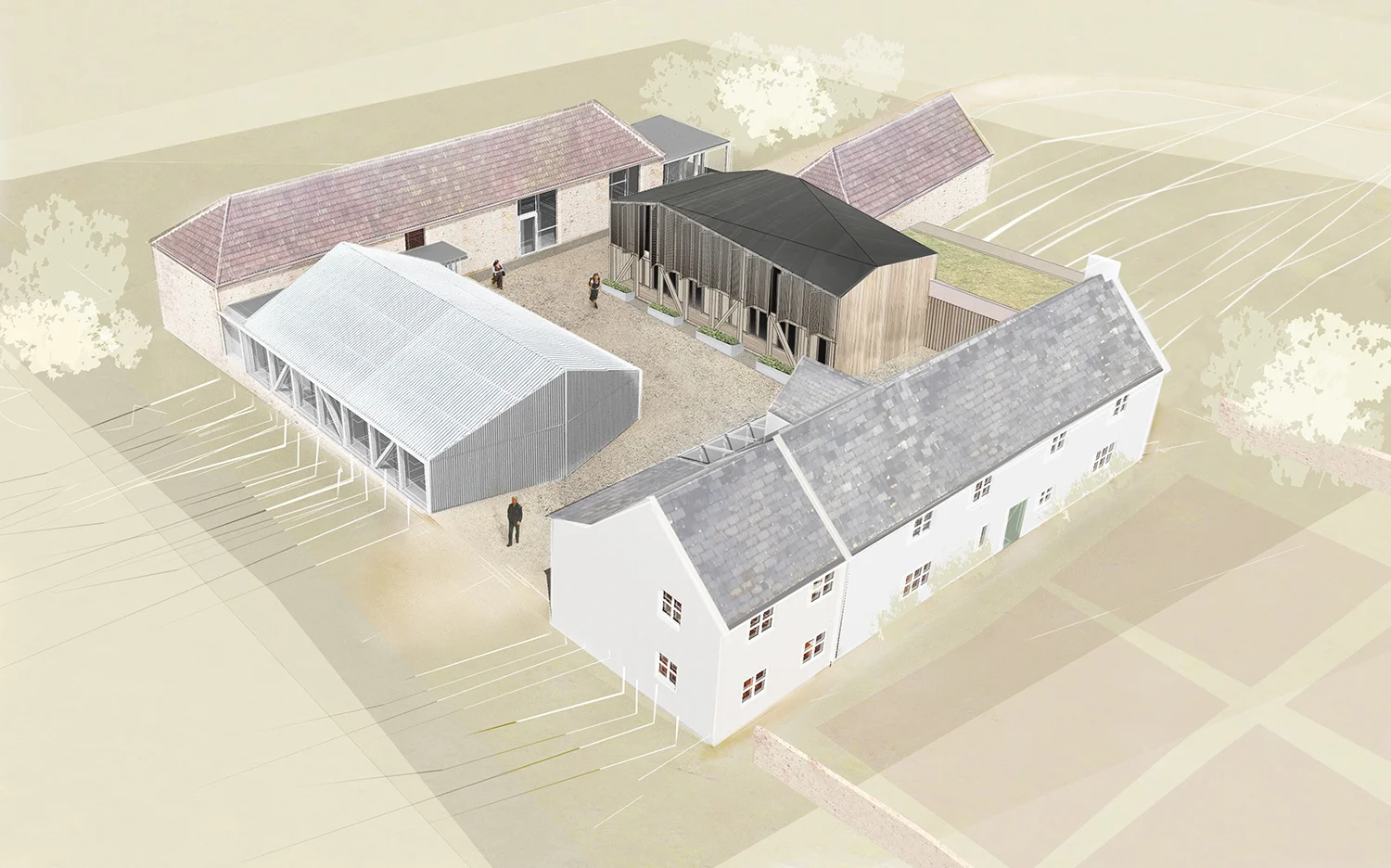
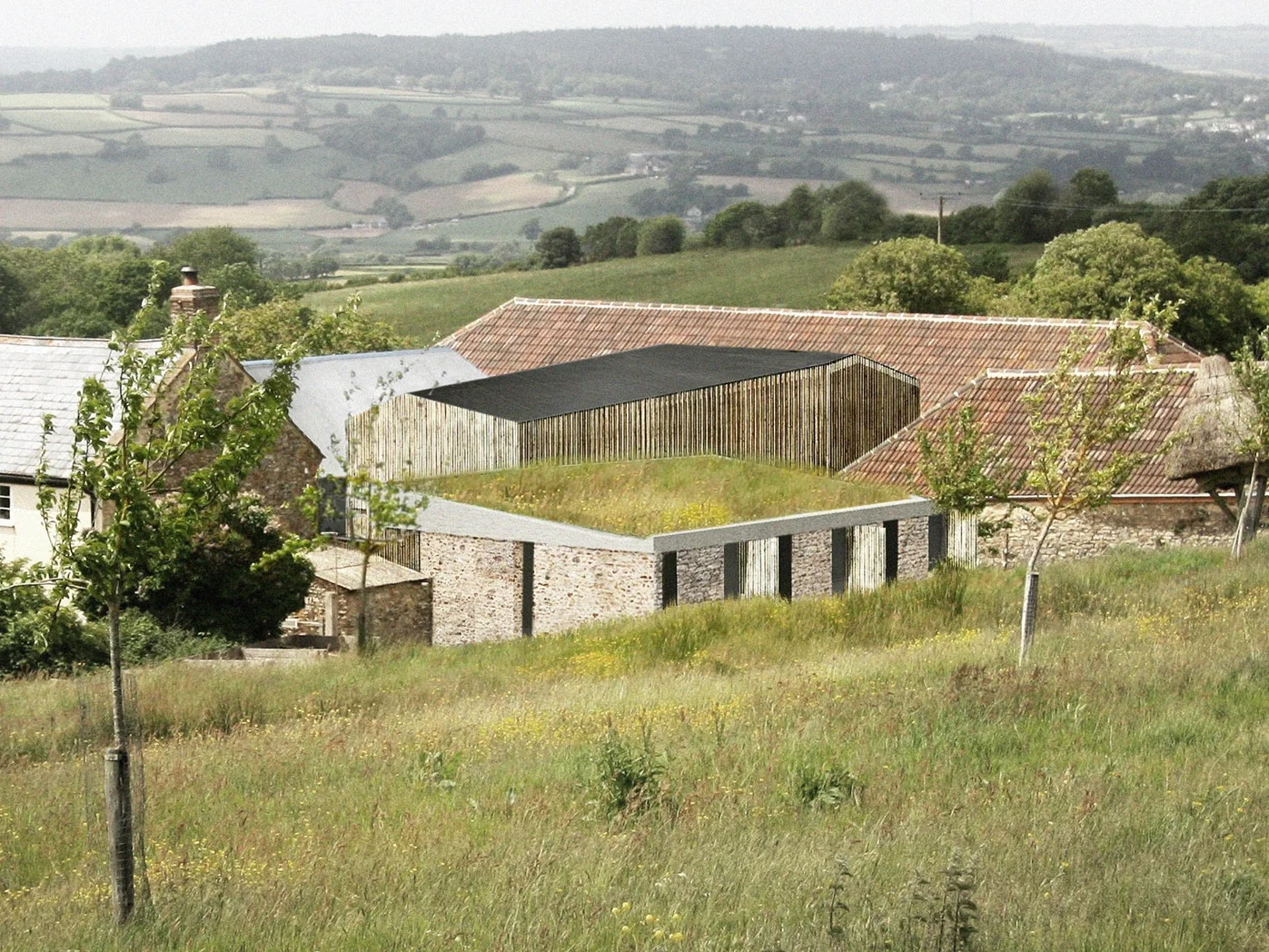
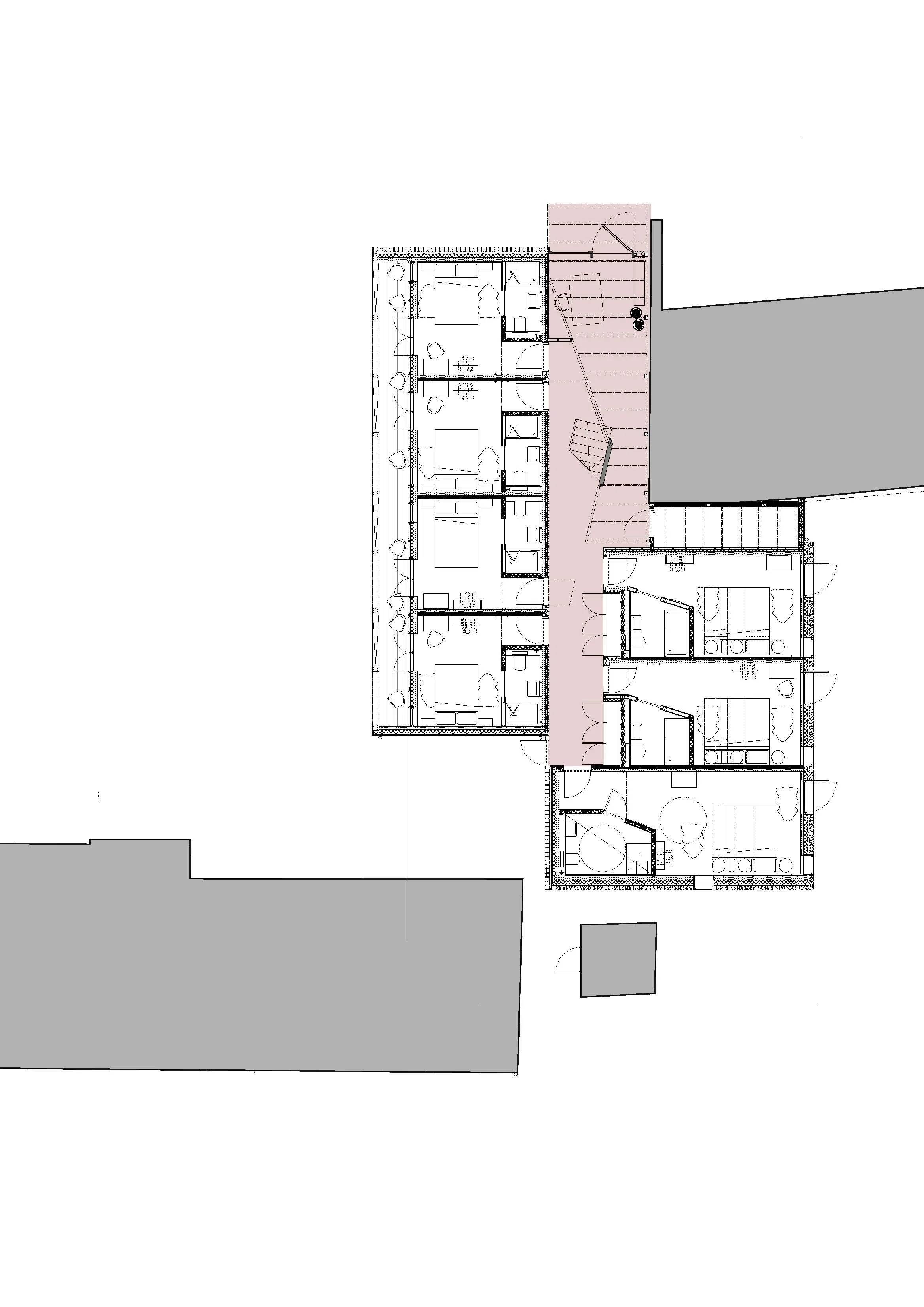
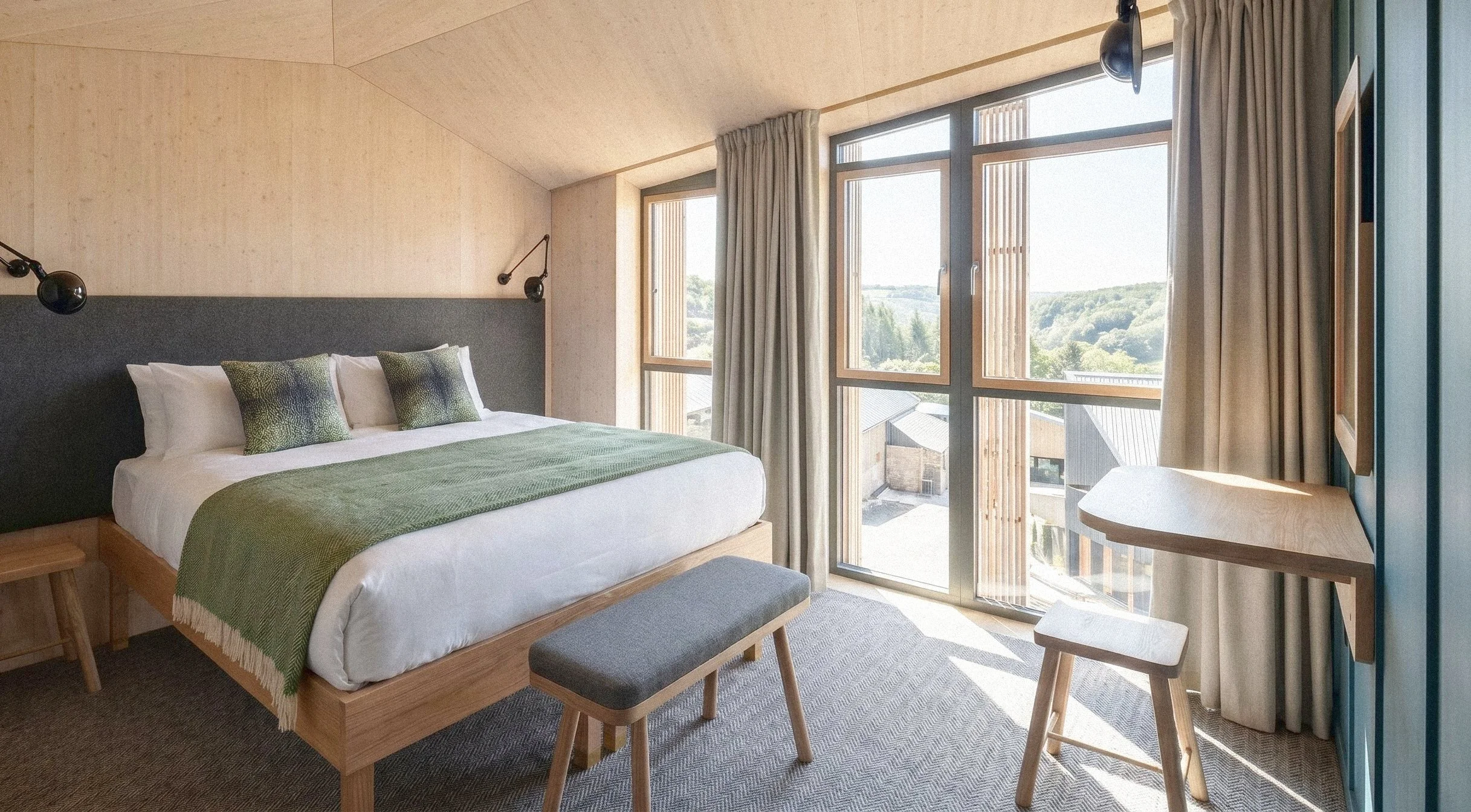
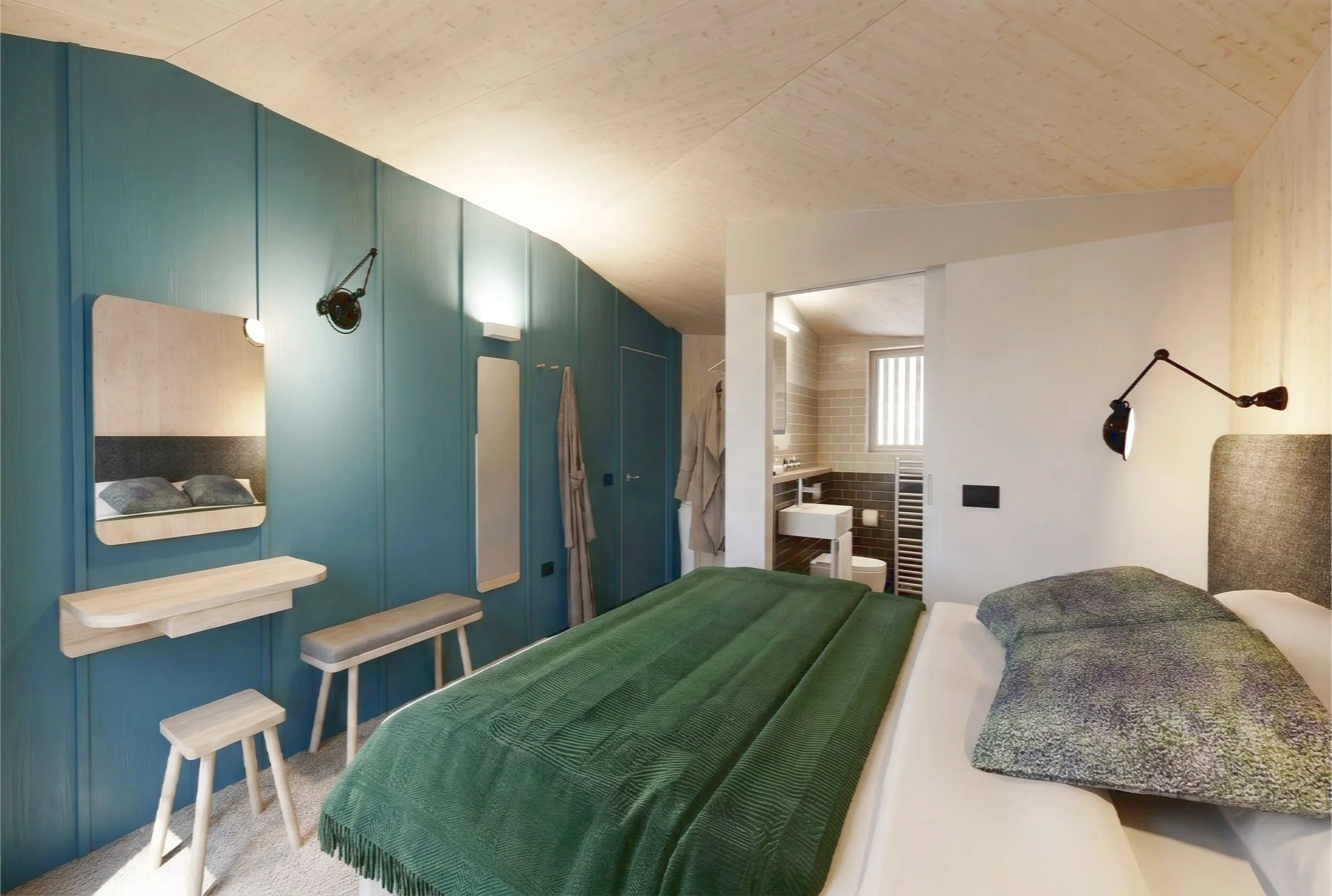
A new rural guesthouse, for the River Cottage diversification of Park Farm, further defines the listed farmyard. Offset into two blocks, it is designed to have the least possible impact and appropriate the accumulative language of the existing buildings, the shift between them two setting up the entrance and circulation.
ᗐ
A low turf roofed stone-faced building abuts a cross-laminated timber two-storey construction with a sculpted roof form that folds down to respect to the existing buildings and a ridge point defined by a cart shed beyond, housing the plant. The farmyard elevation has a covered veranda mirroring that of the cookery school, allowing a buffer for the rooms and enlivening the yard. The rooms above at first floor take advantage of the far-reaching views, with slatted shutters to provide privacy, shade from the afternoon sun, and animate the facade.
A new family home within the stone walls of a protected alpine building. A screening wall bisects the space, defining social from private and supporting rooms.
ᗐ
Zoning options - defining public and private
Beading test with repeating astragals
An existing house with substantial level changes left the kitchen isolated, and a beautiful mature garden cut off even further below. To negotiate a connection, it was chosen to create new space decending across several levels, opening up to the garden and activating a large basement condition.
ᗐ
A reconfigured kitchen retains its previous level, overlooking a lower dining space introduced at the garden level, such that it benefits from increased room height, befitting the ceremony of dining, below a brass lined roof light. The stepped level change becomes a dining bench, continuing externally for warm evenings.
The kitchen is given a large and uninterrupted glazed wall to the garden, with an external level change below forming a bench in the west evening sunlight. An oversized in-situ lintel shelters both the bench and protects internal space from overheating.
The dining space runs directly out to the garden at one end and a den or playroom in the newly opened basement just a few steps down at the other.
Design Development Options
The levels are accentuated in datums of changing materiality pivoting around an oversized column.
As Part of a substantial renovation of a five storey Grade II* listed Georgian town house, a distinct move was made to bring the garden into contact with formal living of the raised ground floor by creating a greatly extended threshold.
The A-symmetrical progression of the classical axis is drawn out of the building and into the garden where the structure signifies differing areas of activity, while drawing spacial connections up to the rooms above.
(with Satellite Architects)
ᗐ
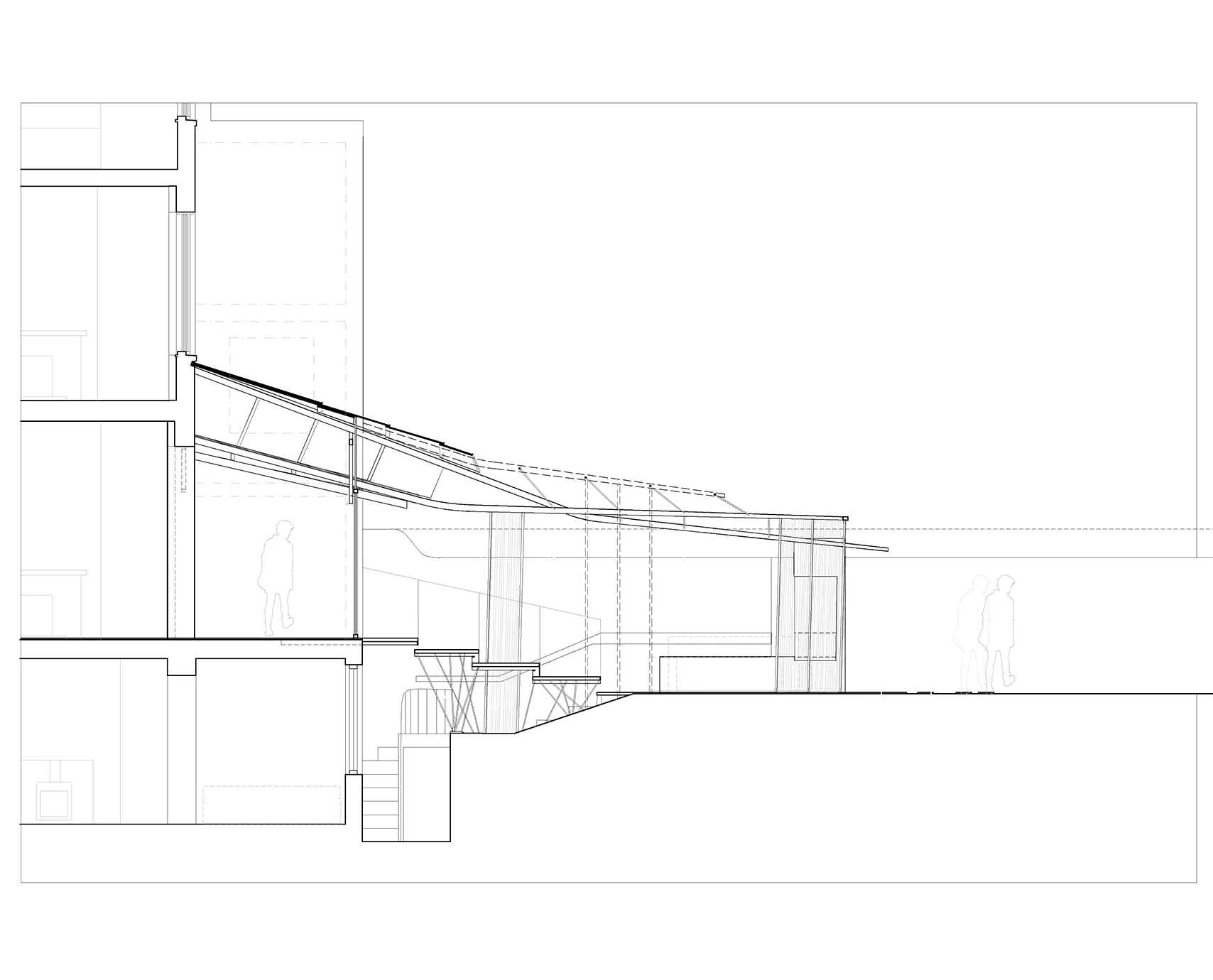
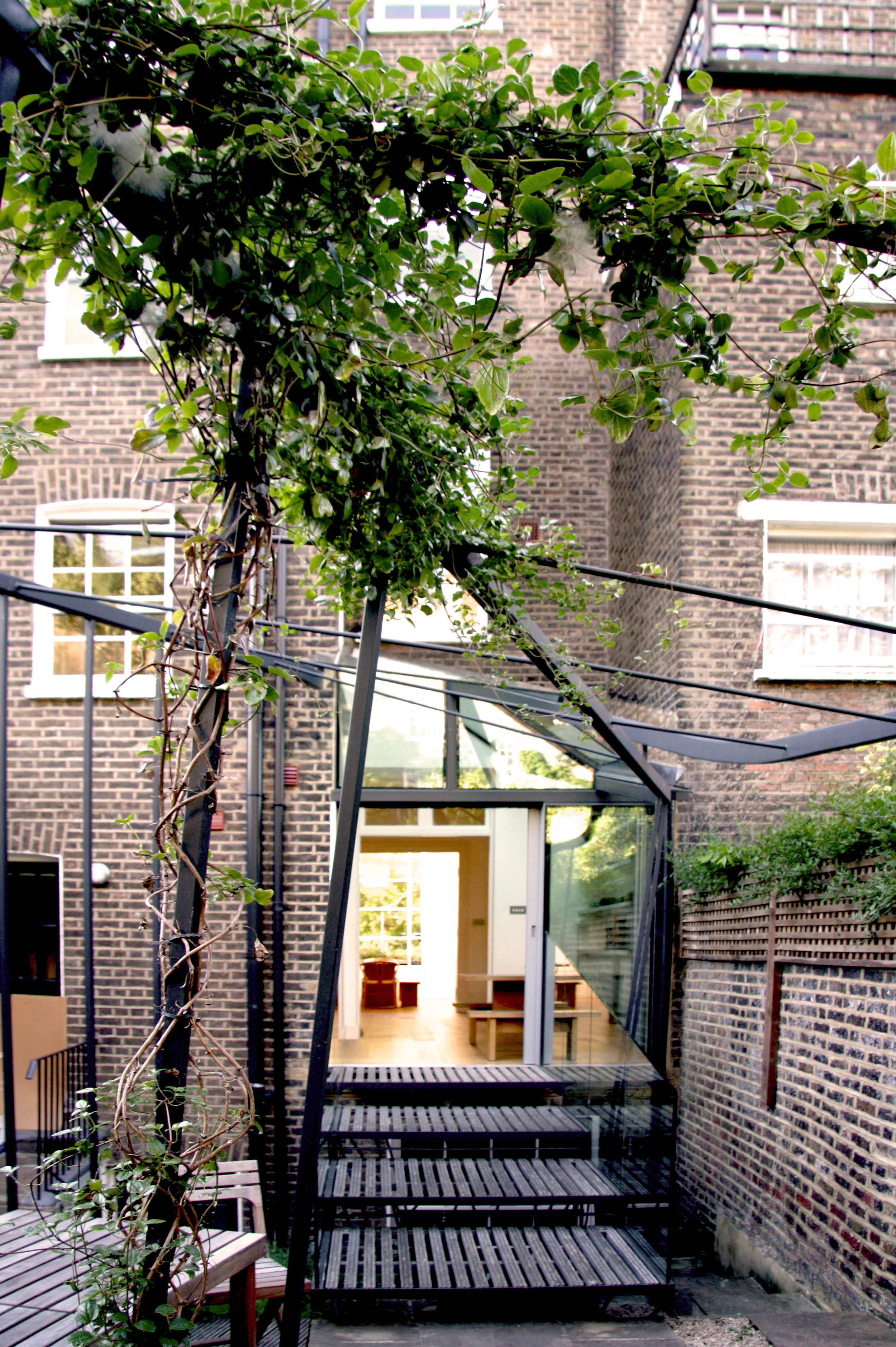
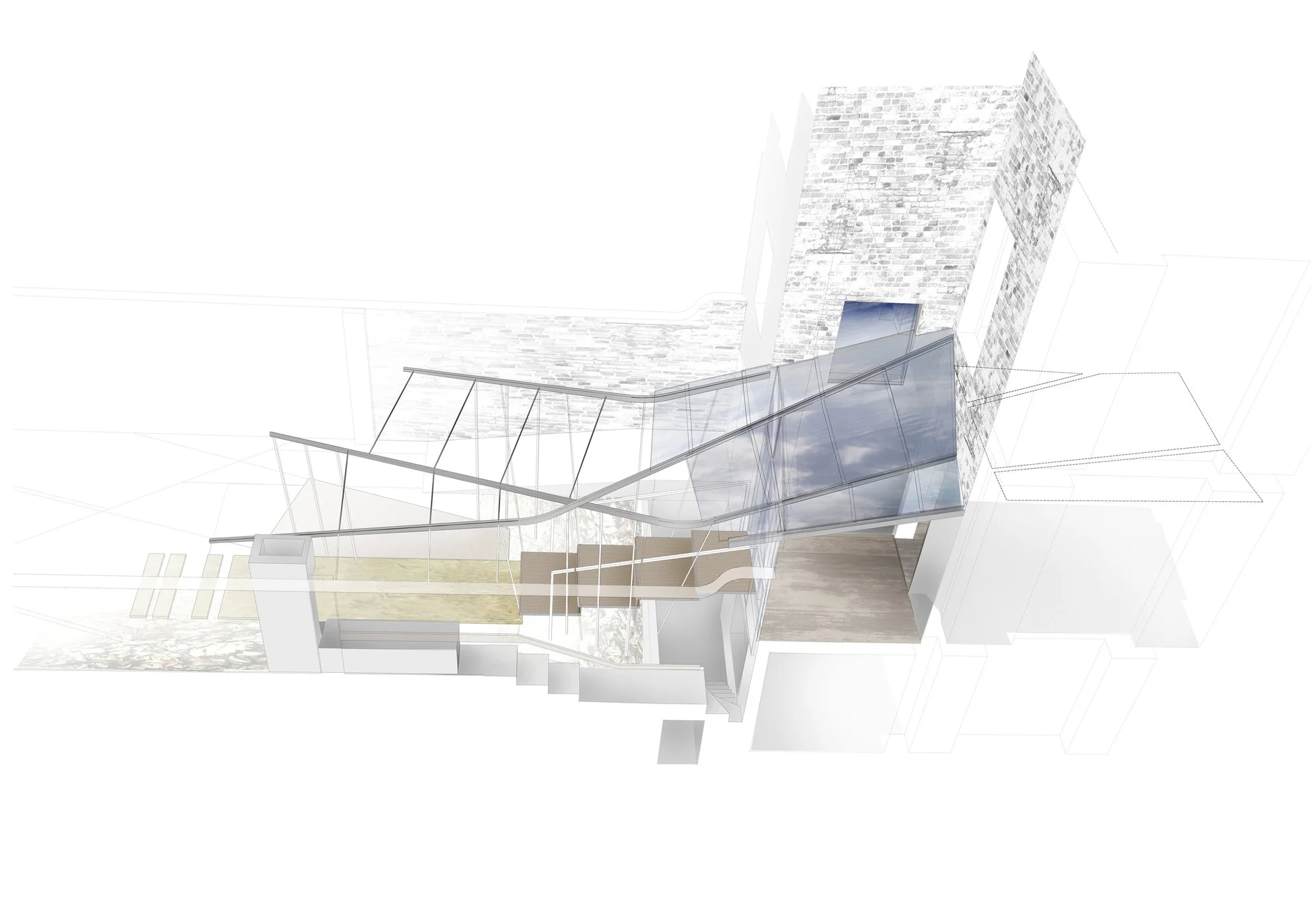
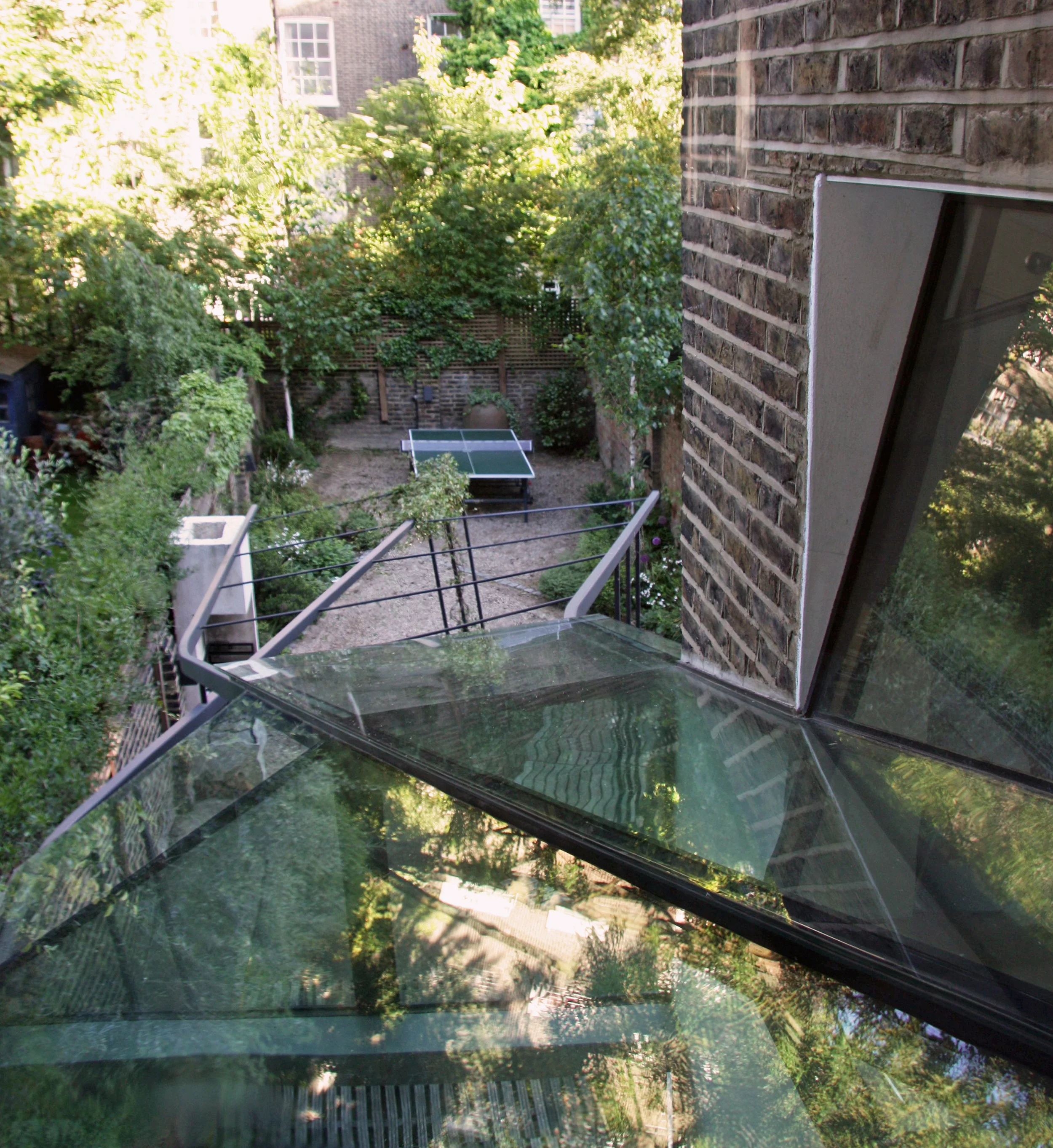
Overlapping glass panes fold up and into a bespoke sloping sash.
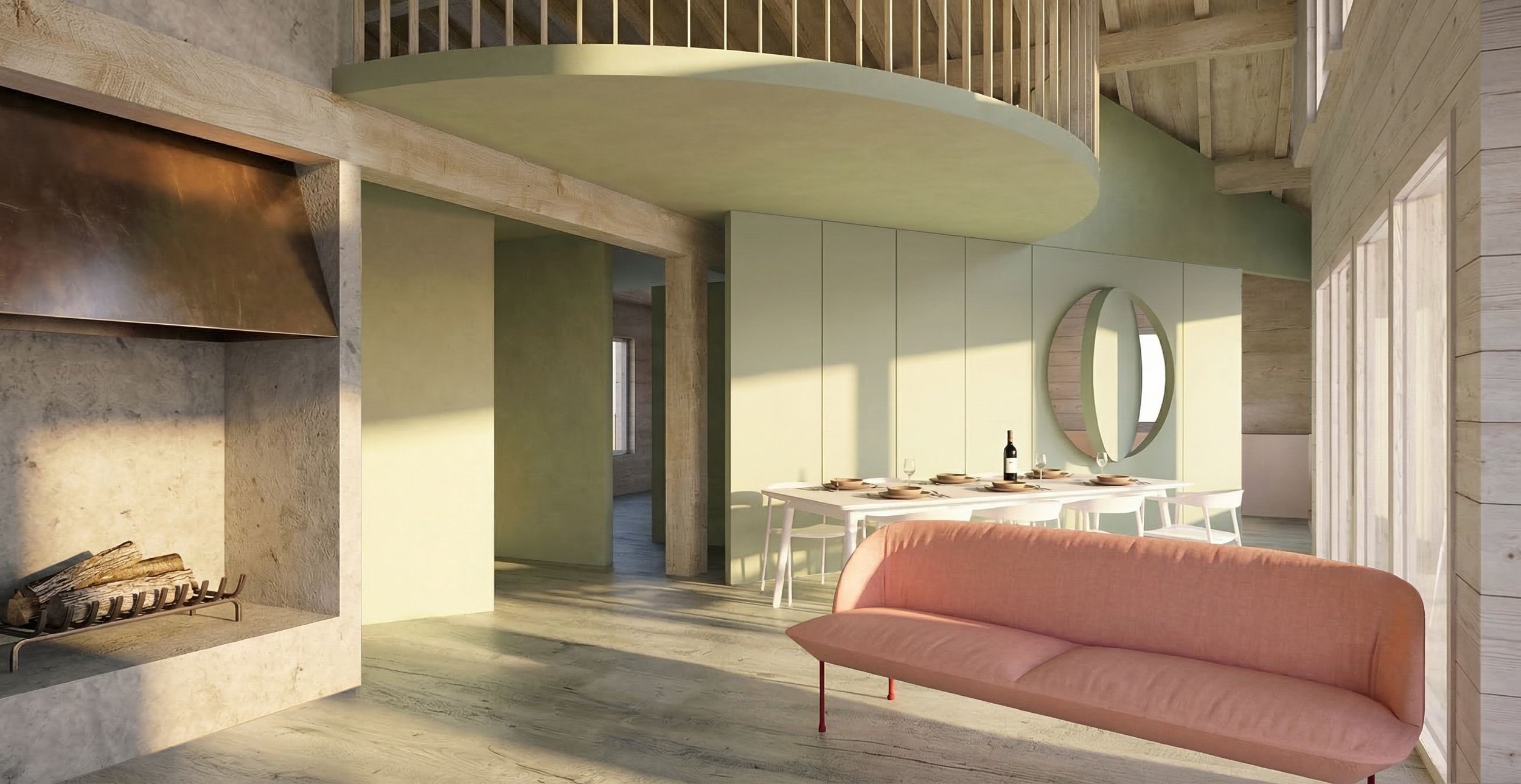
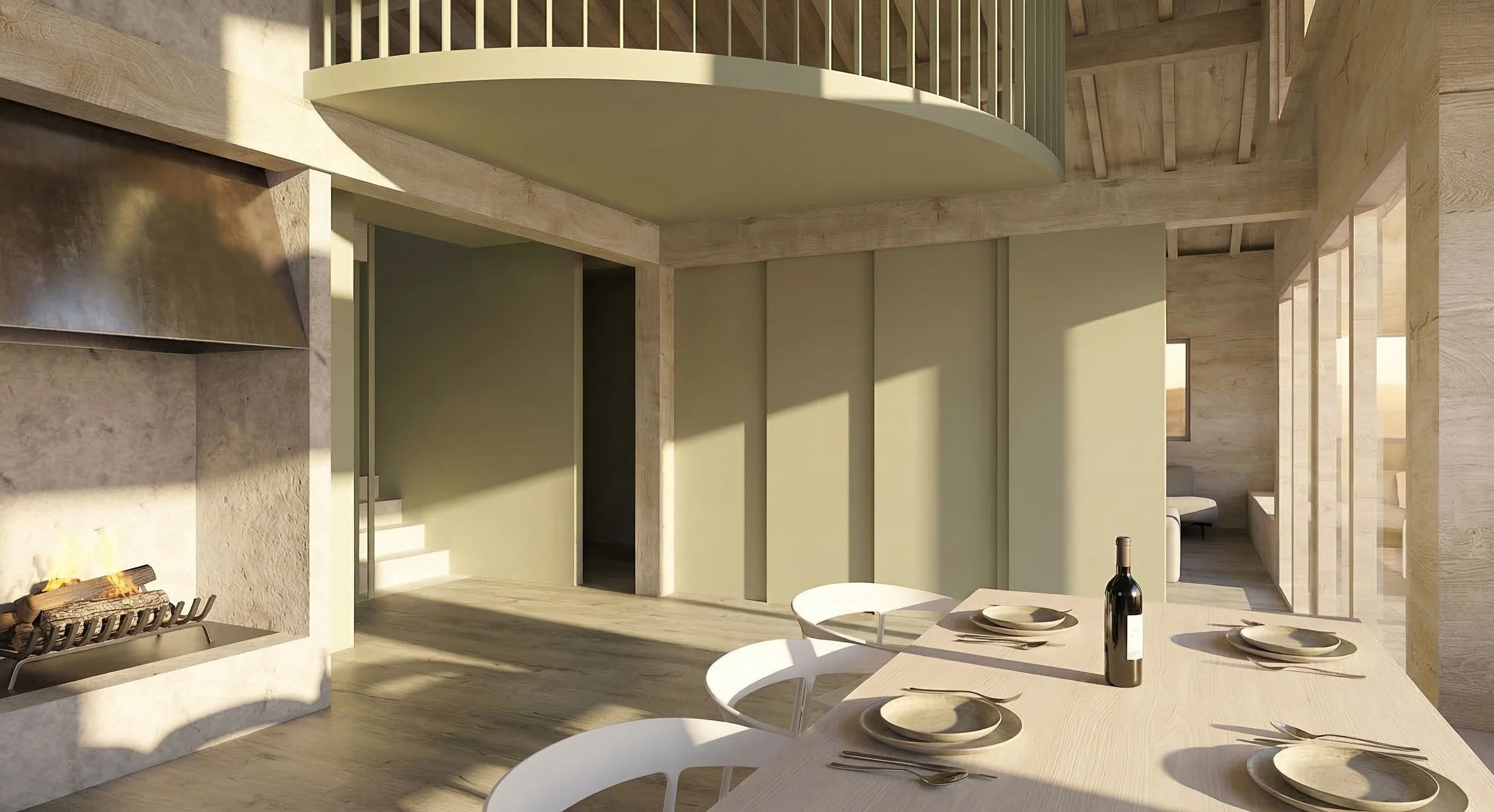
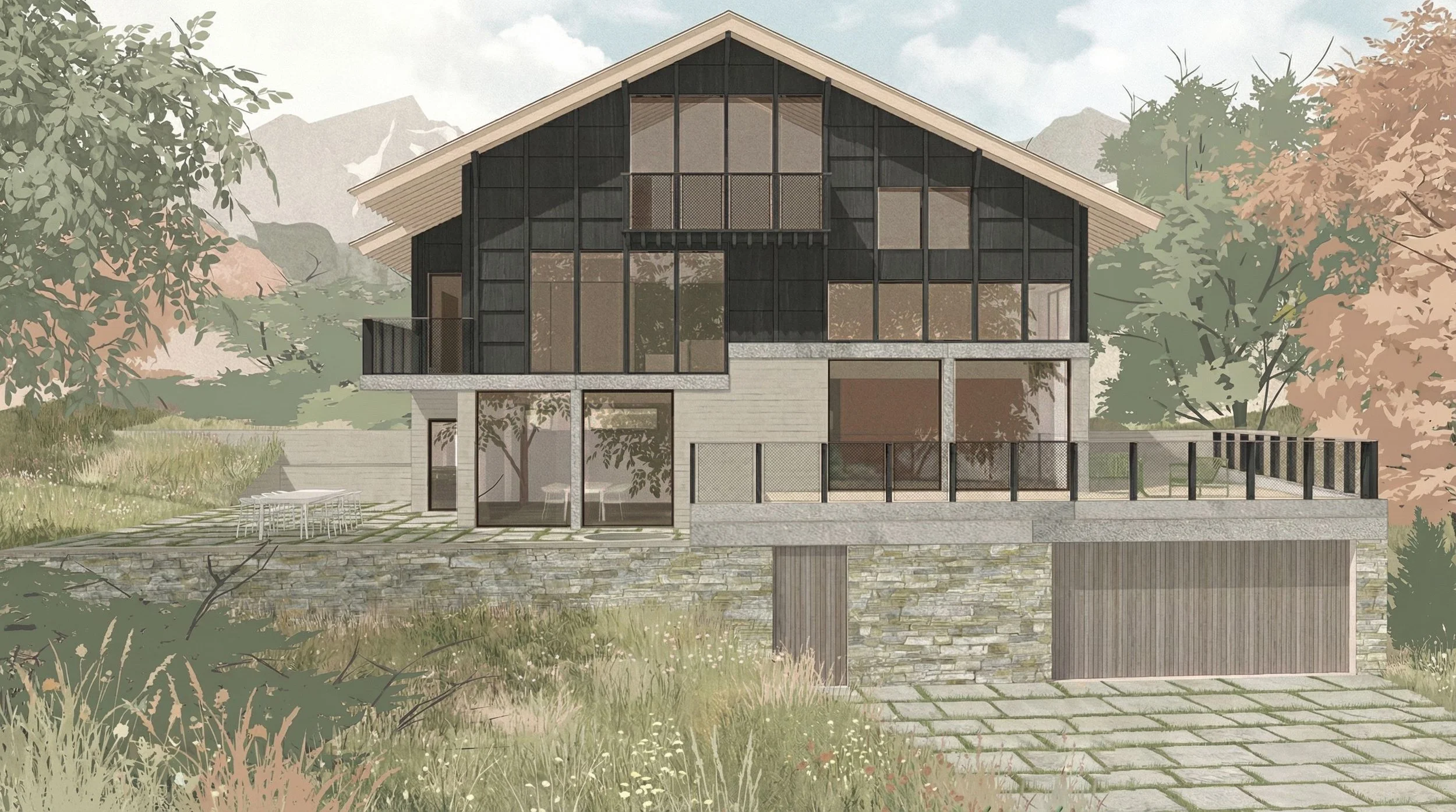
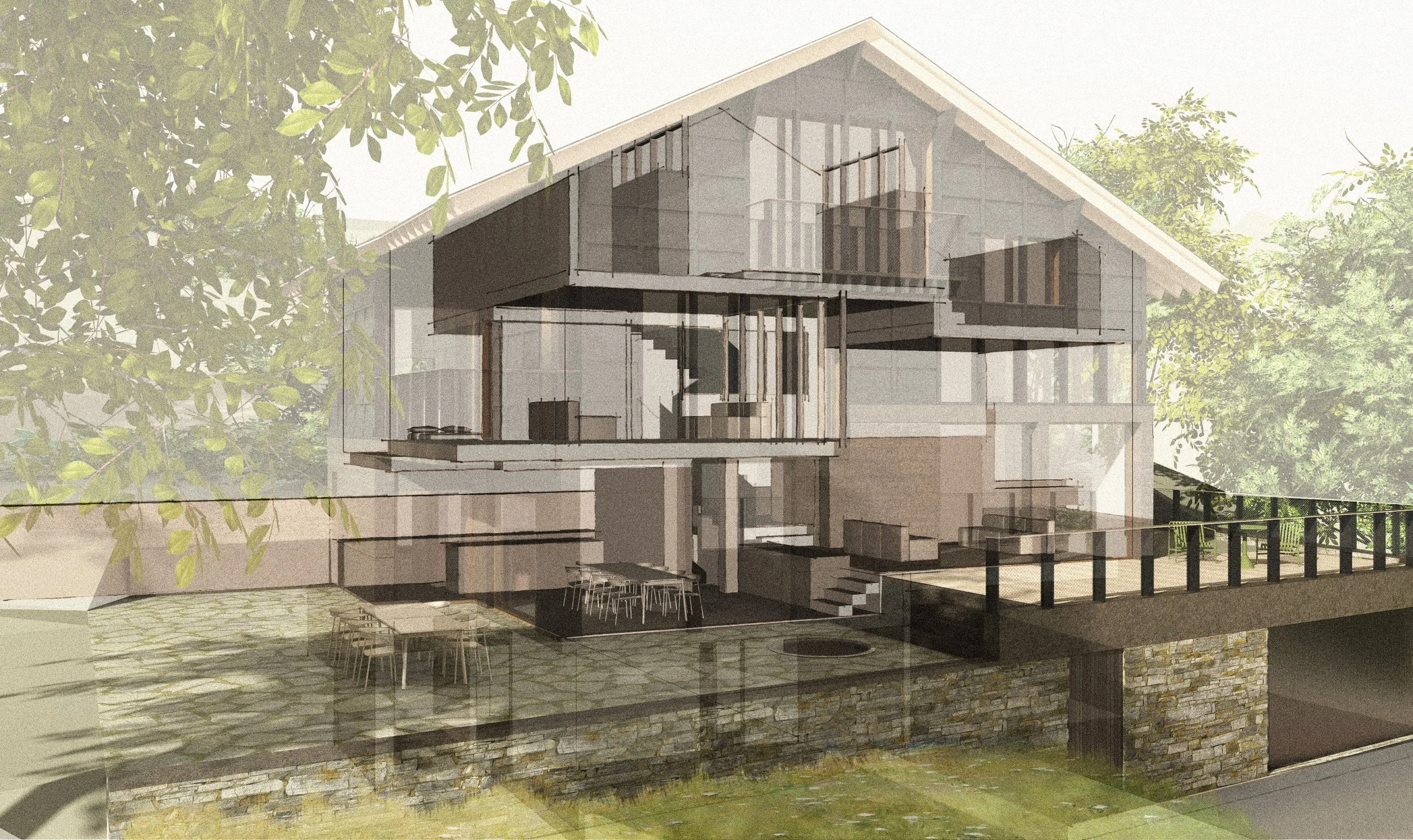
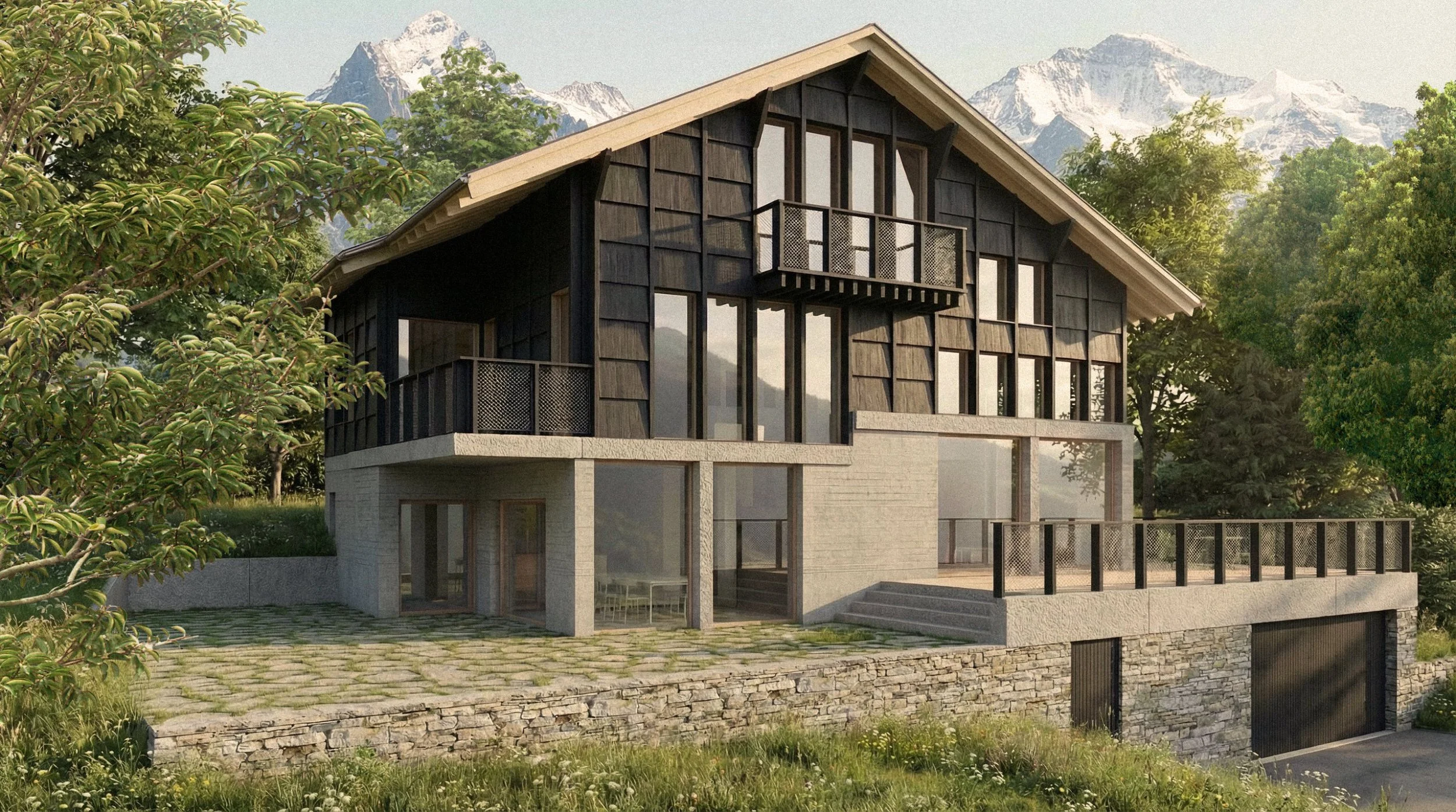
A typical Chamonix Chalet is reimagined, enhancing its qualities with a play of geometries developed from a collection of screens and galleries to create a layered spatiality balancing the fluidity of contemporary open plan living with the separation often needed in a growing family home.
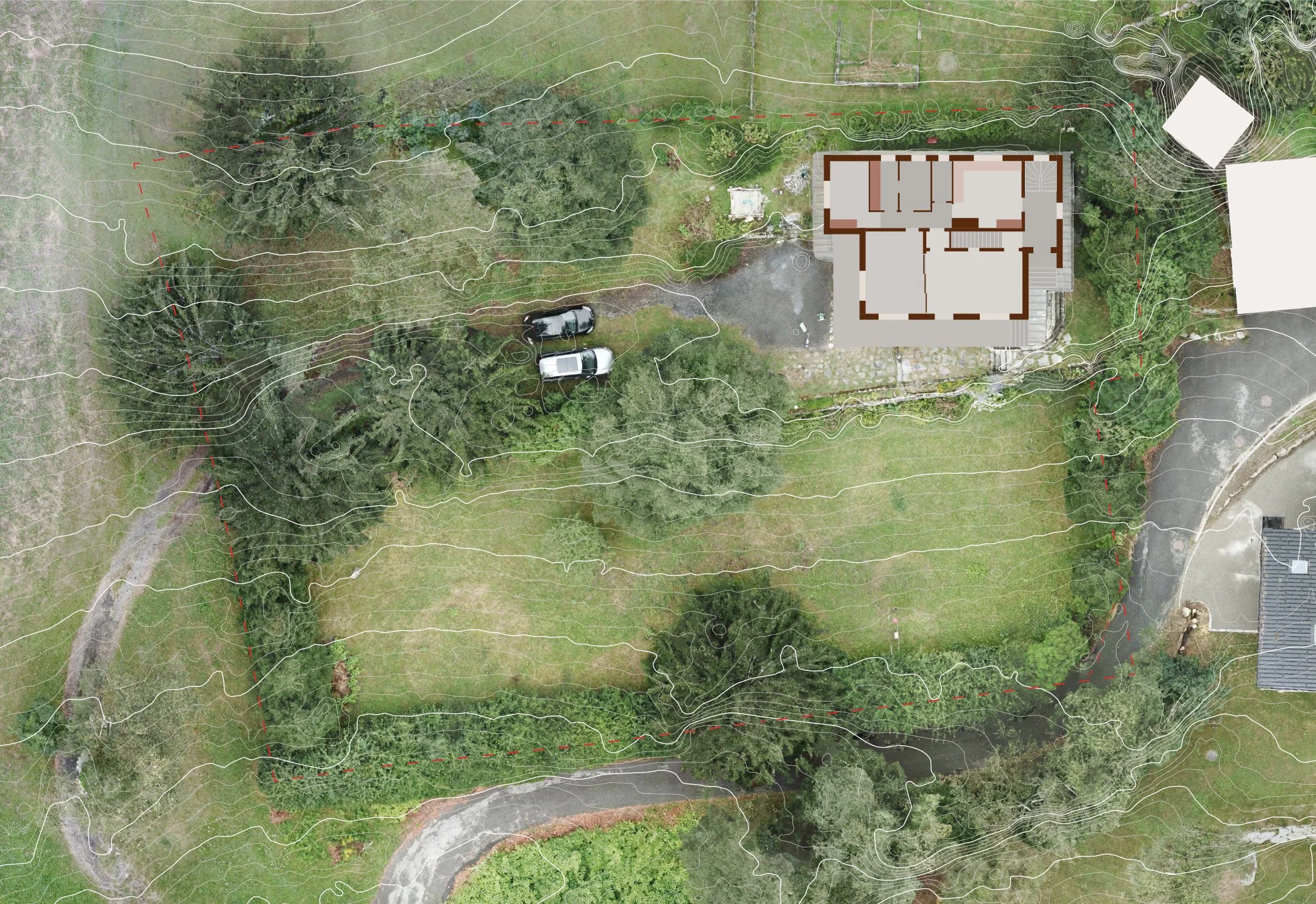
The arrangements focus of key views and light and connection with its gardens below within the strict restrictions of an area prone to flash floods.
ᗐ
Reconfigured interior - balance of open-plan and cellular living
Geometric insertions create unique, fluid spaces
Alternative living configuration
Approach illustration with unifies material palette
Adapted ground floor
Extended ground floor (flash flood resistant)
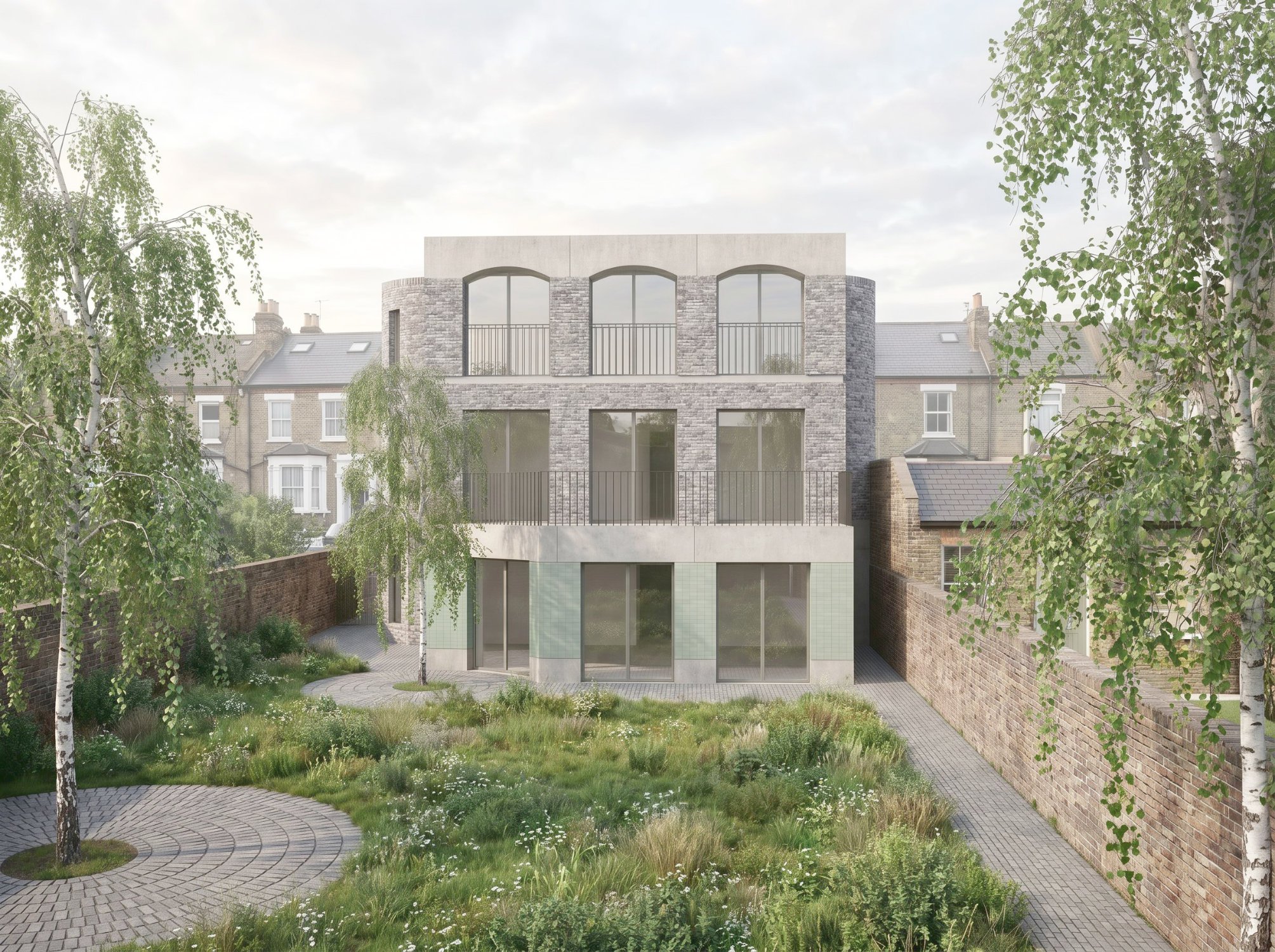
Rear facade illustration - extended base creates terrace for living spaces above
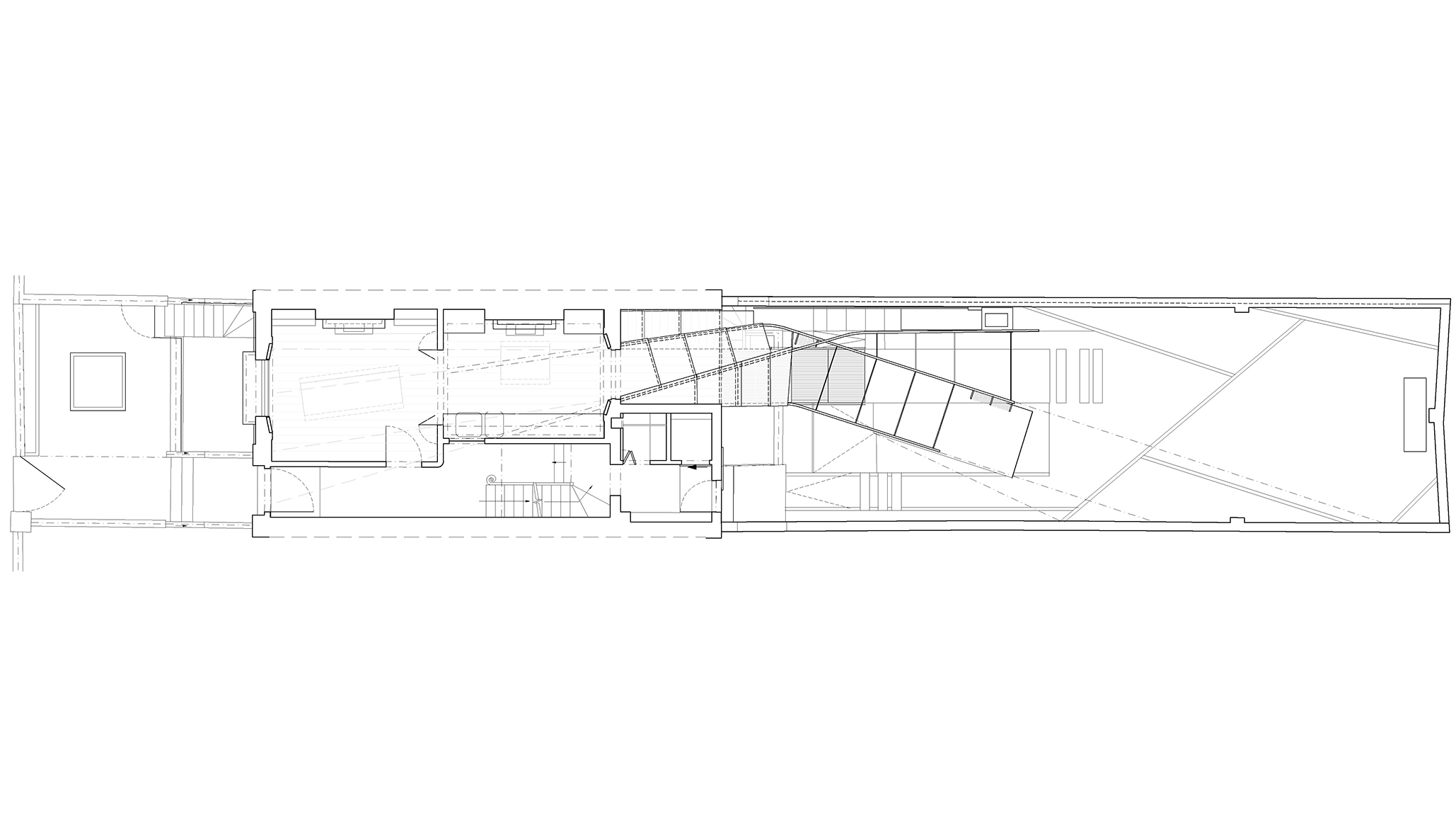
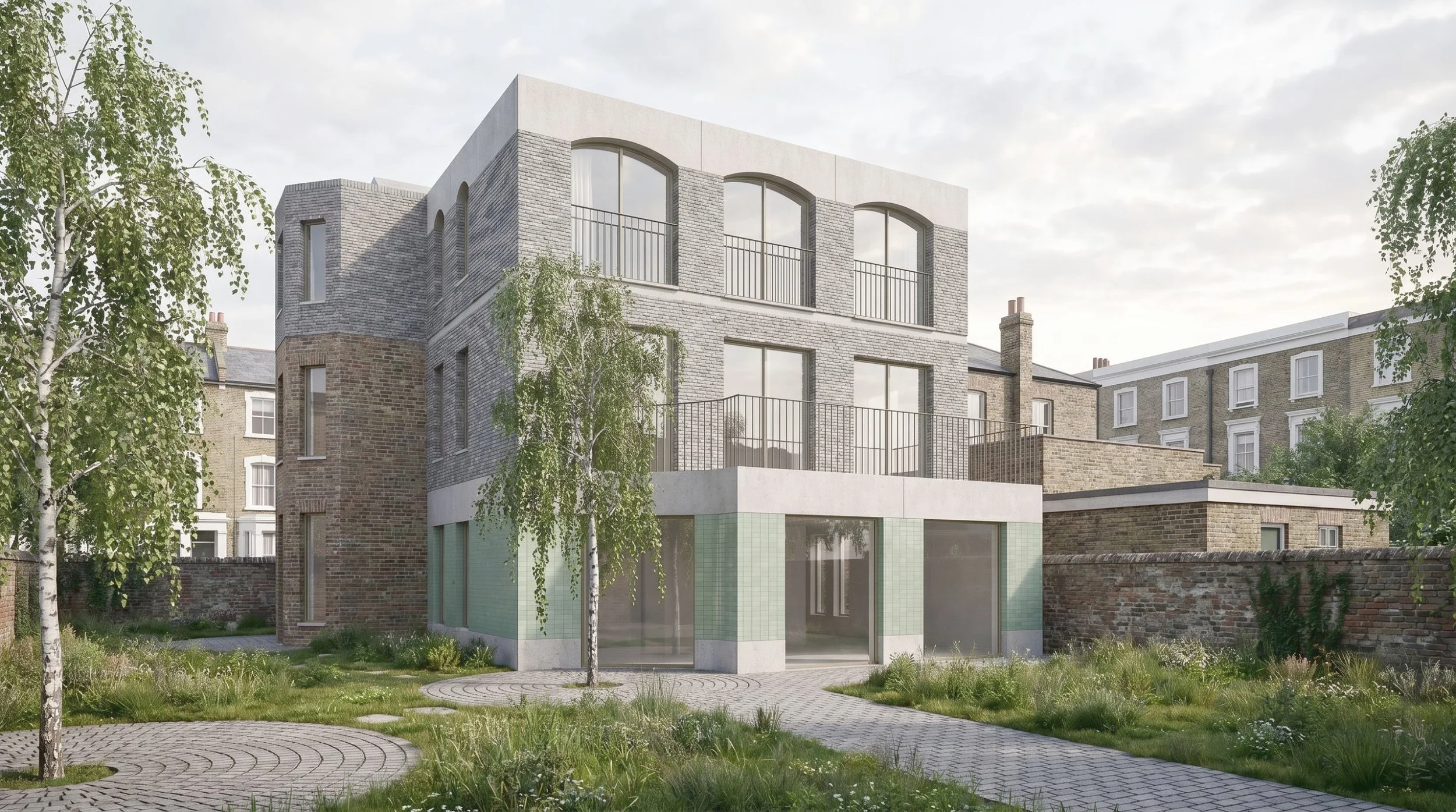
Rethinking the traditional long, thin typology of London’s housing stock, this scheme unifies a semi-detached villa and rotates the party-wall, releasing opportunities for well proportioned, efficient and naturally lit triple aspect apartments, which play off existing quirks of the building to provide moments of delight throughout.
A distinct cylindrical stair, mirrors an existing faceted bay, which as flanking towers act as points of transition from old to new volumes, and allude to the volumetric variety of a London street with a village like mixture of house types.
ᗐ
Situated in heart of Walthamstow Village, the oldest section of present-day Walthamstow, a pair of semi-detached villas, their side entrances allowing the street façades a more unified and grand appearance, have been extensively altered internally and to the rear to accommodate multiple small residential units, and subsequently fallen into disrepair. By demolishing and replacing the complex northern portion of the existing building with a simple 3 storey addition, and inserting a new generous top-lit stair within the darkest, most restricted point of the plan, the adjusted typology can provide for up to 6 apartments, with minimal increase to footprint or volume.
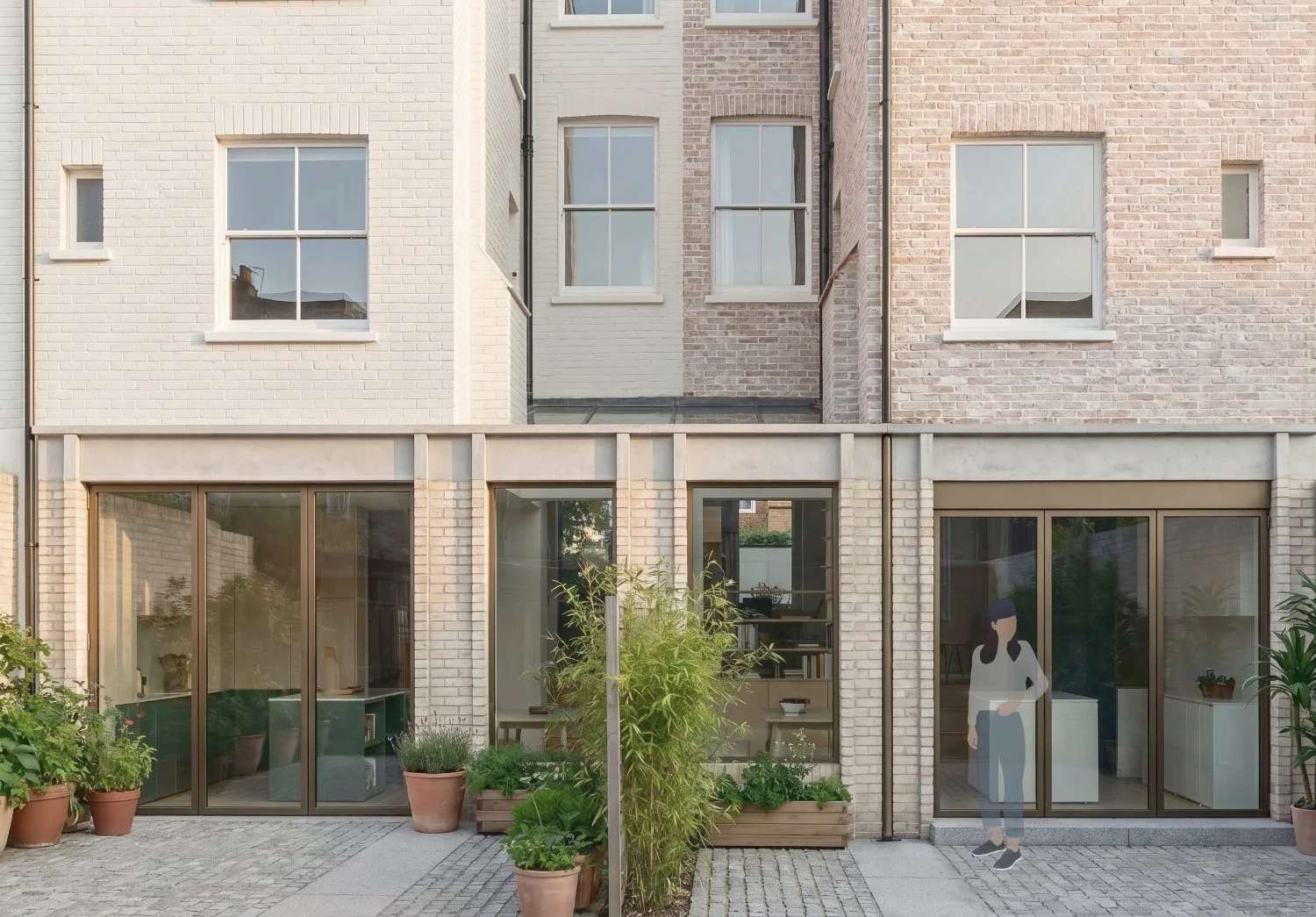
Two twin extensions side by side (one for a twin, who herself gave birth to twins during the realisation of the project). Like identical twins, they are in fact different, tailored to meet the specific requirements of the families.
On inspection the layouts are reversed and proportions shift according to need.
ᗐ
Twin A develops a fitted dining space, below a large roof lights. The larger brings abundant natural light to the depth of the plan, illuminating a home office space which overlooks the new space with views out to the garden and the sky above. Built-in around wraps around both, making optimal use of the space and providing for the owners extensive cookery book collection.
Twin B flips the traditional plan, the kitchen to the front of the house and taking advantage of the central room for dining, opening up a large open living space and seating close to the garden. A stove is relocated within the garden facade (utilising the currently defunct chimney) in an updated arts & crafts manner - framed by windows. The interior exaggerates existing level changes, expressed these in shelves, panels and dados, which are allowed slip past one across the spaces, connected by a wide stair.
The restrained masonry façade is laid with a relief derived from a distinct combined gable and the pilasters to the street-side and capped with a precast head, which extends the relief and sets a division between the old and new.
Twin A
Twin B
Twin B
Twin B
Development
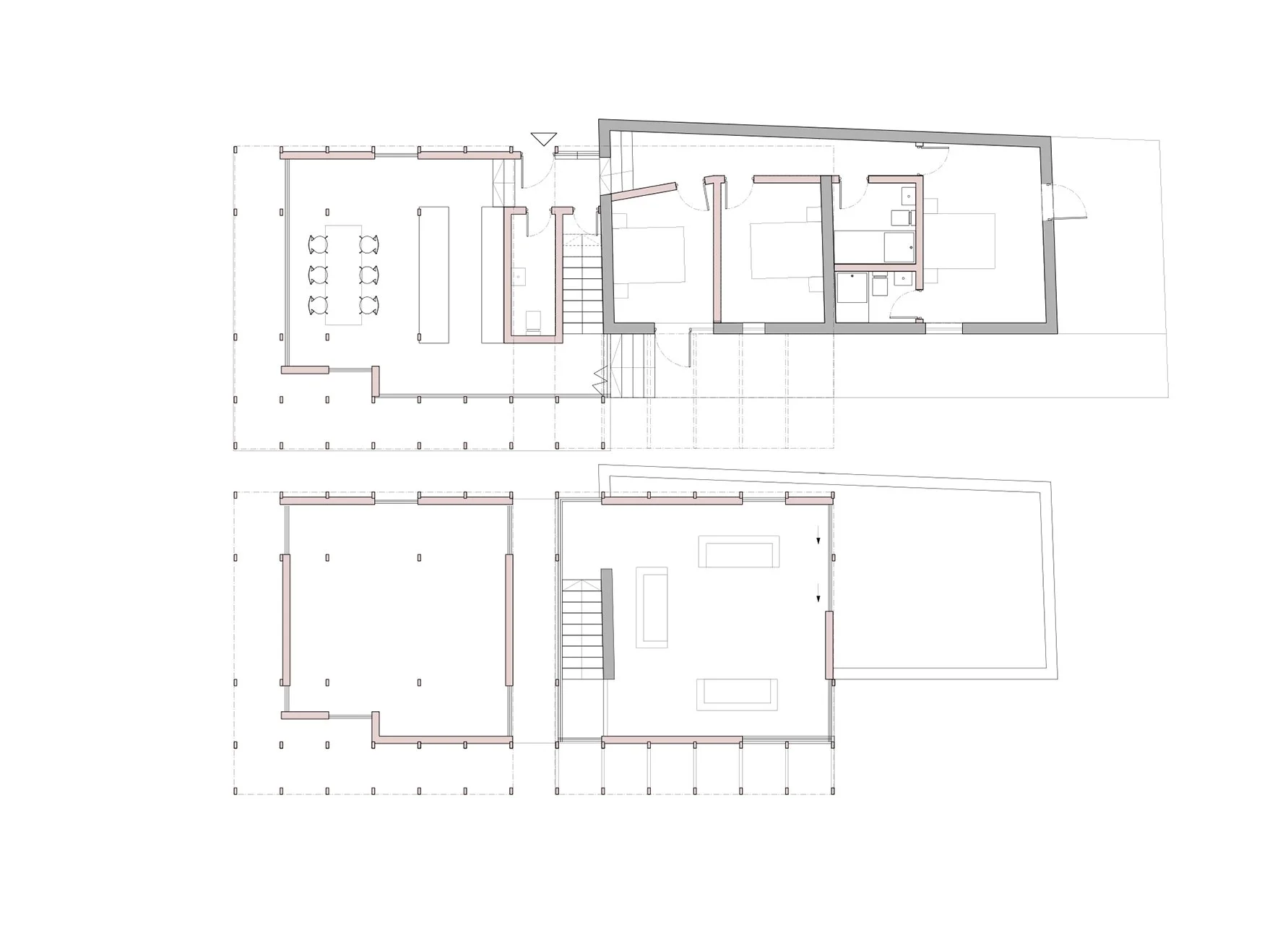
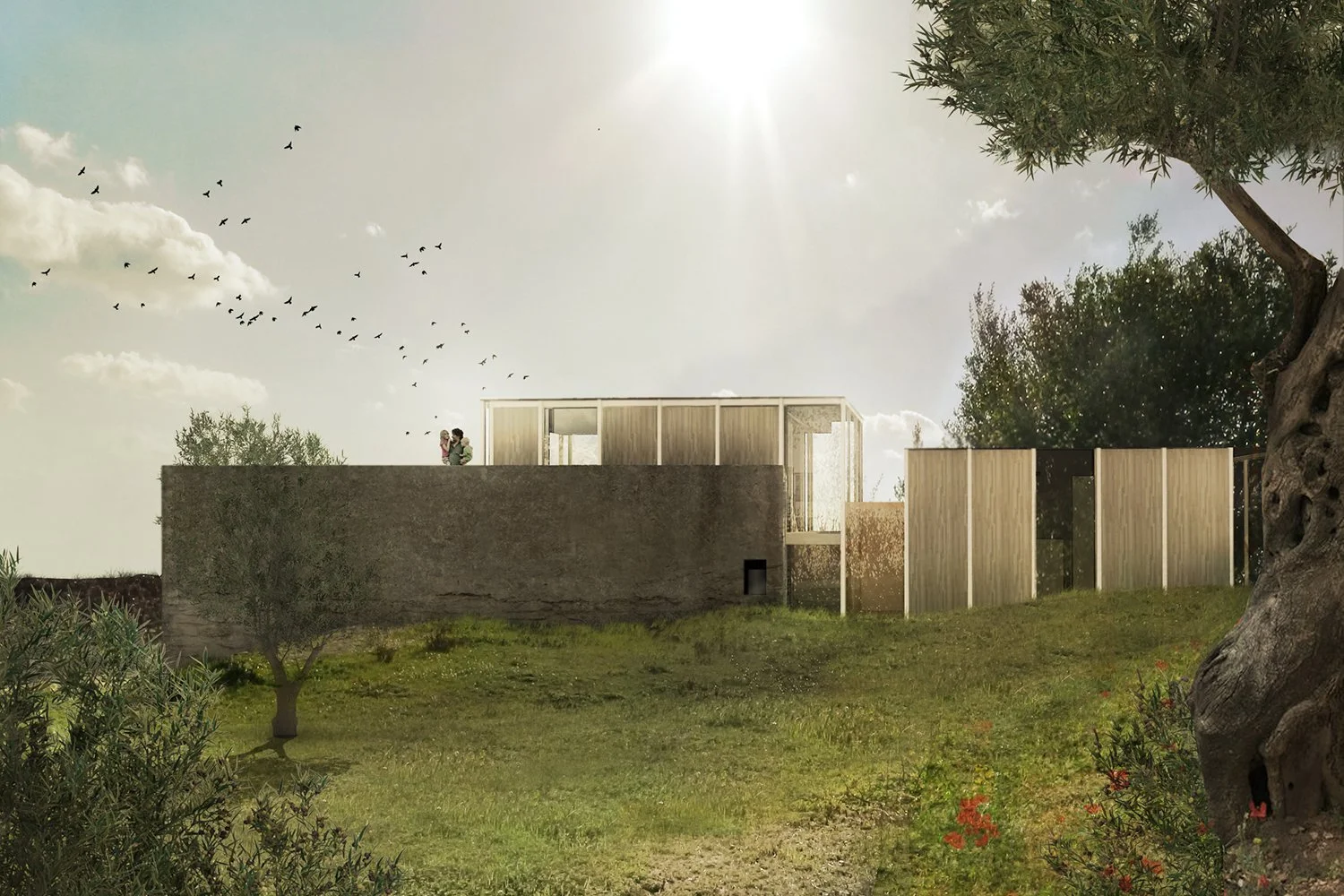
This family house inhabits the old walls of a ruined olive press in southern Sicily. A lightweight timber frame contrasts distinctly with the heavy stonework, allowing a highly glazed kitchen and dining space to feel part of the surrounding olive grove. The living space is lifted above, opening onto a terrace with views out to the sea. In the evening, occupants can retreat to cellular bedrooms set within the thick stone walls.
A projecting framed colonnade and overhangs protect spaces within from the summer sun.
Open, airy spaces connect with the surrounding olive groves looking across the hills to the coast below, while old stones walls provide calm retreat.
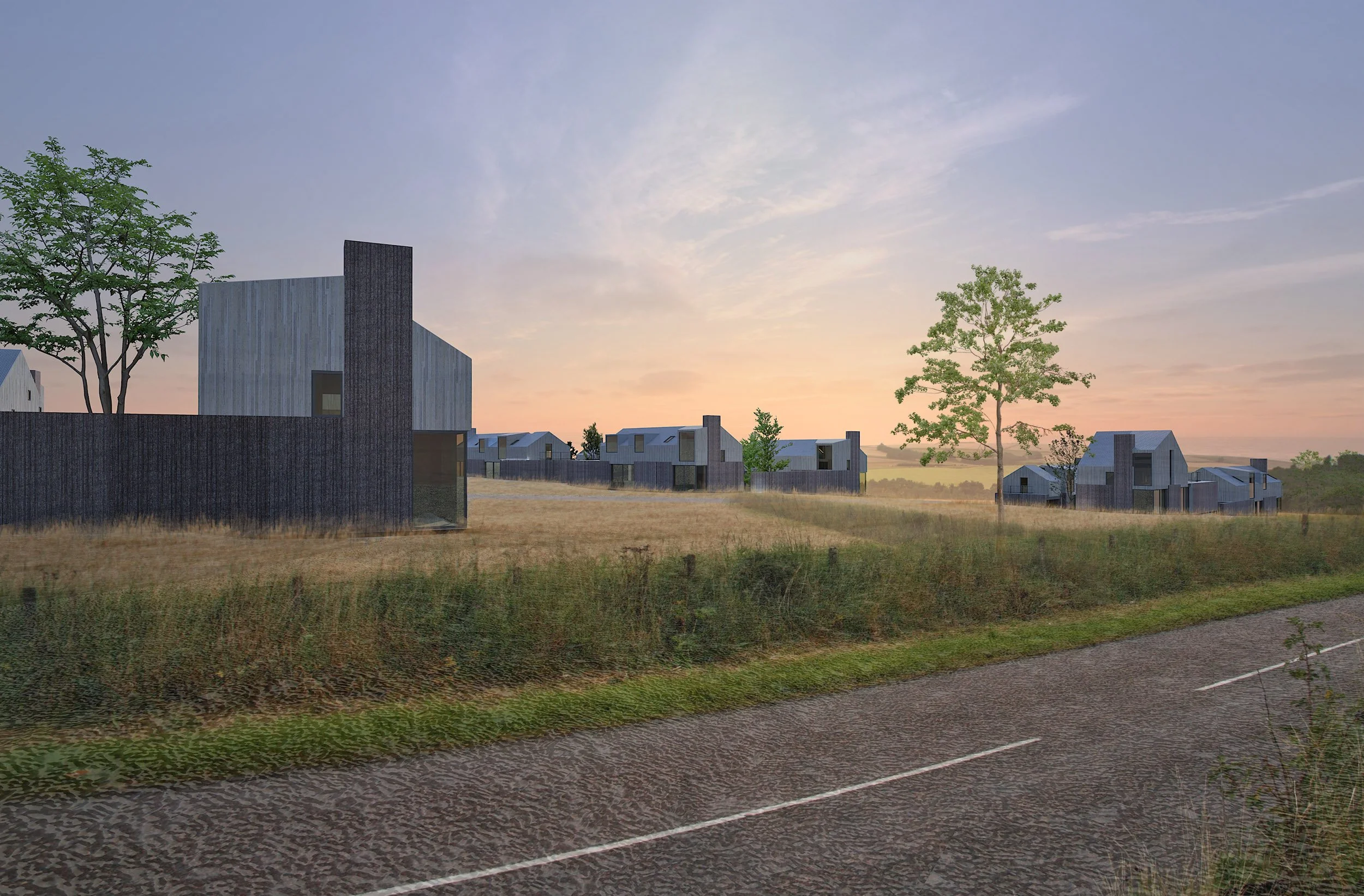
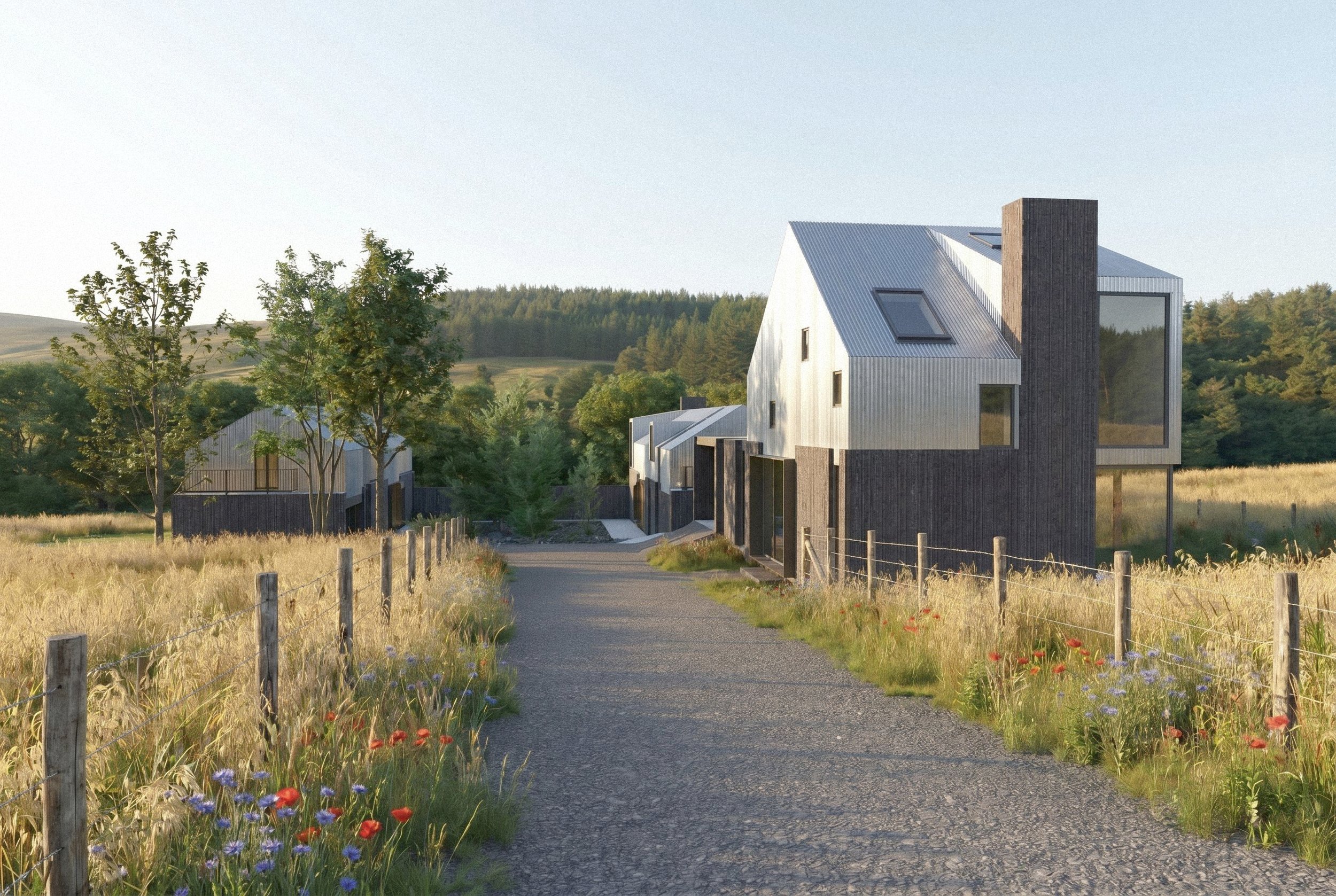
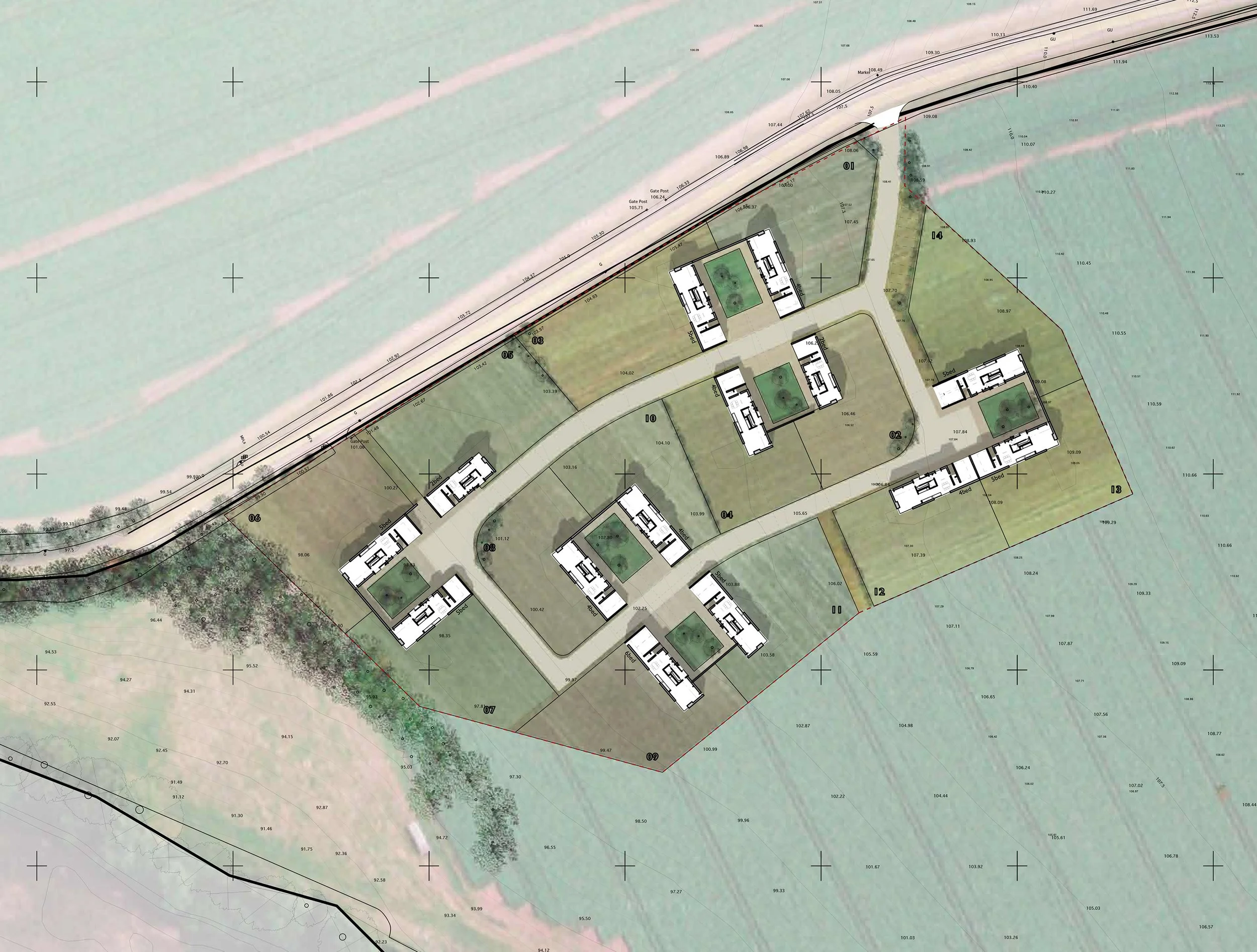
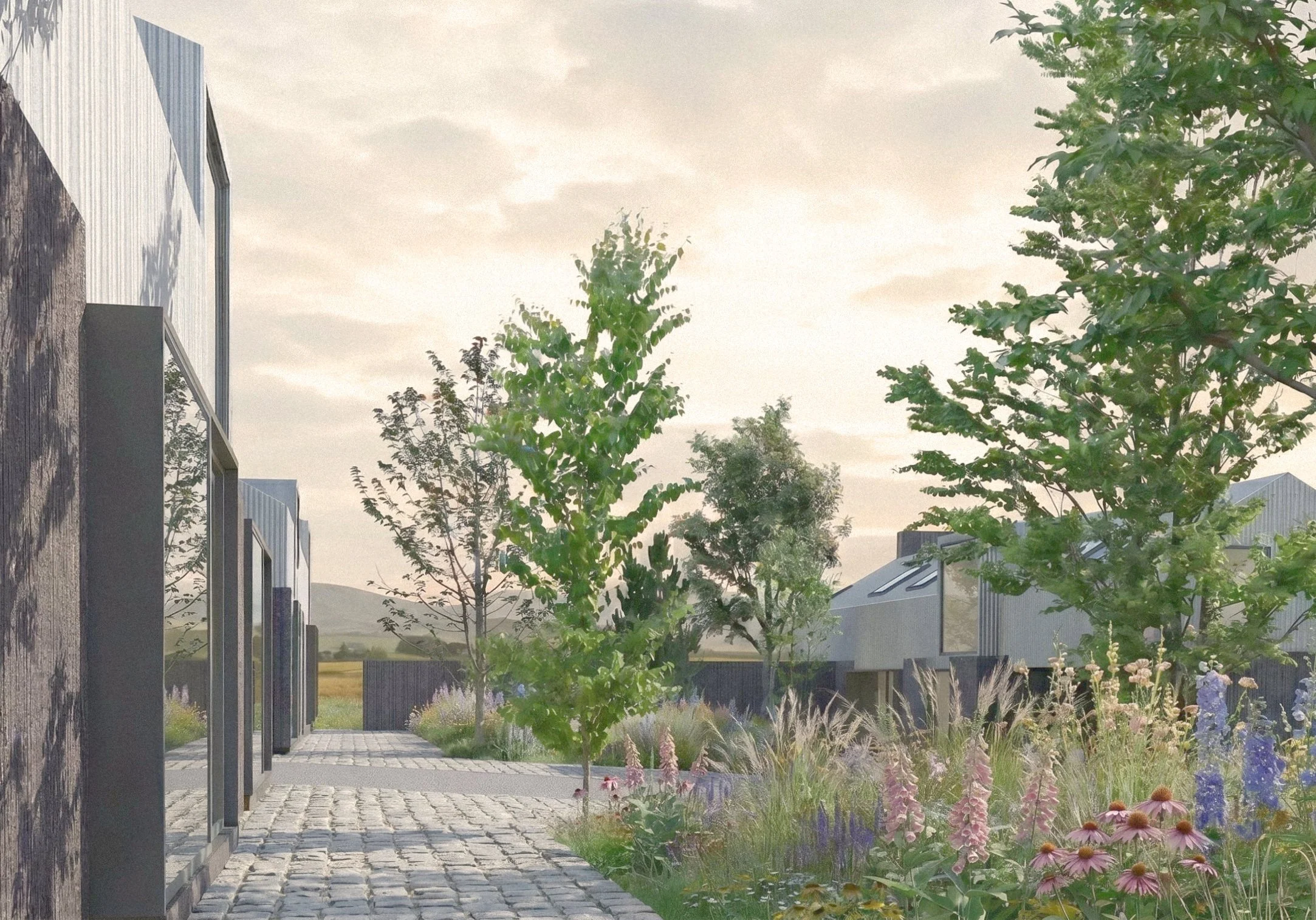
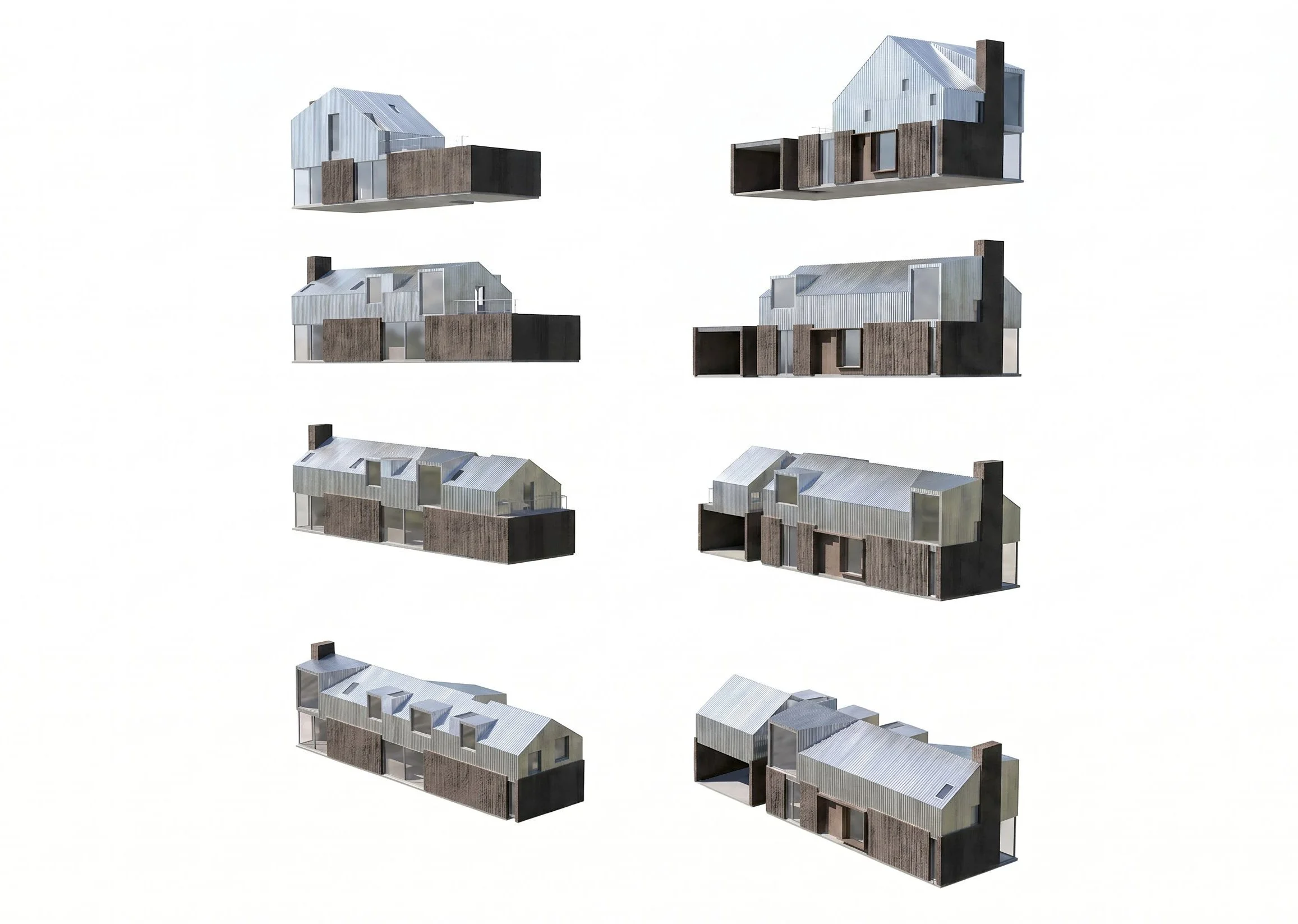
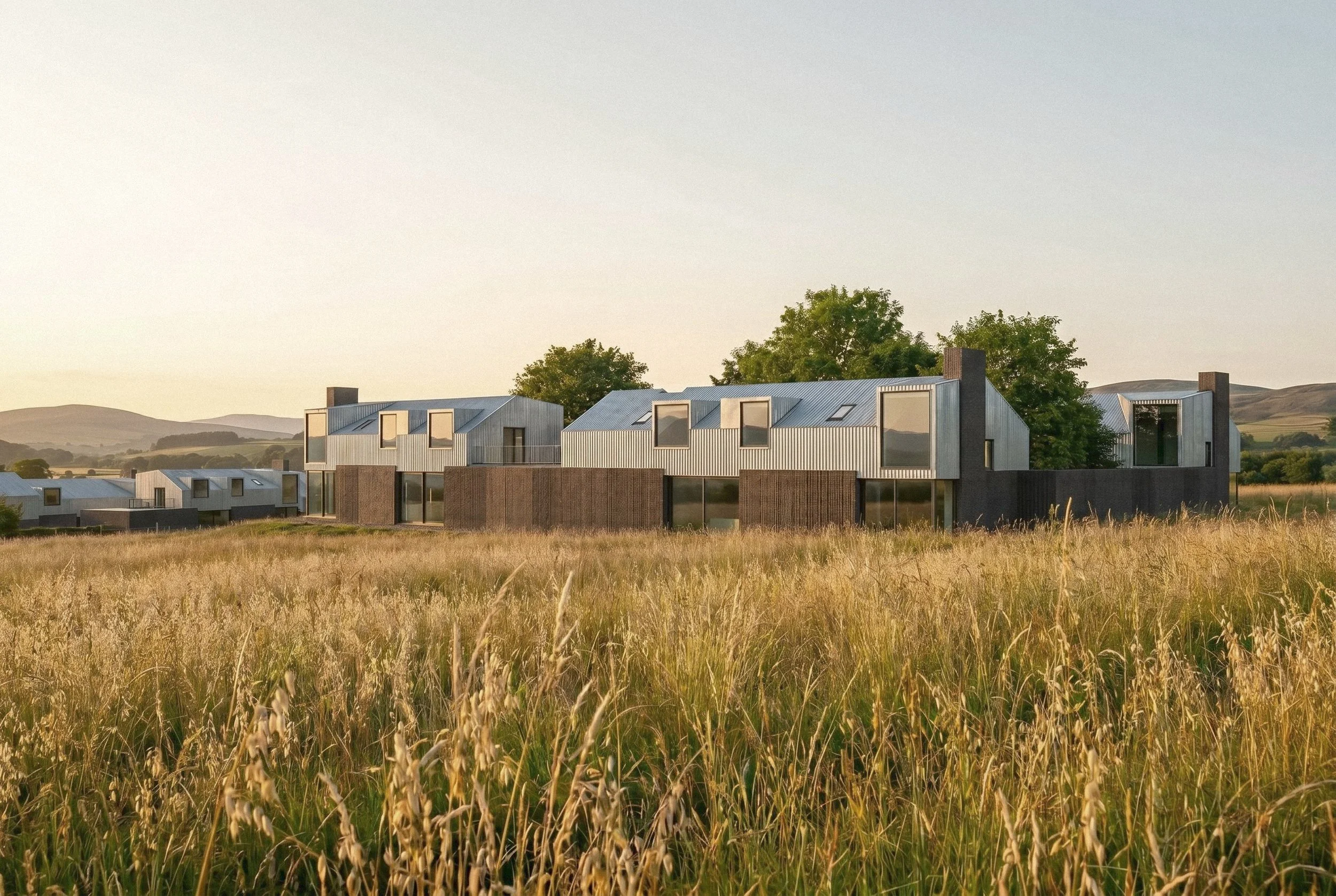
Housing which constitutes an enabling project to fund the preservation of ‘at risk’ listed steadings, the Craigston Estate houses make contemporary reference local features in both the typology of the units and their clustered settlement pattern. Grouped together the buildings provide shelter and enclosure, and reduce the visual spread on green-field land, allowing all access to wild open views.
Modular House types allow variation ranging from 2-bed to 6-bed.
Housing forms part of a wider project with an open brief to redevelop of the historic Craigston Castle estate, in Aberdeenshire, to ensure its long-term environmental and financial sustainability, five strategic developments were proposed focusing on tourism.